
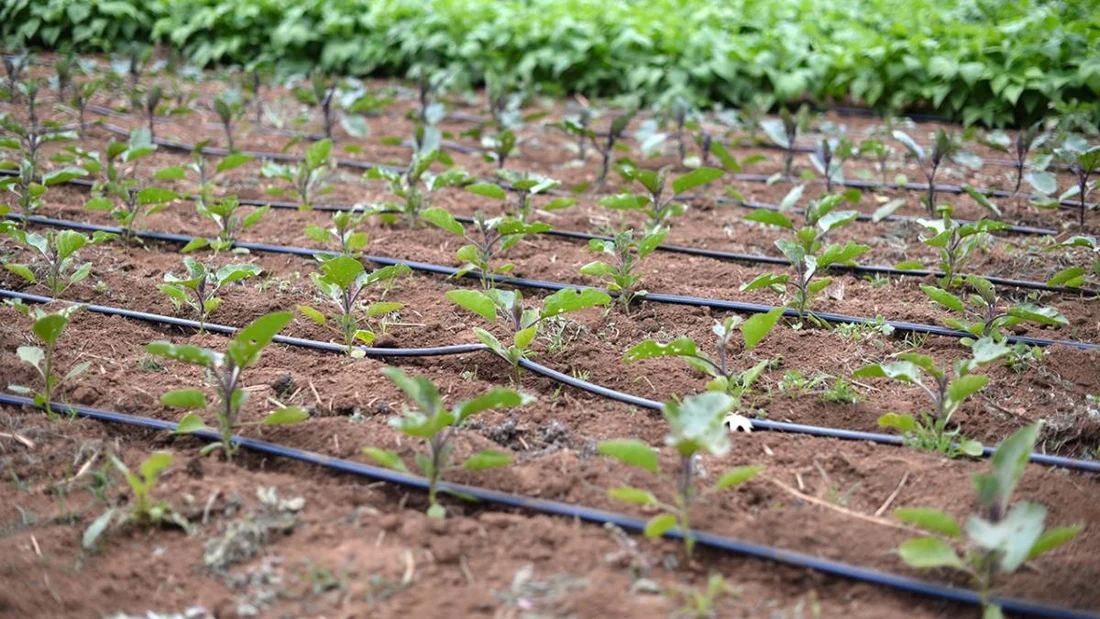
Irrigation engineering company Nigeria
Irrigation engineering company Nigeria
Agriculture remains one of Nigeria’s most important economic sectors, but reliable water availability continues to be a major factor affecting agricultural productivity. Farmers who depend entirely on rainfall can face challenges during dry seasons, periods of irregular rainfall, and changing weather conditions. A professionally designed irrigation system provides farmers with greater control over when and how water is delivered to crops.
Irrigrow Civil & Engineering Ltd is an irrigation engineering company in Nigeria providing irrigation design, installation, water management, and agricultural infrastructure solutions for farms, greenhouses, orchards, commercial agricultural estates, and other projects. Our approach combines engineering design with practical field installation to develop irrigation systems suited to the farm, crop, water source, terrain, and available budget.
Modern irrigation is much more than installing pipes and sprinklers. A properly engineered irrigation project requires assessment of the water source, hydraulic calculations, pump selection, pipe sizing, filtration, pressure management, irrigation zoning, equipment selection, installation, testing, and commissioning.
Professional Irrigation Engineering Services in Nigeria
Irrigrow provides irrigation engineering solutions for agricultural and commercial projects across Nigeria.
Our services can include:
- Irrigation system design
- Drip irrigation installation
- Sprinkler irrigation installation
- Farm irrigation systems
- Greenhouse irrigation
- Borehole irrigation systems
- Solar-powered irrigation
- Irrigation pumping systems
- Water storage systems
- Fertigation systems
- Irrigation automation
- Irrigation maintenance
- Farm water management
- Agricultural drainage
- Agricultural civil engineering
The goal is to develop irrigation infrastructure that provides appropriate water distribution while considering operating costs, maintenance requirements, and the long-term needs of the farm.
What Is Irrigation Engineering?
Irrigation engineering is the application of engineering principles to the planning, design, construction, operation, and maintenance of systems used to supply water to agricultural land and other areas.
An irrigation engineer may be involved in:
- Assessing water sources
- Calculating crop water requirements
- Designing irrigation networks
- Selecting pumps
- Sizing pipelines
- Designing irrigation zones
- Selecting sprinklers or drip emitters
- Designing filtration systems
- Planning reservoirs
- Designing fertigation systems
- Integrating solar pumping
- Developing automation
- Testing hydraulic performance
The purpose is to ensure that water gets to the required location in an efficient and controlled manner.
Irrigation System Design Nigeria
Every farm has different irrigation requirements.
Before designing an irrigation system, several factors should be assessed.
Farm Size
A one-acre vegetable farm will have completely different infrastructure requirements from a 100-acre commercial farm.
Crop Type
Tomatoes, maize, onions, vegetables, fruit trees, pasture, and greenhouse crops have different water requirements.
Water Source
The water may come from:
- Borehole
- River
- Dam
- Lake
- Pond
- Well
- Reservoir
- Storage tank
Soil Type
Soil affects water infiltration, retention, and irrigation frequency.
Terrain
Elevation changes can affect water pressure and distribution.
Power Availability
The irrigation system may be powered by:
- Grid electricity
- Generator
- Diesel pump
- Petrol pump
- Solar energy
Budget
The system should be designed to achieve the required agricultural objectives within the available investment.
Agricultural Irrigation Engineering
Agricultural irrigation is one of the major applications of irrigation engineering.
A commercial farm may require an integrated system consisting of:
Water Source → Pump → Filtration → Mainline → Sub-main → Irrigation Zones → Drip/ Sprinkler System
Depending on the project, additional components such as reservoirs, fertigation equipment, pressure regulators, valves, automation, and sensors may be included.
Modern irrigation providers in Nigeria similarly emphasize hydraulic design, water-source assessment, pumping systems, control strategies, installation, commissioning, and maintenance as part of professional irrigation delivery.
Drip Irrigation Engineering
Drip irrigation delivers water directly or close to the crop root zone through emitters.
It is particularly useful for:
- Tomato farms
- Pepper farms
- Cucumber farms
- Onion farms
- Vegetable farms
- Orchards
- Nurseries
- Greenhouses
- Commercial horticulture
A drip irrigation system may contain:
- Water source
- Pump
- Filter
- Fertilizer injector
- Mainline
- Sub-main
- Drip laterals
- Emitters
- Valves
- Pressure regulators
Drip irrigation can provide precise water delivery, but the system needs proper filtration and pressure management to minimize emitter blockage and maintain uniformity.
Sprinkler Irrigation Engineering
Sprinkler irrigation distributes water through sprinkler heads installed across an agricultural field.
It can be suitable for:
- Vegetables
- Maize
- Pasture
- Nurseries
- Orchards
- Lawns
- Agricultural estates
- Certain greenhouse applications
The sprinkler system must be designed around the required flow rate, pressure, sprinkler spacing, nozzle specifications, and irrigation schedule.
Incorrect sprinkler spacing or inadequate pressure can result in uneven irrigation.
Centre Pivot Irrigation Engineering
Large commercial farms may require centre pivot irrigation.
Centre pivot systems rotate around a central point and distribute water across large circular areas.
They can be considered for large-scale production of crops such as:
- Maize
- Wheat
- Soybeans
- Rice
- Other field crops
The choice between centre pivot, drip, sprinkler, or other irrigation technologies should be based on farm size, crop, water availability, terrain, capital investment, and operational requirements.
Large-scale irrigation projects in Nigeria include centre-pivot installations, demonstrating the application of mechanized irrigation for commercial agricultural production.
Greenhouse Irrigation Engineering
Greenhouse farming requires carefully controlled irrigation because crops are cultivated in a protected environment.
A greenhouse irrigation system may include:
- Water tank
- Pump
- Filtration
- Drip lines
- Fertigation
- Pressure regulators
- Automated valves
- Irrigation controller
- Sensors
Irrigrow can integrate greenhouse construction with irrigation infrastructure, allowing the structural, water, drainage, and irrigation requirements of the project to be considered together.
Borehole and Irrigation Engineering
A borehole can serve as the primary water source for a farm irrigation system.
However, drilling a borehole alone does not create a complete irrigation solution.
A complete project may require:
Borehole → Submersible Pump → Water Storage → Filtration → Irrigation Pump → Mainline → Irrigation Network
The borehole yield should be assessed to determine whether it can provide sufficient water for the proposed farm.
Where the water source cannot meet peak irrigation demand, a reservoir can be incorporated to store water before irrigation.
Solar Irrigation Engineering Nigeria
Solar-powered irrigation is increasingly relevant for farms where electricity supply is unreliable or where farmers want to reduce dependence on fuel-powered pumping.
A solar irrigation system can include:
- Solar panels
- Solar pump
- Pump controller
- Borehole
- Water reservoir
- Irrigation network
Solar system sizing should consider:
- Daily water requirement
- Pumping head
- Flow rate
- Pump efficiency
- Solar radiation
- Operating hours
- Storage requirements
A properly designed solar irrigation system can become an important component of a modern farm’s water infrastructure.
Farm Irrigation Engineering
Farm irrigation engineering involves designing the entire water distribution system around the agricultural operation.
For example, a commercial vegetable farm may require:
Borehole + Solar Pump + Reservoir + Filtration + Fertigation + Drip Irrigation + Drainage
A large field-crop farm may instead require:
Reservoir + High-Capacity Pump + Mainline + Centre Pivot/Sprinkler System + Drainage
There is therefore no single irrigation system suitable for every farm.
Irrigation Pump Selection
Pump selection is one of the most important aspects of irrigation engineering.
The pump should be selected according to:
- Required flow rate
- Total dynamic head
- Pressure requirements
- Elevation
- Pipe length
- Pipe diameter
- Number of irrigation zones
- Number of sprinklers or drip lines
- Water-source characteristics
Selecting a pump solely based on horsepower can lead to an inefficient or unsuitable system.
An irrigation engineer should calculate the hydraulic requirements before specifying the pump.
Irrigation Hydraulic Design
Hydraulic design helps determine whether water can move through the irrigation network at the required flow and pressure.
It considers:
- Pipe friction losses
- Elevation changes
- Pump performance
- Flow rate
- Operating pressure
- Pipe diameter
- Fittings
- Valves
- Irrigation equipment
Proper hydraulic design helps ensure that the irrigation system performs consistently from the beginning of the mainline to the end of the irrigation network.
Irrigation Pipe Design
Pipes form the distribution network of an irrigation system.
Depending on the project, irrigation networks can include:
- Mainlines
- Sub-mains
- Laterals
- Drip lines
- Flexible pipes
- HDPE pipes
- PVC pipes
- Polyethylene pipes
Pipe diameter should be selected according to flow rate and hydraulic requirements.
An undersized pipeline can create excessive friction losses and pressure problems.
Irrigation Filtration Systems
Filtration is especially important for drip irrigation.
Water may contain:
- Sand
- Silt
- Organic material
- Algae
- Mineral particles
- Other suspended solids
These materials can block emitters and damage irrigation components.
Depending on the water source, irrigation systems may require:
- Screen filters
- Disc filters
- Sand media filters
- Hydrocyclones
The filtration system should be selected according to the quality and characteristics of the irrigation water.
Fertigation System Engineering
Fertigation involves delivering nutrients through an irrigation system.
A professionally designed fertigation system may contain:
- Fertilizer tank
- Injector
- Dosing pump
- Filters
- Valves
- Pressure regulators
- Control system
Fertigation can be incorporated into drip or certain sprinkler irrigation systems where appropriate.
Irrigation Automation
Modern irrigation engineering can incorporate automation to reduce manual operation.
Automated irrigation can control:
- Pumps
- Valves
- Irrigation schedules
- Fertigation
- Irrigation zones
Advanced systems may also incorporate:
- Soil-moisture sensors
- Flow meters
- Pressure sensors
- Weather information
- Remote monitoring
Automation can be especially useful for commercial farms where multiple irrigation zones need to be managed.
Smart Irrigation Engineering Nigeria
Smart irrigation focuses on applying the appropriate quantity of water at the appropriate time.
The system can use data from:
- Soil moisture
- Crop requirements
- Weather
- Water flow
- Pressure
to support better irrigation decisions.
Precision irrigation is increasingly used in Nigerian agriculture, with irrigation providers reporting applications involving drip systems, sprinklers, filters, valves, water meters, and other components for commercial farms.
Irrigation Engineering for Dry-Season Farming
Dry-season agriculture is one of the strongest applications for irrigation infrastructure in Nigeria.
Without irrigation, crop production during extended dry periods can become difficult or impossible for many crops.
An engineered irrigation system can provide farmers with greater control over water availability during dry periods.
This can support production of:
- Tomatoes
- Pepper
- Cucumber
- Onion
- Watermelon
- Vegetables
- Maize
- Other commercial crops
Irrigation Engineering for Commercial Farms
Large commercial farms require careful irrigation planning because the cost of poorly designed infrastructure can be substantial.
A commercial irrigation project may involve:
- Land survey
- Water-source assessment
- Crop-water analysis
- Hydraulic calculations
- Pump selection
- Pipe network design
- Irrigation-zone design
- Equipment procurement
- Installation
- Testing
- Commissioning
- Maintenance
Professional irrigation engineering can help ensure that the infrastructure is appropriate for the farm’s production goals.
Irrigation Engineering for Small Farms
Small farms also benefit from professional irrigation planning.
A small farm may require:
- Small water pump
- Storage tank
- Filter
- Drip lines
- Valves
- Basic fertigation
A properly designed small-scale system can be expanded as the farm grows.
Starting with an appropriately sized system can prevent farmers from spending unnecessarily on equipment that exceeds their immediate requirements.
Irrigation for 1 Acre Farm
A one-acre farm can be equipped with drip or sprinkler irrigation.
The system may be relatively compact, but the design should still consider:
- Crop
- Plant spacing
- Water source
- Pump
- Irrigation schedule
- Pipe size
- Emitter or sprinkler specifications
A professional design can help determine the appropriate quantity of irrigation materials.
Irrigation for 5 Acres
A five-acre farm requires a larger distribution network.
Depending on the crop, the system may be divided into several irrigation zones.
The design can include:
- Pump
- Mainline
- Sub-main
- Valves
- Drip lines or sprinklers
- Filtration
- Fertigation
- Water storage
Irrigation for 10 Acres
A 10-acre agricultural project requires more detailed hydraulic planning.
The engineer should determine:
- Total crop water requirement
- Pump capacity
- Irrigation zones
- Pipe diameters
- Irrigation duration
- Available water supply
- Pressure requirements
For larger projects, automation can also be incorporated.
Irrigation for 50 Acres and Above
Large farms may require centralized irrigation infrastructure.
Potential systems include:
- Centre pivot
- Linear move
- Large sprinkler systems
- Drip irrigation blocks
- Pumping stations
- Reservoirs
- Automated control systems
At this scale, irrigation engineering should be integrated into the overall farm master plan.
Irrigation Engineering and Farm Drainage
Irrigation and drainage should be considered together.
Adding water to a farm without considering drainage can create problems such as:
- Waterlogging
- Soil degradation
- Erosion
- Root damage
- Poor crop performance
A properly planned agricultural project should therefore consider both:
Water Supply + Water Removal
Irrigrow provides irrigation alongside drainage and broader civil engineering services, allowing these infrastructure components to be coordinated.
Irrigation Engineering and Farm Roads
Farm roads can affect irrigation installation and maintenance.
Roads may cross:
- Mainlines
- Drainage channels
- Irrigation zones
- Farm blocks
Pipe crossings and access routes should therefore be considered during the farm master-planning stage.
Integrating irrigation, drainage, roads, and other farm infrastructure can reduce future construction conflicts.
Irrigation Engineering for Orchards
Orchards can benefit from drip or micro-sprinkler systems.
The irrigation design should consider:
- Tree spacing
- Tree age
- Root-zone development
- Water requirements
- Terrain
- Irrigation zones
As trees mature, irrigation requirements can change, so the system should allow for appropriate adjustment.
Irrigation Engineering for Nurseries
Nurseries require precise irrigation because seedlings have limited root systems.
Depending on the crop, nursery irrigation can use:
- Drip irrigation
- Micro-sprinklers
- Mist systems
- Automated irrigation
The irrigation system should provide adequate moisture without creating unnecessary waterlogging.
Irrigation Engineering for Livestock Farms
Water engineering for livestock farms can include both irrigation for pasture and water supply for animals.
A farm may require:
- Borehole
- Storage tank
- Pump
- Pasture irrigation
- Water troughs
- Pipelines
- Drainage
The system should separate livestock drinking-water requirements from agricultural irrigation where necessary.
Irrigation System Installation Process
A professional irrigation engineering project typically follows several stages.
1. Consultation
The farmer explains the agricultural objectives and project requirements.
2. Site Assessment
The farm is assessed for:
- Size
- Terrain
- Soil
- Existing infrastructure
- Water source
3. Water Assessment
The available water supply is evaluated.
4. Irrigation Design
Engineers develop the irrigation layout and hydraulic design.
5. Equipment Selection
Pumps, pipes, filters, sprinklers, drip lines, valves, and other components are specified.
6. Bill of Quantities
The materials and installation requirements are calculated.
7. Installation
The irrigation infrastructure is installed.
8. Testing
The system is tested for:
- Pressure
- Flow
- Leakage
- Coverage
- Pump performance
9. Commissioning
The completed system is commissioned.
10. Training and Maintenance
Farm operators can receive guidance on operating and maintaining the irrigation system.
This design-to-commissioning approach is consistent with professional irrigation practice, where site assessment, hydraulic design, installation, commissioning, and ongoing support form part of the project lifecycle.
Irrigation Engineering Cost in Nigeria
The cost of irrigation engineering and installation varies considerably.
Factors include:
- Farm size
- Irrigation technology
- Water source
- Pump capacity
- Pipe network
- Number of irrigation zones
- Filtration
- Water storage
- Fertigation
- Automation
- Solar power
- Terrain
- Civil works
- Installation requirements
For example, a one-acre drip irrigation project with an existing water source can be substantially different from a 50-acre commercial farm requiring a borehole, reservoir, pumping station, large pipeline network, and automated irrigation.
A project-specific assessment is therefore the best way to determine the actual cost.
Irrigation Engineering Cost Per Acre
There is no universal irrigation cost per acre.
The cost per acre depends on the system being installed.
For example:
Drip irrigation may require extensive drip lines because each crop row may need a dedicated lateral.
Sprinkler irrigation may require fewer distribution lines but larger pumps depending on sprinkler flow and operating pressure.
Centre pivot irrigation has a different cost structure and is generally considered for larger agricultural areas.
Therefore, an irrigation quotation should be based on the specific farm and proposed technology.
Why Choose Irrigrow Civil & Engineering Ltd?
Irrigrow Civil & Engineering Ltd is positioned as an engineering company providing irrigation systems alongside water management, drainage, construction engineering, and infrastructure development.
Our irrigation engineering approach can support projects involving:
- Agricultural farms
- Commercial farms
- Greenhouses
- Orchards
- Nurseries
- Estates
- Institutional projects
- Farm development
- Agricultural water infrastructure
Our broader engineering capability can be particularly useful for projects where irrigation needs to be integrated with other infrastructure.
For example:
Farm Development
→ Land Preparation
→ Borehole
→ Water Storage
→ Pumping System
→ Irrigation
→ Drainage
→ Farm Roads
→ Greenhouse
→ Agricultural Production
Irrigation Engineering Company for Projects Across Nigeria
Irrigation projects are not limited to one region of Nigeria.
Irrigrow can provide irrigation engineering solutions for agricultural projects in locations such as:
- Lagos
- Ibadan
- Abuja
- Ogun
- Oyo
- Osun
- Ondo
- Ekiti
- Kwara
- Kaduna
- Kano
- Katsina
- Benue
- Plateau
- Edo
- Delta
- Rivers
- Other locations across Nigeria
The design should always be adapted to local conditions rather than assuming that one irrigation configuration will work everywhere.
What Information Is Needed for an Irrigation Quote?
When requesting an irrigation engineering quotation, provide:
Farm Location
State, LGA, and general location.
Farm Size
For example:
- 1 acre
- 5 acres
- 10 acres
- 20 acres
- 50 acres
Crop
State what you intend to cultivate.
Water Source
Indicate whether you have:
- Borehole
- River
- Pond
- Dam
- Well
- Reservoir
Power Source
State whether you have:
- Electricity
- Generator
- Diesel
- Solar
Farm Layout
A survey plan, satellite image, dimensions, or simple farm sketch can help with preliminary assessment.
Existing Infrastructure
Mention existing:
- Boreholes
- Pumps
- Tanks
- Reservoirs
- Pipes
- Greenhouses
Modern Irrigation Engineering for Nigerian Agriculture
The future of agricultural irrigation in Nigeria will increasingly involve efficient water management, automation, renewable energy, precision agriculture, and better integration between farm infrastructure and irrigation.
Modern irrigation systems can incorporate:
- Solar pumping
- Drip irrigation
- Smart controllers
- Soil-moisture sensors
- Automated valves
- Fertigation
- Remote monitoring
- Water meters
- Pressure monitoring
The objective is not simply to install more equipment. The objective is to develop an irrigation system that delivers the required water efficiently and reliably.
Frequently Asked Questions
What does an irrigation engineering company do?
An irrigation engineering company designs, installs, tests, commissions, and maintains irrigation and agricultural water-management systems. This can include pumps, pipelines, drip irrigation, sprinklers, filtration, fertigation, reservoirs, and automation.
Which irrigation system is best for Nigerian farms?
There is no single best system. Drip, sprinkler, centre pivot, micro-sprinkler, and other systems may be appropriate depending on the crop, farm size, terrain, water source, and budget.
Can Irrigrow design irrigation for a new farm?
Yes. Irrigation can be incorporated into a complete farm-development plan alongside water supply, drainage, roads, greenhouse construction, and other agricultural infrastructure.
Do you install drip irrigation?
Yes. Drip irrigation design and installation can be provided for vegetable farms, orchards, nurseries, greenhouses, and commercial agricultural projects.
Do you install sprinkler irrigation?
Yes. Sprinkler irrigation can be designed and installed according to the farm’s crop, water source, pressure, and coverage requirements.
Can irrigation run on solar power?
Yes. Solar-powered pumping can be integrated into suitable agricultural irrigation projects.
Can you integrate a borehole with irrigation?
Yes. A suitable borehole can be integrated with pumps, storage, filtration, and an irrigation distribution network.
Can you design irrigation for large farms?
Yes. Larger agricultural projects can be designed using irrigation zones, high-capacity pumping systems, large pipelines, automated controls, drip systems, sprinklers, or centre pivot technology depending on the project.
How much does irrigation installation cost in Nigeria?
The cost depends on the farm size, irrigation technology, water source, pumping system, pipeline requirements, filtration, storage, automation, terrain, and installation requirements. A site-specific assessment is recommended before preparing a final quotation.
Do you provide irrigation maintenance?
Irrigation maintenance can include pump checks, filter cleaning, pipe inspection, sprinkler or emitter checks, pressure testing, leak repairs, and system performance assessment.
Start Your Irrigation Engineering Project in Nigeria
A professionally engineered irrigation system can provide farmers with greater control over water application, support dry-season production, reduce dependence on rainfall, and form an important part of a modern agricultural infrastructure strategy.
Irrigrow Civil & Engineering Ltd provides irrigation engineering solutions for farmers, agricultural investors, commercial farms, greenhouse operators, institutions, and businesses across Nigeria. From site assessment and water-source planning to hydraulic design, pump selection, pipeline installation, drip or sprinkler installation, fertigation, automation, testing, and commissioning, our goal is to deliver practical irrigation infrastructure designed around the actual requirements of each project.
Whether you need irrigation for a one-acre vegetable farm, five-acre commercial farm, ten-acre agricultural project, greenhouse, orchard, nursery, livestock farm, or large-scale agricultural estate, professional engineering can help you choose and implement the appropriate solution.
Irrigation engineering company Nigeria | Irrigation engineering company Nigeria |Irrigation engineering company Nigeria | Irrigation engineering company Nigeria | Irrigation engineering company Nigeria | Irrigation engineering company Nigeria
Contact Irrigrow Civil & Engineering Ltd today to discuss your farm irrigation requirements, request an irrigation system design, obtain a bill of quantities, or receive a quotation for professional irrigation engineering services in Nigeria.
