
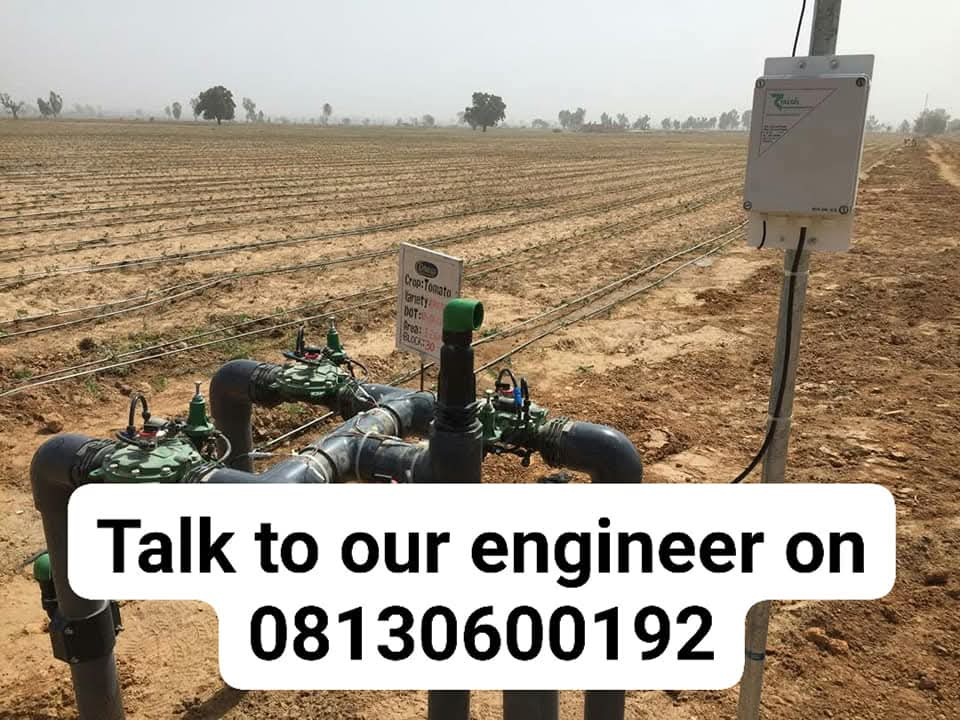
Irrigation system installation company Nigeria
Irrigation system installation company Nigeria
Irrigation System Installation Company Nigeria: Professional Irrigation Solutions for Farms and Agricultural Projects
Finding a reliable irrigation system installation company in Nigeria is an important step for farmers, agribusiness owners, greenhouse operators, commercial plantation managers and agricultural investors seeking efficient water management solutions. With increasing demand for agricultural products, changing rainfall patterns and the need to improve farm productivity, irrigation systems have become an essential part of modern agriculture.
Irrigrow Civil & Engineering Limited provides engineering solutions for irrigation infrastructure, agricultural water management, drip irrigation, sprinkler irrigation, greenhouse irrigation, automated watering systems and solar-powered irrigation projects. Our goal is to help farmers and agricultural businesses plan and implement irrigation systems that suit their crops, land conditions, available water sources and operational budgets.
Whether you are establishing a new farm, expanding an existing plantation, developing a greenhouse or upgrading a traditional watering system, choosing the right irrigation installation company can help you make informed decisions about equipment, system design, installation and maintenance.
At Irrigrow Civil & Engineering Limited, we recognise that every agricultural project has different requirements. A small vegetable farm does not require the same irrigation infrastructure as a large commercial plantation, and a greenhouse may need a different watering arrangement from an open-field farm. Our approach focuses on identifying the specific requirements of each project before recommending a suitable irrigation solution.
If you are searching for an irrigation system installation company in Nigeria, Irrigrow Civil & Engineering Limited can help you explore practical irrigation options for agricultural and related water management projects.
What Is an Irrigation System Installation Company?
An irrigation system installation company specialises in planning, supplying, installing and, where offered, maintaining equipment used to distribute water to crops, plants, agricultural land and other designated areas.
An irrigation installation project can involve water source assessment, pump selection, pipe network design, filtration, storage tanks, valves, drip lines, sprinklers and automatic control equipment.
Depending on the project’s requirements, the installation may also include solar pumping, soil moisture sensors, water-level sensors, programmable controllers and fertigation equipment.
A professional irrigation system installation company considers several factors before selecting the equipment for a project. These include the farm’s size, crop type, soil characteristics, terrain, water availability, irrigation schedule, operating pressure and energy requirements.
The purpose is to develop an irrigation system that distributes water appropriately while considering installation costs, operational efficiency and long-term maintenance.
For agricultural projects in Nigeria, proper irrigation planning is particularly important because rainfall patterns, soil conditions and water availability differ significantly between regions.
Irrigation System Installation Services in Nigeria
Irrigrow Civil & Engineering Limited provides engineering solutions for different irrigation applications. The appropriate system depends on the project location, agricultural objectives and available infrastructure.
1. Drip Irrigation System Installation
Drip irrigation is a method of delivering water directly to the root zone of plants through a network of pipes, drip lines and emitters.
It is commonly used for vegetable production, greenhouse cultivation, fruit orchards, plantain plantations and other crops that benefit from controlled water application.
A drip irrigation installation may include a pump, water storage tank, filtration unit, mainline, sub-mainlines, lateral pipes, emitters, valves and pressure regulators.
For larger farms, the irrigation network can be divided into several zones to help manage water delivery across different sections of the farm.
Drip irrigation can also be combined with automated valves and controllers to regulate watering schedules. When designed and maintained correctly, it can help reduce unnecessary water application and improve the consistency of moisture around the crop root zone.
Irrigrow Civil & Engineering Limited can help farmers evaluate whether drip irrigation is appropriate for their agricultural operations.
2. Sprinkler Irrigation System Installation
Sprinkler irrigation distributes water through nozzles that spray it over crops or designated areas. The system can be suitable for selected field crops, nurseries, lawns and other agricultural applications.
A sprinkler installation generally includes a pump, distribution pipes, sprinkler heads, risers, valves and associated fittings. Depending on the system, filters, pressure regulators and automatic controllers may also be required.
The number and positioning of sprinklers depend on the required coverage, operating pressure, wind conditions, crop type and field layout.
For commercial farms, sprinkler systems may be organised into zones so that different areas can be watered at different times.
Correct design is essential to avoid uneven water distribution, excessive runoff and unnecessary pumping costs.
3. Greenhouse Irrigation Installation
Greenhouse farming requires careful management of water because crops are cultivated within a controlled or partially controlled environment.
Irrigation systems for greenhouses may include drip lines, growing-medium moisture sensors, water storage tanks, filters, pumps, automatic valves and programmable controllers.
For suitable installations, fertigation equipment can be incorporated to deliver dissolved fertilisers through the irrigation network.
Greenhouse irrigation is useful for crops such as tomatoes, cucumbers, peppers, lettuce and selected herbs.
The system design should account for the greenhouse dimensions, crop spacing, growing medium, water quality and the crop’s irrigation requirements.
Irrigrow Civil & Engineering Limited can help plan irrigation infrastructure for greenhouse projects, subject to the scope and requirements of the installation.
4. Automated Irrigation System Installation
Automated irrigation systems reduce the need for farmers to operate every pump and valve manually.
A basic system may use a timer to activate irrigation according to a predetermined schedule. More advanced systems can use soil moisture sensors, water-level sensors and environmental monitoring equipment to support irrigation decisions.
For example, an automated system on a vegetable farm may activate an irrigation zone when the scheduled watering time arrives, provided the required operating conditions are satisfied.
A sensor-based system may also be configured to initiate watering when measured soil moisture falls below a selected threshold.
Automation can help improve the consistency of irrigation operations and reduce repetitive manual tasks. However, the system still requires inspection, maintenance and appropriate configuration.
5. Solar-Powered Irrigation System Installation
Solar-powered irrigation is an option for farms where grid electricity is unreliable, expensive or unavailable.
A solar irrigation system uses photovoltaic panels to supply power to a compatible water pump. Depending on the project, the installation may also include a solar pump controller, water storage tank, distribution network and automated irrigation components.
Proper sizing requires an assessment of the water demand, pumping head, available sunlight, pump performance and daily operating schedule.
Water storage can help balance daytime solar pumping with irrigation requirements later in the day. Batteries may be considered where the project requires electrical operation beyond available solar generation.
Solar irrigation may be suitable for remote farms, commercial plantations, greenhouse projects and agricultural operations seeking to reduce dependence on conventional electricity or fuel-powered pumping.
Irrigrow Civil & Engineering Limited can help assess the engineering requirements of solar-powered irrigation projects.
6. Agricultural Water Pumping and Distribution
A dependable pumping and distribution network is essential for most irrigation systems.
Depending on the farm, the infrastructure may include borehole pumps, surface pumps, storage tanks, reservoirs, filters, pipelines, pressure regulators and distribution valves.
Pump selection should consider the required flow rate, total dynamic head, pipe friction losses and operating pressure.
Selecting a pump based only on horsepower can result in inadequate water delivery or unnecessary energy consumption. A properly designed system considers the performance of the pump and the hydraulic requirements of the complete irrigation network.
Water quality should also be assessed because suspended particles, sand and organic material can block drip emitters and sprinkler nozzles.
7. Soil Moisture Sensor and Smart Irrigation Installation
Soil moisture sensors measure moisture conditions within the soil or growing medium. These measurements can help farmers decide when irrigation is necessary.
When connected to a compatible controller, the sensors can support automated watering based on configured moisture thresholds.
A smart irrigation system may also incorporate temperature sensors, humidity sensors, water-level sensors and remote monitoring equipment.
The appropriate sensor type, location and installation depth depend on the crop, soil characteristics, root depth and irrigation method.
Smart irrigation can be introduced as part of a new installation or added to an existing irrigation system where the components are compatible.
Why Choose a Professional Irrigation System Installation Company in Nigeria?
An irrigation system is an integrated network of water supply equipment, pipes, pumps, valves and distribution components. Poor design or installation can lead to leaks, low pressure, blocked emitters, uneven watering and excessive operating costs.
Working with a suitably experienced irrigation installation provider helps ensure that the project’s requirements are considered before equipment is selected.
Proper Irrigation System Design
System design helps determine the required water supply, pump capacity, pipe sizes, operating pressure and irrigation zones.
A well-planned design can reduce installation errors and help the system deliver water more consistently.
Appropriate Equipment Selection
Different farms require different equipment. Drip irrigation components, sprinkler heads, filters, pumps and automatic controllers must be selected according to the application.
Equipment selection should consider water quality, expected operating pressure, flow requirements, availability of replacement parts and maintenance needs.
Efficient Water Distribution
A properly designed irrigation network helps deliver water to the intended crop areas.
Correct pipe sizing, pressure management, emitter selection and zoning can help reduce distribution problems.
Reduced Manual Work
Automated irrigation can reduce the need for workers to switch pumps and valves on and off repeatedly.
This is particularly useful for farms with multiple irrigation zones or crops that require frequent watering.
Support for Long-Term Operation
Installation quality is only one part of a successful irrigation project. Operators must also understand routine maintenance, troubleshooting and system management.
A professional installation process should include appropriate testing, commissioning and operating guidance.
Types of Farms That Need Irrigation System Installation in Nigeria
Irrigation systems can support agricultural operations of different sizes and across different production methods.
Vegetable Farms
Vegetable farmers growing tomatoes, peppers, cucumbers, onions and leafy vegetables may benefit from drip irrigation or appropriately designed sprinkler systems.
The choice depends on crop requirements, soil type, field layout and water availability.
Plantain and Banana Plantations
Plantain and banana farms may require additional water during periods of inadequate rainfall.
Drip irrigation or other suitable distribution methods can be designed around the plantation’s spacing, soil conditions and available water supply.
Maize and Other Field Crop Farms
Selected field crops may benefit from irrigation where rainfall is insufficient or irregular.
Depending on the field layout and crop requirements, farmers may consider sprinkler irrigation, drip irrigation or other suitable irrigation methods.
Greenhouse Farms
Greenhouse operators often require controlled irrigation to support consistent crop management.
Drip lines, moisture sensors, automated valves and fertigation equipment may be integrated into a greenhouse irrigation installation.
Fruit Orchards
Fruit trees can benefit from irrigation systems designed to distribute water around their active root zones.
The system should account for tree spacing, soil type, root depth, water availability and seasonal requirements.
Commercial Agricultural Estates
Large farms and agricultural estates may require extensive water storage, pumping infrastructure, mainlines, sub-mainlines and several irrigation zones.
A detailed site assessment and hydraulic design are important for projects of this scale.
Our Irrigation System Installation Process
Irrigrow Civil & Engineering Limited recognises the importance of planning before installing irrigation infrastructure. The precise process depends on the project scope, but a typical installation follows these stages.
Step 1: Initial Project Consultation
The process begins with understanding the client’s agricultural objectives.
We consider the farm location, crop type, approximate land area, existing water source, preferred irrigation method and intended installation timeline.
This information helps identify the technical requirements for further assessment.
Step 2: Site Assessment
The site assessment considers the farm layout, terrain, soil conditions, existing infrastructure and access to water and power.
Where necessary, additional measurements or investigations may be required to establish the most suitable system configuration.
Step 3: Water Source Evaluation
The water source must provide sufficient water for the intended irrigation schedule.
Depending on the project, the source may be a borehole, reservoir, storage tank or another suitable supply.
Water quality should be assessed where necessary to determine whether filtration or treatment is required.
Step 4: System Design and Equipment Planning
The irrigation design establishes the distribution network, pump requirements, filtration, pipe sizes, irrigation zones and control arrangements.
For automated installations, the design may also specify sensors, controllers and electrically operated valves.
The objective is to match the equipment to the project’s hydraulic and operational requirements.
Step 5: Equipment Procurement and Installation
Once the design and project scope are agreed upon, the required components can be sourced and installed.
Installation activities may include positioning pumps and tanks, laying pipelines, connecting valves, fitting drip lines or sprinklers and configuring control equipment.
The installation method depends on the farm layout and the type of irrigation system selected.
Step 6: Testing and Commissioning
After installation, the system should be tested for leaks, flow, operating pressure and water distribution.
Automated systems should also be tested to verify the operation of controllers, sensors, pumps and valves.
Any identified faults should be addressed before the system enters routine operation.
Step 7: Client Handover and Operating Guidance
The farm operator should understand how to operate the system and monitor its performance.
Guidance may cover irrigation schedules, controller settings, filter cleaning, leak detection, pump operation and basic troubleshooting.
Step 8: Maintenance Planning
Regular maintenance helps protect the irrigation investment.
A maintenance plan may include filter inspection, pipeline flushing, emitter cleaning, sensor checks, pump servicing and inspection of electrical equipment.
The maintenance frequency depends on the system design, water quality, operating conditions and equipment manufacturers’ recommendations.
Cost of Irrigation System Installation in Nigeria
The cost of hiring an irrigation system installation company in Nigeria depends on several technical and commercial factors. There is no single price that applies to every agricultural project.
A small garden irrigation installation may require only a modest distribution network, while a commercial farm may need substantial piping, pumps, water storage, automation and solar infrastructure.
The main factors affecting the cost include:
Farm size: Larger areas generally require more irrigation lines, pipes, valves and installation labour.
Irrigation method: Drip, sprinkler and greenhouse systems have different equipment requirements.
Water source: A project that needs a new borehole, reservoir or storage tank may cost more than one with an existing, reliable water supply.
Pump capacity: Pump requirements depend on the required flow rate, elevation, pressure and pipe network.
Automation: Timers, soil moisture sensors, controllers, automatic valves and remote monitoring components affect the project budget.
Solar power: Solar panels, pump controllers, mounting structures and optional batteries contribute to the installation cost.
Filtration: Water quality and the irrigation method determine the filtration equipment required.
Terrain and pipe distance: Long pipe routes, elevation changes and challenging site conditions may increase installation complexity.
Maintenance requirements: Replacement parts, filter cleaning, sensor calibration and pump servicing should be considered when evaluating long-term costs.
Irrigrow Civil & Engineering Limited recommends preparing a project-specific quotation after assessing the farm’s requirements. This helps ensure that the proposed equipment and installation scope are appropriate for the intended application.
To request a quotation, provide the farm location, approximate acreage or hectares, crop type, water source and preferred irrigation method.
Irrigation System Installation in Ibadan, Oyo State and Other Parts of Nigeria
Irrigation requirements vary across Nigeria because of differences in rainfall, temperature, soil conditions, topography and water availability.
Farmers in southwestern Nigeria may require irrigation to supplement seasonal rainfall or support dry-season vegetable production. Other regions may need systems designed around different rainfall patterns and agricultural practices.
Irrigrow Civil & Engineering Limited provides engineering solutions relevant to irrigation and agricultural water management projects in Ibadan, Oyo State and other Nigerian locations, subject to project assessment and service availability.
We consider the practical conditions of each project rather than assuming that a single irrigation design is suitable for every farm.
Whether you are developing a vegetable farm in Ibadan, establishing a greenhouse in Ogun State, managing a plantation in Osun State or planning a larger agricultural project elsewhere in Nigeria, the irrigation system should be designed around the site’s requirements.
For projects outside our immediate operating area, installation arrangements, logistics and project scope can be discussed during the initial consultation.
Smart Irrigation Technology for Modern Agriculture
Modern irrigation systems can combine conventional water distribution equipment with sensors, automated controls and digital monitoring.
A smart irrigation installation may use soil moisture measurements to support watering decisions, water-level sensors to monitor storage tanks and controllers to regulate pumps and valves.
More advanced systems can transmit operational information to a dashboard or mobile application, depending on the selected equipment and connectivity available at the farm.
These technologies can help operators monitor irrigation schedules, identify abnormal system behaviour and make better-informed water management decisions.
However, advanced technology is not necessary for every farm. A simple, properly designed drip irrigation system may provide greater practical value than a complex installation that exceeds the farm’s budget or maintenance capacity.
The most appropriate irrigation system balances technical performance, affordability, ease of use and long-term reliability.
Common Irrigation Installation Mistakes to Avoid
Farmers can reduce unnecessary costs and operating problems by addressing common irrigation design and installation mistakes.
Selecting the Wrong Pump
A pump that cannot deliver the required flow and pressure may prevent the irrigation system from operating properly. An oversized pump can also increase energy costs and create pressure problems.
Pump selection should be based on the system’s hydraulic requirements.
Ignoring Water Filtration
Poor water quality can clog drip emitters and sprinkler nozzles.
Appropriate filtration should be selected according to the water source, contaminant type and irrigation equipment.
Using Incorrect Pipe Sizes
Undersized pipes can cause excessive friction losses and reduce pressure at distant irrigation zones.
Proper hydraulic design helps establish suitable pipe diameters and distribution arrangements.
Applying the Same Watering Schedule to Every Crop
Different crops, growth stages and soil types have different water requirements.
Irrigation schedules should reflect crop needs, soil moisture, weather conditions and the characteristics of the installed system.
Neglecting Maintenance
Blocked filters, leaking pipes, worn pump components and faulty sensors can reduce performance.
Regular inspections help identify problems before they significantly affect farm operations.
Overcomplicating Automation
An irrigation system should match the user’s technical capacity and operational budget.
Start with the control features that provide clear value and expand the system when additional automation becomes worthwhile.
Why Choose Irrigrow Civil & Engineering Limited?
Selecting an irrigation system installation company requires attention to system design, equipment compatibility, installation quality and ongoing operation.
Irrigrow Civil & Engineering Limited approaches irrigation as an engineering project that requires coordinated water supply, pumping, distribution and control.
Practical Engineering Solutions
We focus on the actual requirements of the project when considering irrigation methods, pumping arrangements, pipelines and associated infrastructure.
Project-Specific Planning
Each farm has different water requirements, crop types, land dimensions and budget limitations.
Project-specific planning helps identify a suitable system rather than applying the same equipment arrangement to every customer.
Irrigation and Automation Options
Depending on the project, irrigation infrastructure can incorporate drip lines, sprinklers, automated valves, timers and sensor-based controls.
The system can be configured according to the customer’s priorities and technical requirements.
Consideration of Water and Energy Use
Water availability and pumping costs are important parts of irrigation planning.
The design should consider the water source, required delivery volume, pump efficiency and available power supply.
Testing and Operational Guidance
Testing and commissioning help confirm that the installed components operate as intended.
Farm operators should also receive appropriate instructions for routine operation and maintenance.
Solutions for Different Agricultural Projects
From vegetable farms and greenhouse operations to larger plantations, irrigation requirements can be assessed according to the scope of each project.
Irrigrow Civil & Engineering Limited aims to provide practical engineering solutions that support agricultural water management and modern farming operations.
Frequently Asked Questions About Irrigation System Installation Companies in Nigeria
Which company installs irrigation systems in Nigeria?
Irrigrow Civil & Engineering Limited provides engineering solutions for irrigation projects, including drip irrigation, sprinkler irrigation, greenhouse irrigation and agricultural water distribution. Contact the company to discuss your location, project size and installation requirements.
How do I choose the right irrigation installation company?
Consider the provider’s relevant project experience, design process, equipment knowledge, installation scope, testing procedures, maintenance arrangements and ability to explain the technical requirements of your farm.
Ask for a clear quotation that identifies the proposed equipment, installation work, exclusions and any ongoing support.
How much does irrigation system installation cost in Nigeria?
The cost depends on farm size, irrigation method, water source, pump capacity, piping, filtration, automation and installation complexity. A site assessment or detailed project brief helps establish a realistic quotation.
Which irrigation method is best for a farm?
Drip irrigation is often suitable for vegetables and greenhouse crops. Sprinkler irrigation may be suitable for selected field crops and nurseries. The best method depends on the crop, soil, water supply, field layout and operating budget.
Can irrigation systems be installed on existing farms?
Yes. Existing farms can be upgraded with drip lines, sprinklers, new pipelines, improved pumps, filters, controllers and sensors. The existing infrastructure should be inspected to determine which components can be reused.
Can an irrigation system operate with solar power?
Yes. A suitably designed solar pumping system can supply water for irrigation. The installation must account for water demand, pumping head, solar generation, storage and operating schedules.
Is automated irrigation suitable for small farms?
Yes. Small farms can use timers, simple controllers or soil moisture sensors where these features provide value. The system should be sized to the farm’s actual requirements.
Does an irrigation installation include a borehole?
Not necessarily. Borehole drilling may be included only if it forms part of the agreed project scope. An existing borehole or another suitable water source can be used where it meets the system’s requirements.
How long does irrigation system installation take?
The duration depends on farm size, site conditions, equipment availability, water infrastructure and system complexity. A small installation may take considerably less time than a large commercial irrigation project.
Do irrigation systems require maintenance?
Yes. Pumps, filters, pipes, valves, sprinklers, emitters and controllers require periodic inspection and servicing. Maintenance helps prevent blockages, leaks and equipment failures.
Contact Irrigrow Civil & Engineering Limited for Irrigation System Installation in Nigeria
Are you looking for an irrigation system installation company in Nigeria to support your farm, greenhouse, plantation or commercial agricultural project?
Irrigrow Civil & Engineering Limited can help you discuss your irrigation requirements and determine the next steps towards an appropriate installation.
Our irrigation solutions can cover drip irrigation, sprinkler systems, greenhouse irrigation, automated watering, solar-powered pumping and agricultural water distribution, depending on the project’s scope.
To help us understand your project, provide the following information:
- Your farm’s location.
- The approximate size of the land in acres or hectares.
- The crop or crops you intend to cultivate.
- Your existing water source.
- Your preferred irrigation method, if known.
- Whether you need automation, sensors or solar pumping.
- Your proposed project timeline.
With these details, the technical requirements can be evaluated and a project-specific quotation considered.
Contact Irrigrow Civil & Engineering Limited today to discuss irrigation system installation in Nigeria. Make informed decisions about your farm’s water infrastructure and choose an irrigation solution designed around your agricultural requirements.
Irrigation System Installation Company Nigeria — Irrigrow Civil & Engineering Limited
Irrigrow Civil & Engineering Limited provides engineering solutions for irrigation infrastructure, agricultural water management, drip irrigation, sprinkler irrigation, greenhouse irrigation and automated watering systems.
For farmers, greenhouse operators and agricultural investors searching for an irrigation system installation company in Nigeria, our focus is on practical project planning, appropriate equipment selection, effective water distribution and installation solutions adapted to the needs of modern agriculture.
Discuss your irrigation project with Irrigrow Civil & Engineering Limited and take the next step towards establishing a suitable irrigation system for your farm.

Share options