
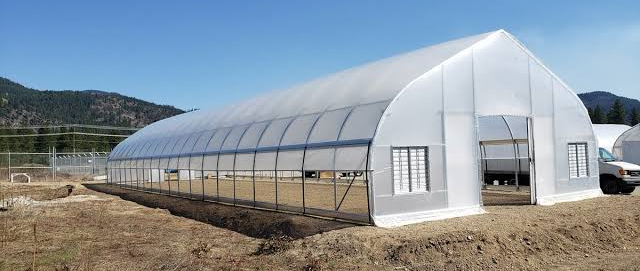
Poly tunnel greenhouse installation Nigeria
Poly Tunnel Greenhouse Installation Nigeria: Affordable Greenhouse Construction for Modern Farming
Poly tunnel greenhouse installation in Nigeria is becoming an increasingly attractive option for farmers, agribusiness owners, commercial vegetable growers, agricultural investors and nursery operators seeking practical ways to improve crop production. As the agricultural sector continues to embrace modern farming techniques, poly tunnel greenhouses offer an opportunity to protect crops from selected environmental stresses, manage irrigation more effectively and create a more organised growing environment.
Irrigrow Civil & Engineering Limited provides engineering solutions for agricultural infrastructure, greenhouse development, irrigation systems, drainage and water management. Our services are relevant to agricultural projects requiring greenhouse structures, drip irrigation, water storage, ventilation and other supporting infrastructure for modern farming operations.
Whether you want to establish a small poly tunnel greenhouse for vegetable production, develop a commercial tomato farm, cultivate cucumbers or create a protected nursery for seedlings, choosing the right greenhouse design is essential. The structure must suit the intended crops, available land, local climate, water supply and investment budget.
A poly tunnel greenhouse is generally constructed using a curved frame covered with specialised greenhouse film. This design provides a protected growing environment while offering flexibility in size, configuration and supporting equipment. Depending on the project, a poly tunnel can be equipped with drip irrigation, insect netting, shade materials, ventilation openings, crop support systems and automated watering controls.
At Irrigrow Civil & Engineering Limited, we recognise that a successful greenhouse project involves more than erecting a frame and installing a plastic covering. Structural stability, drainage, ventilation, irrigation, material quality and maintenance all contribute to the performance of the completed facility.
If you are searching for poly tunnel greenhouse installation in Nigeria, this guide explains the available options, the installation process, suitable crops, cost considerations and the benefits of investing in a properly planned greenhouse system.
What Is a Poly Tunnel Greenhouse?
A poly tunnel greenhouse is a protected agricultural structure built using a series of curved or arched frames covered with specialised polyethylene greenhouse film. The frame is commonly made from galvanised steel or another suitable structural material, while the covering allows sunlight to enter and provides a degree of protection from rainfall, wind and other external conditions.
Poly tunnels are widely used for growing vegetables, raising seedlings, cultivating selected herbs and supporting other forms of protected agriculture.
Compared with some more elaborate greenhouse structures, poly tunnels can offer a relatively straightforward design that can be adapted to different farm sizes and production requirements. Their suitability depends on the quality of construction, the local environment and the equipment installed.
In Nigeria, poly tunnel greenhouses can be considered for farms in southwestern states such as Oyo, Ogun, Osun and Lagos, as well as agricultural projects in other regions, subject to site conditions and project requirements.
A well-designed poly tunnel should account for the country’s varying temperatures, rainfall patterns, wind exposure and humidity. Ventilation is particularly important because temperatures inside a poorly ventilated tunnel can rise quickly under strong sunlight.
The greenhouse film should also be selected for agricultural use, with suitable specifications for ultraviolet resistance, durability and the intended growing conditions.
Poly Tunnel Greenhouse Installation Services in Nigeria
Irrigrow Civil & Engineering Limited provides engineering solutions relevant to greenhouse construction and agricultural infrastructure projects. The scope of each installation can be tailored to the client’s intended use, land dimensions, crop selection and budget.
1. Commercial Poly Tunnel Greenhouse Installation
Commercial poly tunnel greenhouses are designed for farmers who intend to cultivate crops for sale in local markets, supermarkets, restaurants, wholesale markets or other distribution channels.
A commercial installation may include galvanised steel frames, greenhouse film, anchoring systems, ventilation openings, crop support structures, drip irrigation and drainage provisions.
The size of the greenhouse depends on the production target, available land, crop spacing and planned farming operations.
Larger installations may require multiple tunnels, shared water storage, centralised pumping equipment and organised access routes for workers and harvesting activities.
Before construction, the project should be evaluated to determine whether a single tunnel or a multi-tunnel arrangement is more suitable for the intended operation.
2. Tomato Poly Tunnel Greenhouse Installation
Tomatoes are among the crops that can be cultivated in appropriately designed poly tunnel greenhouses.
Protected cultivation can help farmers manage rainfall exposure and organise irrigation, crop support, pruning, harvesting and other production activities. However, successful tomato cultivation requires careful temperature and humidity management.
A tomato poly tunnel may include trellising wires, crop support strings, drip irrigation, suitable ventilation and growing beds.
The irrigation system should provide water according to the crop’s growth stage, growing medium and environmental conditions. Where appropriate, fertigation equipment can be incorporated to supply dissolved nutrients through the irrigation network.
Tomato varieties should be selected according to their suitability for protected cultivation, disease resistance, market demand and local growing conditions.
A greenhouse structure alone does not guarantee higher yields or better profits. Crop nutrition, pest management, pollination, disease prevention and skilled farm management remain essential.
3. Cucumber Poly Tunnel Greenhouse Installation
Cucumber production is another potential application for poly tunnel greenhouse farming in Nigeria.
Cucumber plants can be trained vertically using suitable support systems, helping farmers organise plant growth and maintain access for crop inspection and harvesting.
A cucumber poly tunnel can incorporate drip irrigation, crop support wires, trellising materials, ventilation openings and drainage.
The spacing of plants and irrigation lines should be determined by the selected variety, production method and growing conditions.
For commercial cucumber farming, the project should also consider the availability of labour, planting materials, fertilisers, packaging and access to buyers.
4. Poly Tunnel Greenhouses for Vegetable Production
Poly tunnel structures can support the cultivation of selected vegetables, including peppers, leafy vegetables and other suitable horticultural crops.
The best crop depends on the tunnel’s environmental conditions, available ventilation, temperature management and market opportunities.
For example, some leafy vegetables may require shade management during periods of intense heat, while fruiting vegetables may need carefully planned irrigation and crop support.
An appropriate poly tunnel design should provide sufficient working space, access to water, suitable planting arrangements and a practical system for managing pests and diseases.
5. Poly Tunnel Greenhouse for Seedling Nurseries
A poly tunnel can be adapted for nursery operations where farmers need to raise seedlings before transplanting them to open fields or larger greenhouse facilities.
A nursery installation may include seedling trays, benches, growing media, watering equipment, insect netting and shade materials.
Seedlings require careful management of moisture, temperature, light and sanitation. Excessive heat or poor ventilation can damage young plants, while inconsistent watering can affect germination and development.
The nursery layout should allow workers to inspect plants, water seedlings and remove unhealthy materials without damaging surrounding crops.
For commercial growers, a well-planned nursery can support more organised planting schedules and improve coordination between seedling production and field preparation.
6. Poly Tunnel Greenhouse With Drip Irrigation
Drip irrigation is a practical addition to many poly tunnel greenhouses because it delivers water directly to the root zone of crops.
A drip irrigation installation may include a water source, pump, filtration unit, mainline, sub-mainlines, lateral pipes, drip emitters, valves and pressure regulators.
The system should be designed to provide the required flow and pressure across the growing area.
For larger tunnels or facilities containing different crops, irrigation can be divided into zones to allow separate watering schedules.
Filtration is particularly important because sediment and other particles can clog drip emitters. Routine filter cleaning and pipeline flushing help maintain performance.
7. Automated Poly Tunnel Greenhouse Installation
Farmers who want to reduce repetitive manual watering can incorporate automated irrigation controls into their poly tunnel installations.
A basic system may use a timer to activate irrigation according to a programmed schedule. More advanced installations can include soil moisture sensors, water-level sensors, automatic valves and digital controllers.
Temperature and humidity sensors may also be used to monitor conditions inside the tunnel.
Depending on the configuration, automated equipment can help regulate watering or activate selected ventilation equipment when environmental measurements reach predefined thresholds.
Automation should be matched to the farm’s operational needs and maintenance capacity. Reliable, simple equipment can be more useful than an unnecessarily complex system that is difficult to maintain.
Benefits of Poly Tunnel Greenhouse Installation in Nigeria
Poly tunnel greenhouse farming can provide several advantages when the structure, crops and supporting systems are properly selected.
Protection From Selected Environmental Stresses
The greenhouse covering can help reduce direct exposure to rainfall and provide some protection from wind and other external conditions.
This can be valuable for crops that are sensitive to excessive rainfall or require more controlled growing conditions.
However, a poly tunnel does not automatically protect crops from every pest, disease or weather event. Insect netting, structural anchoring, ventilation and appropriate farm management may be needed.
Better Control of Irrigation
A poly tunnel can be fitted with drip irrigation to supply water in a controlled manner.
Because rainfall is partly excluded by the covering, the irrigation system becomes especially important for supplying the crop’s water requirements.
A well-designed irrigation network can help maintain more consistent soil moisture and reduce unnecessary watering.
Support for Organised Crop Production
Growing crops under a poly tunnel can help farmers organise planting rows, irrigation lines, trellising and harvesting activities.
The structure also provides a defined area in which workers can monitor crops and carry out routine production tasks.
Potential for More Consistent Production Planning
Protected cultivation may help farmers manage certain environmental challenges and organise production schedules.
However, planting dates, crop varieties, temperature, water availability and market conditions continue to influence production outcomes.
Efficient Use of Available Land
A properly planned poly tunnel can support organised crop spacing and, for suitable crops, vertical training systems.
These arrangements may help farmers manage the growing area more effectively.
The actual production capacity depends on crop choice, plant density, environmental conditions and the grower’s management practices.
Integration With Smart Irrigation
Poly tunnel greenhouses can incorporate timers, moisture sensors, automated valves and other irrigation control equipment.
These additions can help farmers monitor conditions and reduce manual intervention in routine watering.
Flexible Greenhouse Development
Poly tunnel projects can be planned around different farm sizes and budgets. A farmer may begin with one tunnel and consider additional structures as production experience, market demand and available capital increase.
Expansion should be planned with water supply, drainage, access routes and future infrastructure requirements in mind.
Types of Poly Tunnel Greenhouses Available
Different poly tunnel configurations are available for agricultural applications. The right option depends on the crop, local weather conditions, desired lifespan and available budget.
Single-Span Poly Tunnel Greenhouse
A single-span poly tunnel consists of one main arched growing structure.
It can be suitable for small and medium-sized farming projects, nurseries and individual crop production areas.
The dimensions should be selected according to the available land, ventilation requirements, crop layout and intended use.
Multi-Span Poly Tunnel Greenhouse
A multi-span arrangement connects multiple growing bays to create a larger protected cultivation area.
This configuration may be suitable for commercial farms seeking a coordinated production facility.
The design requires careful attention to structural support, ventilation, rainwater management, drainage and access between growing areas.
Naturally Ventilated Poly Tunnel
A naturally ventilated poly tunnel uses openings, side ventilation or other passive airflow arrangements to support air movement.
This can be an appropriate option for certain crops and locations, provided the structure has sufficient ventilation for the local climate.
In Nigeria’s hot conditions, ventilation design is particularly important to reduce excessive heat accumulation.
Poly Tunnel With Insect Netting
Insect netting can be incorporated into suitable openings to reduce the entry of selected insect pests.
The mesh specification should balance pest exclusion with airflow requirements. Very fine mesh can restrict ventilation, so the design must consider the crop and local conditions.
Insect netting is not a substitute for integrated pest management, sanitation and crop monitoring.
Poly Tunnel With Shade Materials
Shade materials may be used where crops need reduced solar exposure during particular growing periods.
The required shade level depends on the crop, light requirements and environmental conditions.
Shade materials should be selected carefully because excessive shading can reduce the light available for plant growth.
Poly Tunnel for Hydroponic Farming
Some poly tunnels can be adapted for hydroponic production using growing channels, containers or other suitable soilless systems.
These installations may require nutrient reservoirs, pumps, irrigation lines, drainage systems and equipment for monitoring nutrient solution conditions.
Hydroponic farming requires reliable water quality, appropriate nutrient management and a clear maintenance plan.
Crops Suitable for Poly Tunnel Greenhouse Farming in Nigeria
The choice of crop is one of the most important decisions when planning a poly tunnel greenhouse.
Tomatoes
Tomatoes can be grown in poly tunnels with suitable ventilation, crop support, irrigation and disease management.
Variety selection and temperature management are particularly important for flowering, fruit set and fruit quality.
Cucumbers
Cucumbers can be cultivated using vertical support systems and drip irrigation.
The tunnel should provide sufficient airflow and access for pruning, training and harvesting.
Sweet Peppers
Sweet peppers can be grown in suitable protected structures where temperature, irrigation, nutrition and pest management are appropriately managed.
Leafy Vegetables
Selected leafy vegetables may be cultivated in poly tunnels or related protected structures. Shade, airflow and moisture management should reflect the crop’s requirements.
Herbs
Certain herbs can be grown under protected conditions, depending on market demand, variety, temperature and production practices.
Seedlings and Nursery Plants
Poly tunnels can support the propagation and early growth of selected vegetable seedlings, ornamentals and other planting materials.
The nursery environment must be managed to provide appropriate moisture, light, temperature and sanitation.
Before investing in a poly tunnel, farmers should investigate market demand and identify potential buyers for the intended crops. A structure should be planned around a viable farming operation, not just the availability of greenhouse materials.
Poly Tunnel Greenhouse Installation Process
Irrigrow Civil & Engineering Limited approaches greenhouse-related projects by considering the site, structure, irrigation requirements and intended use.
Step 1: Project Consultation
The initial consultation establishes the proposed location, available land, intended crop, greenhouse dimensions, budget and preferred production method.
This information helps determine the likely project scope.
Step 2: Site Assessment
The site should be examined for terrain, drainage, sunlight, wind exposure, water availability and access.
Areas prone to flooding or waterlogging may require drainage improvements or an alternative site.
The orientation and layout of the tunnel should be considered in relation to prevailing winds, sunlight and the proposed ventilation arrangement.
Step 3: Design and Dimensions
The greenhouse dimensions should be selected according to the intended crop, planting arrangement, available space and required working access.
The design should also account for the strength of the frame, anchoring, covering material, ventilation openings and drainage.
For larger or more exposed structures, appropriate engineering assessments are important to establish the necessary structural requirements.
Step 4: Material Selection
Material selection affects durability, maintenance and overall project costs.
The frame should be suitable for the intended loads and environmental exposure. Galvanised steel is commonly used in greenhouse structures, but its specifications and protection against corrosion should be assessed.
The greenhouse film should be suitable for agricultural use, with appropriate thickness, UV resistance and performance characteristics.
The availability of replacement covering materials should also be considered.
Step 5: Foundation and Frame Installation
The installation team prepares the site and installs the required foundations or anchoring arrangements.
The frame is then assembled and secured according to the project design.
Correct alignment, secure connections and suitable anchoring are important for structural stability.
Step 6: Greenhouse Film Installation
The polyethylene covering is installed and secured to the frame.
Correct installation helps reduce premature tearing and damage caused by wind or poorly secured edges.
The covering should be inspected for gaps, loose fittings and areas where abrasion may occur.
Step 7: Ventilation and Crop Support Installation
Ventilation openings, insect netting, doors and crop support structures are installed according to the agreed scope.
For crops such as tomatoes and cucumbers, suitable trellising may be required to support plant growth.
The ventilation arrangement should be checked to confirm that it is appropriate for the greenhouse dimensions and expected growing conditions.
Step 8: Irrigation and Water Supply Installation
Where included, the irrigation network is installed and connected to the water source.
The system may include pumps, filters, water tanks, drip lines, valves and pressure regulators.
The irrigation design should provide sufficient water flow and pressure for the intended crop area.
Step 9: Testing and Commissioning
The completed installation should be inspected to verify structural stability, covering installation, irrigation performance and the operation of any automated components.
Pipes should be checked for leaks, and the irrigation network should be tested for suitable flow and distribution.
Any problems identified during testing should be resolved before normal operation.
Step 10: Handover and Maintenance Planning
The farm operator should receive guidance on basic operation, irrigation scheduling, filter cleaning, ventilation management and routine inspections.
A maintenance plan should cover the frame, greenhouse film, anchoring, irrigation equipment and any installed automation.
Cost of Poly Tunnel Greenhouse Installation in Nigeria
The cost of poly tunnel greenhouse installation in Nigeria depends on the size, materials, structural design, site conditions and equipment required.
A small nursery tunnel may require a relatively simple structure, while a commercial poly tunnel with drip irrigation, water storage, insect netting and automated controls involves a broader installation scope.
The following factors influence the total project cost.
1. Greenhouse dimensions: Larger tunnels require more structural materials, covering film, connectors and installation labour.
2. Frame material and specifications: Steel quality, galvanisation, frame spacing and anchoring arrangements affect the overall cost and durability.
3. Greenhouse film: The covering’s thickness, UV resistance, expected service life and specification influence the price.
4. Site preparation: Land levelling, foundations, drainage and access improvements may add to the project cost.
5. Irrigation equipment: Pumps, pipes, filters, drip lines, valves and water tanks contribute to the installation budget.
6. Ventilation and insect protection: Side vents, roof vents, insect netting and shade materials affect both the cost and performance of the greenhouse.
7. Automation: Soil moisture sensors, timers, automatic valves and environmental monitoring equipment increase the initial investment.
8. Water and power infrastructure: A new water source, solar pumping equipment or additional electrical infrastructure may be required.
9. Installation location: Transport, site accessibility and the distance from equipment suppliers can influence the final quotation.
10. Maintenance requirements: Greenhouse film, irrigation components and other equipment may require cleaning, repair or eventual replacement.
Irrigrow Civil & Engineering Limited recommends obtaining a project-specific quotation based on the intended greenhouse dimensions, crop, location and supporting equipment.
To request an estimate, provide the proposed tunnel size, farm location, intended crop, water source and whether irrigation or automation should be included.
Poly Tunnel Greenhouse Installation for Smallholder and Commercial Farmers
Poly tunnel greenhouses can be considered by both smallholder farmers and commercial agricultural enterprises.
A smallholder farmer may start with a single tunnel for vegetables or seedlings. The initial system may include a frame, covering, ventilation openings and a simple drip irrigation arrangement.
A medium-sized farm may require multiple tunnels, additional water storage, improved irrigation distribution and crop support systems.
A commercial agricultural operation may require a coordinated layout, multiple growing structures, centralised pumping, automated irrigation and more extensive drainage infrastructure.
The correct approach is to match the investment to the farm’s production targets, operating capacity and market opportunities.
Farmers should also consider the recurring costs of seeds, fertilisers, crop protection, labour, electricity, water, packaging and transportation.
Planning these costs before construction helps establish whether the intended operation can support the investment.
Poly Tunnel Greenhouse Installation in Ibadan and Across Nigeria
Greenhouse requirements differ across Nigeria because temperature, rainfall, humidity, wind exposure and soil conditions vary by location.
In Ibadan and other parts of southwestern Nigeria, particular attention should be given to heat management, ventilation, rainfall drainage and the prevention of waterlogging.
For projects in other parts of the country, the design may need to accommodate different combinations of dry conditions, high temperatures, heavy rainfall or wind exposure.
Irrigrow Civil & Engineering Limited provides engineering solutions relevant to greenhouse and agricultural infrastructure projects in Ibadan, Oyo State and other Nigerian locations, subject to project assessment and service availability.
Whether you are planning a poly tunnel greenhouse in Oyo, Ogun, Osun, Lagos, Kwara or another state, the structure should be designed around the actual conditions of the proposed site.
A site assessment can help identify the appropriate dimensions, materials, anchoring requirements, ventilation arrangements and irrigation infrastructure.
Smart Irrigation for Poly Tunnel Greenhouses
Smart irrigation can help farmers manage water delivery within a poly tunnel more efficiently.
A basic drip irrigation system can be enhanced with timers or programmable controllers. More advanced installations may include soil moisture sensors, water-level sensors and automated valves.
These components can help regulate irrigation according to programmed schedules or measured conditions.
For example, a moisture sensor can provide information about the water content of the growing medium. When connected to a compatible controller, its readings can support decisions about when watering should begin.
Smart irrigation should be configured carefully because crop water requirements change according to growth stage, temperature, humidity and growing medium.
A properly designed system can reduce repetitive manual work and improve consistency, but regular maintenance and monitoring remain necessary.
Common Mistakes to Avoid During Poly Tunnel Installation
Choosing Poor-Quality Greenhouse Film
Film that is unsuitable for outdoor agricultural use may deteriorate quickly under sunlight or tear under mechanical stress.
Choose greenhouse covering with appropriate specifications for the intended application.
Neglecting Ventilation
Poor ventilation can cause excessive heat and humidity, which may negatively affect crops.
The design should provide suitable airflow for the greenhouse size, crop and local climate.
Inadequate Structural Anchoring
A poly tunnel must be secured appropriately for its site and expected wind exposure.
Structural design and anchoring should be addressed before construction rather than after problems arise.
Ignoring Drainage
Rainwater accumulating around the tunnel can affect foundations, access paths and nearby growing areas.
The site should have appropriate drainage provisions based on the terrain and expected rainfall.
Installing Irrigation Without Filtration
Water containing sediment or other particles can clog drip emitters.
Appropriate filtration and regular maintenance help protect the irrigation system.
Selecting the Wrong Crops
Not every crop performs well in every poly tunnel environment.
Crop selection should consider temperature, ventilation, growing conditions, market demand and the operator’s experience.
Failing to Plan for Maintenance
Greenhouse film, structural connections, irrigation lines and pumps require regular inspection.
A maintenance plan helps identify problems before they affect production.
Why Choose Irrigrow Civil & Engineering Limited?
Choosing a greenhouse installation provider requires careful consideration of structural quality, irrigation planning, material selection and project coordination.
Irrigrow Civil & Engineering Limited offers engineering solutions relevant to agricultural infrastructure and water management projects.
Engineering-Focused Project Planning
A greenhouse should be planned according to its intended use, dimensions, site conditions and operating requirements.
Attention to these factors helps establish the infrastructure required for the project.
Solutions Tailored to Your Farm
Different farms require different tunnel dimensions, covering materials, ventilation arrangements and irrigation equipment.
Project-specific planning helps ensure that the proposed system reflects the client’s agricultural objectives.
Integration With Irrigation Infrastructure
Where required, poly tunnel projects can incorporate drip irrigation, pumping, filtration, water storage and automation.
Planning these components together can help avoid incompatibilities between the structure and the watering system.
Attention to Durability and Maintenance
The choice of frame, covering film, anchoring and fittings affects the service life of a greenhouse.
The design should also consider the availability of replacement materials and the practical needs of routine maintenance.
Practical Agricultural Engineering Solutions
Our focus is on understanding the infrastructure requirements of agricultural projects and identifying suitable solutions according to the agreed project scope.
For customers planning poly tunnel greenhouse installation in Nigeria, this begins with a clear understanding of the proposed farm, crops, site and intended investment.
Frequently Asked Questions About Poly Tunnel Greenhouse Installation in Nigeria
What is the cost of a poly tunnel greenhouse in Nigeria?
The cost depends on the greenhouse dimensions, frame specifications, covering material, site preparation, irrigation equipment, ventilation and automation. A project-specific quotation is needed to determine the actual cost.
Which crops can be grown in a poly tunnel greenhouse?
Suitable crops may include tomatoes, cucumbers, sweet peppers, selected leafy vegetables, herbs and seedlings. The best choice depends on the greenhouse environment, variety, growing method and market demand.
Is a poly tunnel greenhouse suitable for Nigeria’s climate?
Poly tunnels can be used in Nigeria, but their design must account for high temperatures, rainfall, humidity and wind exposure. Appropriate ventilation, anchoring, covering materials and drainage are important.
What is the difference between a poly tunnel and a conventional greenhouse?
A poly tunnel generally uses a curved or arched frame covered with greenhouse film. Conventional greenhouses can include a wider range of structural designs and covering materials, including rigid panels. The best option depends on the intended use, environmental conditions and budget.
Can I install drip irrigation inside a poly tunnel?
Yes. Drip irrigation is commonly used in protected cultivation. The installation may include a pump, filter, pipes, emitters, valves and a controller, depending on the project’s requirements.
Can a poly tunnel greenhouse be automated?
Yes. Suitable systems can incorporate irrigation timers, moisture sensors, automatic valves and environmental monitoring equipment. More advanced automation may be introduced where it provides practical value.
How long does poly tunnel installation take?
The duration depends on the structure’s size, site preparation, material availability, foundation requirements and the installation scope. The timeline should be agreed upon after the project requirements have been assessed.
Does a poly tunnel greenhouse require maintenance?
Yes. The frame, anchoring, covering film, ventilation openings, irrigation system and other components require regular inspection. Cleaning and timely repairs help maintain the structure and its supporting equipment.
Can I start with one poly tunnel and expand later?
Yes. A phased approach may suit farmers who want to begin with a manageable growing area. Future expansion should consider access routes, water supply, drainage and the layout of additional tunnels.
Does greenhouse installation include water tanks and irrigation?
These items are included only when specified in the agreed project scope. The quotation should clearly identify whether the greenhouse structure, water tank, pump, drip irrigation, drainage and automation are included.
Contact Irrigrow Civil & Engineering Limited for Poly Tunnel Greenhouse Installation in Nigeria
Are you planning to establish a poly tunnel greenhouse for tomato farming, cucumber production, vegetable cultivation, nursery operations or commercial agriculture?
Irrigrow Civil & Engineering Limited can help you discuss the engineering requirements of your proposed greenhouse project and determine the next steps towards a suitable installation.
Depending on the agreed scope, your project may include the greenhouse frame, agricultural covering, ventilation, crop support structures, drip irrigation, water storage, drainage and selected automation equipment.
To help assess your project, provide the following information:
- Your farm location in Nigeria.
- The intended greenhouse dimensions or available land area.
- The crop or crops you intend to cultivate.
- Your preferred poly tunnel configuration, if known.
- Whether you require drip irrigation, water storage or solar pumping.
- Whether you need insect netting, shade materials or automated controls.
- Your estimated budget and intended installation timeline.
These details can help establish the project scope and the information needed to prepare a suitable quotation.
Contact Irrigrow Civil & Engineering Limited today to discuss poly tunnel greenhouse installation in Nigeria. Develop your greenhouse project around suitable structural materials, effective irrigation and a design that reflects your farming objectives.
Poly Tunnel Greenhouse Installation Nigeria — Irrigrow Civil & Engineering Limited
Irrigrow Civil & Engineering Limited provides engineering solutions for greenhouse development, agricultural irrigation, drainage and water management projects.
For farmers, agribusiness owners and agricultural investors searching for poly tunnel greenhouse installation in Nigeria, our focus is on practical project planning and infrastructure solutions tailored to the needs of the intended growing operation.
Whether you require a single poly tunnel for vegetable farming or a larger protected cultivation facility, the project can be assessed according to your site conditions, crop requirements and budget.
Contact Irrigrow Civil & Engineering Limited to discuss your poly tunnel greenhouse project and take the next step towards establishing a suitable protected farming facility.

Share options