
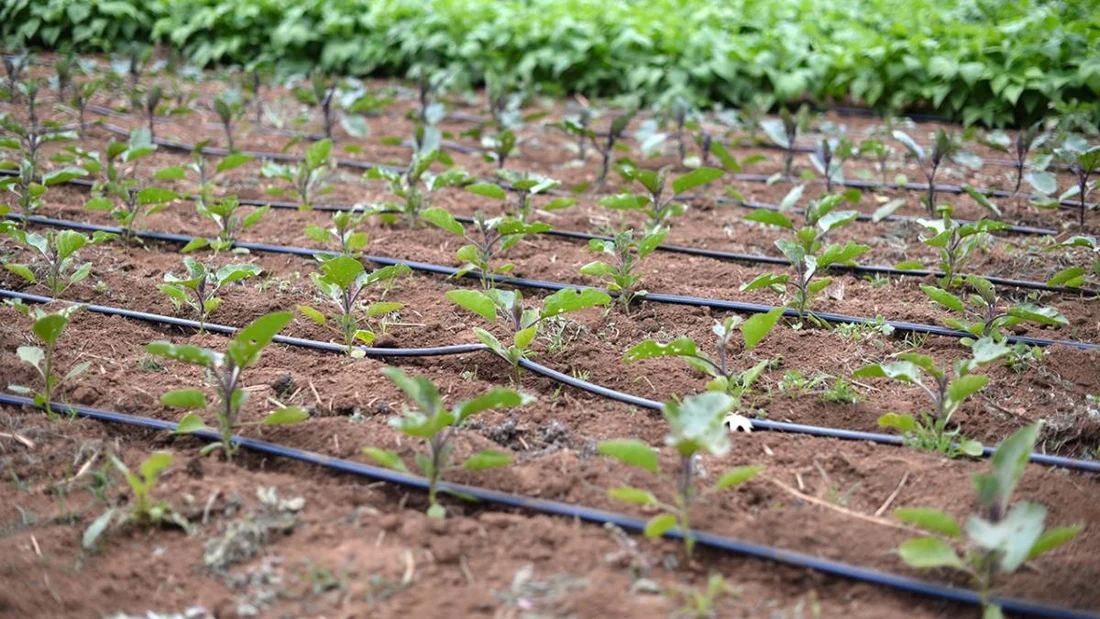
Drip irrigation installation Nigeria
Drip irrigation installation Nigeria
Drip irrigation is one of the most efficient irrigation methods for modern agriculture because it delivers water directly to the root zone of plants in controlled quantities. For farmers in Nigeria, a properly designed drip irrigation system can support dry-season farming, commercial vegetable production, greenhouse farming, orchards, nurseries, plantations, and other agricultural projects where reliable water management is important.
Irrigrow Civil & Engineering Ltd provides professional drip irrigation installation in Nigeria, helping farmers, agribusinesses, commercial farms, agricultural investors, cooperatives, and institutions design and install irrigation systems based on their crops, farm sizes, water sources, terrain, and production requirements.
A complete drip irrigation project involves more than laying drip lines across a farm. The system must be properly designed to ensure adequate water pressure, uniform distribution, appropriate emitter spacing, filtration, pumping capacity, irrigation zoning, and easy maintenance. When these components are correctly selected and installed, drip irrigation can become an important part of an efficient agricultural production system.
What Is Drip Irrigation?
Drip irrigation is a method of applying water slowly and directly around the root zone of crops through emitters installed along irrigation pipes or drip lines.
Instead of distributing water over the entire field like conventional flooding or some sprinkler systems, drip irrigation targets the areas where crops need water most.
A typical drip irrigation system can include:
- Water source
- Borehole or reservoir
- Pump
- Mainline
- Sub-main pipes
- Drip laterals
- Emitters
- Filters
- Pressure regulators
- Valves
- Fertilizer injector
- Control system
- Water storage tank
- Connectors and fittings
The exact configuration depends on the farm size, crop, water source, terrain, and irrigation requirements.
Drip Irrigation Installation Company in Nigeria
Choosing an experienced irrigation company is important when developing a drip irrigation system because poor design can result in uneven water distribution, blocked emitters, excessive pressure, inadequate pressure, leakage, and poor crop performance.
Irrigrow Civil & Engineering provides agricultural irrigation and engineering solutions for farms and agricultural projects across Nigeria.
Our services include:
- Drip irrigation installation
- Sprinkler irrigation
- Greenhouse irrigation
- Farm irrigation design
- Borehole and water systems
- Water storage solutions
- Fertigation systems
- Smart irrigation
- Agricultural engineering
- Farm drainage
- Greenhouse construction
- Agricultural civil engineering
Our approach is to design irrigation infrastructure around the actual requirements of the farm rather than using the same configuration for every agricultural project.
Drip Irrigation System for Farms in Nigeria
Drip irrigation can be used for different types of agricultural production.
Applications include:
- Vegetable farms
- Tomato farms
- Pepper farms
- Cucumber farms
- Onion farms
- Strawberry farms
- Fruit orchards
- Banana plantations
- Citrus farms
- Mango farms
- Nursery farms
- Greenhouse farms
- Commercial horticulture
- Smallholder farms
- Large-scale agricultural projects
The appropriate drip irrigation system depends on the crop’s water requirements, planting arrangement, soil characteristics, and available water.
How Drip Irrigation Works
A typical drip irrigation system works through a series of components.
1. Water Source
Water may come from:
- Borehole
- River
- Lake
- Dam
- Farm pond
- Well
- Reservoir
- Storage tank
The source must provide sufficient water for the irrigation schedule.
2. Pumping System
A pump moves water through the irrigation network.
Pump selection depends on:
- Flow rate
- Pressure
- Total head
- Pipe length
- Elevation
- Number of irrigation zones
3. Filtration
Water passes through filters before entering the drip network.
Filtration is particularly important because small particles can block drip emitters.
4. Mainline
The mainline transports water from the pump or water source toward the agricultural field.
5. Sub-main
Sub-main pipes distribute water to individual irrigation blocks.
6. Drip Laterals
Drip laterals run along crop rows.
7. Emitters
Emitters release water at controlled rates around the crop root zone.
8. Control System
Valves and controllers can regulate different irrigation zones and schedules.
Drip Irrigation Design in Nigeria
A professional drip irrigation installation should begin with a detailed design.
The design should consider:
- Farm size
- Crop type
- Plant spacing
- Row spacing
- Soil type
- Water source
- Water quality
- Water availability
- Farm topography
- Pump capacity
- Required pressure
- Pipe length
- Drip-line specifications
- Emitter flow rate
- Irrigation frequency
The objective is to deliver sufficient water to the crop while maintaining reasonable pressure and distribution uniformity across the irrigation system.
Drip Irrigation for Vegetable Farming
Vegetable farming is one of the major applications for drip irrigation.
Crops that can be grown with drip irrigation include:
- Tomato
- Pepper
- Cucumber
- Lettuce
- Cabbage
- Carrot
- Onion
- Okra
- Watermelon
- Melon
- Garden egg
- Other vegetables
Drip irrigation is particularly useful where crops are planted in defined rows because drip lines can be positioned close to the plants.
For commercial vegetable farms, irrigation can also be combined with fertigation to deliver nutrients through the irrigation network.
Drip Irrigation for Tomato Farming
Tomato production requires effective water management.
A tomato drip irrigation system may include:
Borehole → Pump → Filter → Fertilizer Injector → Mainline → Sub-main → Drip Lines
The drip lines can be positioned along the tomato rows, allowing water to be delivered close to the root zone.
This can help farmers manage irrigation more precisely than manually watering individual plants.
Drip Irrigation for Pepper Farming
Pepper farms can also benefit from drip irrigation.
A properly designed system can deliver controlled amounts of water along crop rows.
Depending on the farm layout, the system can be divided into several irrigation zones to allow efficient management of the available water and pumping capacity.
Drip Irrigation for Cucumber Farming
Cucumber is commonly grown commercially under irrigation.
Drip irrigation can provide a convenient method for supplying water along cucumber rows.
It can be incorporated into:
- Open-field cucumber farms
- Greenhouse cucumber farms
- Protected agriculture
- Commercial horticultural farms
Irrigrow can also integrate irrigation with greenhouse construction where farmers are developing protected cultivation projects.
Drip Irrigation for Onion Farming
Onion farming requires effective water management, particularly during periods of low rainfall.
Drip irrigation can be designed to supply water along onion beds or rows.
The system should be configured around:
- Soil type
- Plant density
- Emitter spacing
- Irrigation frequency
- Water availability
Drip Irrigation for Watermelon Farming
Watermelon farms can also use drip irrigation.
Drip lines can be installed along planting rows, with the system divided into irrigation zones depending on the farm size.
Proper irrigation scheduling is important because excessive water can negatively affect crop development and farm efficiency.
Drip Irrigation for Orchards
Drip irrigation is widely applicable to fruit production.
Potential crops include:
- Mango
- Citrus
- Avocado
- Guava
- Banana
- Pawpaw
- Other fruit crops
For orchards, irrigation lines can be installed around the root zone of individual trees.
As trees grow, the irrigation layout can be adjusted to provide appropriate wetting around the expanding root zone.
Drip Irrigation for Nursery Farms
Nurseries require careful control of water because young plants have relatively small root systems.
Drip irrigation can be used for:
- Fruit-tree nurseries
- Vegetable nurseries
- Forestry nurseries
- Ornamental plants
- Seedling production
The irrigation system can be divided into small zones to provide better control.
Drip Irrigation for Greenhouses in Nigeria
Greenhouse farming requires reliable irrigation because crops are grown in a controlled environment.
Drip irrigation is particularly suitable for many greenhouse crops.
A greenhouse irrigation system may include:
- Water tank
- Pump
- Filter
- Fertilizer injector
- Mainline
- Sub-main
- Drip lines
- Pressure regulators
- Valves
- Automation
Irrigrow provides greenhouse construction and irrigation services, allowing farmers to integrate the greenhouse structure, irrigation system, water supply, and other agricultural infrastructure into one project.
Drip Irrigation and Fertigation
One major advantage of drip irrigation is that it can be integrated with fertigation.
Fertigation is the application of soluble fertilizer through irrigation water.
A fertigation system can include:
- Fertilizer tank
- Venturi injector
- Dosing pump
- Filters
- Valves
- Pressure regulators
- Control system
This can allow nutrients to be delivered close to the crop root zone.
However, fertilizer compatibility, concentration, filtration, and irrigation-system maintenance must be properly managed.
Drip Irrigation and Borehole Systems
Many Nigerian farms use boreholes as irrigation water sources.
A typical agricultural water system may be:
Borehole → Submersible Pump → Storage Tank/Reservoir → Filter → Irrigation Pump → Drip System
The actual arrangement depends on the borehole yield, water storage requirements, pump configuration, farm size, and irrigation schedule.
Before installing a drip system, it is important to establish whether the available water source can meet the farm’s irrigation requirements.
Solar-Powered Drip Irrigation Nigeria
Solar-powered irrigation can be used to operate irrigation pumps in areas where electricity supply is unreliable or unavailable.
A solar drip irrigation system may include:
- Solar panels
- Solar pump
- Pump controller
- Borehole or water source
- Storage tank
- Filtration
- Drip irrigation network
Solar pumping can reduce dependence on diesel or grid electricity, but the solar system must be properly sized according to the required water volume, pumping head, operating hours, and available solar energy.
Drip Irrigation Water Storage
Water storage can be an important part of an agricultural irrigation project.
Storage options include:
- Plastic tanks
- Steel tanks
- Concrete reservoirs
- Farm ponds
- Earth dams
- Lined reservoirs
Storage can allow water to be collected before irrigation and can help separate water production from irrigation demand.
For example, a borehole may operate for several hours to fill a reservoir, after which the irrigation system can distribute the stored water to the farm.
Drip Irrigation Filtration System
Filtration is critical for drip irrigation.
Because drip emitters have relatively small water passages, suspended particles can cause clogging.
Depending on the water source, a system may use:
- Screen filters
- Disc filters
- Sand filters
- Hydrocyclone separators
The appropriate filtration configuration depends on water quality.
Water from rivers, ponds, and surface reservoirs may require more extensive filtration than properly developed groundwater sources.
Drip Irrigation Pressure Regulation
Pressure management helps maintain consistent water distribution.
If pressure is too low, some emitters may not discharge the required amount of water.
If pressure is too high, the system can experience:
- Pipe damage
- Emitter problems
- Excessive flow
- Leakage
Pressure regulators and appropriate hydraulic design can help maintain suitable operating conditions.
Drip Irrigation System Components
A complete drip irrigation project can contain:
Water Source
Borehole, river, pond, dam, well, or reservoir.
Pump
Moves water through the irrigation network.
Filter
Removes particles from the water.
Fertilizer Injector
Allows fertigation where required.
Mainline
Carries water toward the farm.
Sub-main
Distributes water to irrigation blocks.
Laterals
Run along crop rows.
Emitters
Deliver water to plants.
Valves
Control irrigation zones.
Pressure Regulators
Maintain suitable pressure.
End Caps and Flush Valves
Allow irrigation lines to be cleaned.
Drip Irrigation Layout
The layout should be developed based on the actual farm dimensions.
A typical layout may look like:
Water Source
↓
Pump
↓
Filter
↓
Fertigation Unit
↓
Mainline
↓
Sub-main
↓
Valves
↓
Drip Laterals
↓
Crop Root Zone
The physical arrangement depends on the farm’s geometry, slope, crop spacing, and water source location.
Drip Irrigation for 1 Acre Farm
A one-acre farm can be equipped with a drip irrigation system.
The required materials depend on:
- Crop
- Row spacing
- Plant spacing
- Water source
- Field shape
- Irrigation schedule
For example, a one-acre tomato farm may require a different number and arrangement of drip lines from a one-acre orchard.
For this reason, Irrigrow recommends designing the irrigation system around the actual farm rather than using a generic material list.
Drip Irrigation for 5 Acres
A five-acre commercial farm will generally require a larger distribution network.
The project may include:
- Larger water source
- Pumping system
- Mainline
- Several sub-mains
- Multiple irrigation zones
- Filters
- Fertigation
- Drip laterals
- Valves
Zoning allows farmers to irrigate manageable sections instead of attempting to operate the entire field simultaneously.
Drip Irrigation for 10 Acres
A 10-acre farm requires more detailed hydraulic planning.
The irrigation design should consider:
- Total water requirement
- Pump capacity
- Pipe diameter
- Irrigation zones
- Elevation
- Pressure
- Drip-line length
- Filtration capacity
Large farms may also benefit from automation and remote monitoring.
Large-Scale Drip Irrigation
Large agricultural estates require a more comprehensive approach to irrigation.
A commercial drip irrigation project may include:
- Pump station
- Water reservoir
- Filtration station
- Fertigation system
- Mainline
- Sub-main network
- Irrigation blocks
- Automated valves
- Pressure regulators
- Flow meters
- Controllers
The system can be designed so that individual farm sections can be operated independently.
Drip Irrigation Cost in Nigeria
One of the most common questions from farmers is:
How much does drip irrigation installation cost in Nigeria?
There is no universal installation price because every farm has different requirements.
The cost can depend on:
- Farm acreage
- Crop
- Water source
- Pump
- Pipe length
- Pipe diameter
- Drip-line type
- Emitter spacing
- Filtration
- Fertigation
- Water storage
- Automation
- Solar power
- Terrain
- Installation labour
- Transportation
A small farm with an existing water source may require significantly less investment than a large commercial farm that needs a new borehole, reservoir, pump station, filtration system, and extensive pipeline network.
Therefore, a site assessment and project-specific bill of quantities are recommended before making a budget.
Drip Irrigation Cost Per Acre in Nigeria
The cost of drip irrigation per acre varies according to the crop and system configuration.
For example, two one-acre farms may have different costs because:
- Their crops require different plant spacing.
- One already has a water source.
- One requires a new borehole.
- One needs solar pumping.
- One requires a storage reservoir.
- One requires automation.
- Their farms have different terrain.
A professional irrigation company should therefore calculate the required materials and equipment based on the actual farm layout.
Factors Affecting Drip Irrigation Cost
Farm Size
More acreage generally requires more pipes, drip lines, fittings, and irrigation infrastructure.
Water Source
A farm with an existing reliable water source may have lower initial infrastructure requirements.
Pump
Pump size affects the overall project cost.
Drip Line
Different drip-line specifications and emitter spacing affect material requirements.
Filtration
Water quality determines the filtration equipment required.
Fertigation
Adding fertilizer injection increases system complexity.
Automation
Automated irrigation can increase initial investment but provide greater operational control.
Storage
Reservoirs and tanks add to project costs but can provide valuable water storage.
Terrain
Sloping land may require additional pressure-management infrastructure.
Drip Irrigation Installation Process
A professional drip irrigation project should follow a structured process.
Step 1: Farm Assessment
The irrigation team assesses:
- Farm dimensions
- Crop
- Water source
- Terrain
- Soil
- Existing infrastructure
Step 2: Water Assessment
The available water source is evaluated.
For a borehole, its yield and suitability should be considered.
Step 3: Farm Mapping
The farm is mapped to determine:
- Mainline route
- Sub-main routes
- Irrigation zones
- Drip-line placement
Step 4: Hydraulic Design
The irrigation system is designed based on:
- Flow
- Pressure
- Pipe sizes
- Pump capacity
- Drip-line requirements
Step 5: Bill of Quantities
Materials and equipment are calculated.
This can include:
- Pipes
- Drip lines
- Pumps
- Filters
- Valves
- Fittings
- Tanks
- Fertigation equipment
Step 6: Installation
The system is installed according to the approved design.
Step 7: Testing
The system is tested for:
- Pressure
- Flow
- Leakage
- Emitter performance
- Filter operation
Step 8: Commissioning
The completed irrigation system is commissioned.
Step 9: Farmer Training
Farm operators can be trained on:
- Pump operation
- Filter cleaning
- Flushing drip lines
- Irrigation scheduling
- Fertigation
- Maintenance
- Troubleshooting
Drip Irrigation Maintenance in Nigeria
Proper maintenance is essential for maintaining the performance of a drip irrigation system.
Regular maintenance should include:
- Cleaning filters
- Flushing drip lines
- Inspecting emitters
- Checking pressure
- Inspecting pipes
- Checking valves
- Inspecting pump performance
- Checking fertilizer injectors
- Repairing leaks
- Cleaning tanks and reservoirs
Common Drip Irrigation Problems
Clogged Emitters
Emitter blockage is one of the most common problems.
Possible causes include:
- Poor filtration
- Dirty water
- Algae
- Mineral deposits
- Fertilizer precipitation
Uneven Water Distribution
Possible causes include:
- Pressure differences
- Incorrect pipe sizing
- Long laterals
- Blocked emitters
- Poor system design
Pipe Leakage
Leaks can result from damaged pipes, fittings, animals, machinery, or installation problems.
Excessive Pressure
High pressure can damage components.
Insufficient Pressure
Low pressure can cause inadequate emitter flow.
Regular inspection and proper system design can reduce these problems.
Drip Irrigation vs Sprinkler Irrigation
Both systems have their applications.
| Feature | Drip Irrigation | Sprinkler Irrigation |
|---|---|---|
| Water delivery | Root zone | Overhead |
| Water control | Highly localized | Wider field coverage |
| Foliage wetting | Minimal | Common |
| Vegetable farming | Highly suitable | Suitable |
| Orchards | Highly suitable | Suitable |
| Greenhouses | Highly suitable | Application dependent |
| Fertigation | Highly suitable | Possible |
| Wind sensitivity | Low | Higher |
| Root-zone application | Yes | Less direct |
| Automation | Possible | Possible |
The best system depends on the farm and crop.
Why Choose Irrigrow Civil & Engineering?
Irrigrow Civil & Engineering provides integrated agricultural infrastructure solutions rather than treating irrigation as an isolated installation.
Our services can include:
- Drip irrigation installation
- Sprinkler irrigation installation
- Farm irrigation design
- Greenhouse construction
- Greenhouse irrigation
- Borehole systems
- Water storage
- Fertigation
- Smart irrigation
- Farm drainage
- Agricultural civil engineering
- Farm infrastructure
This integrated approach is useful when an agricultural project requires multiple components.
For example, a commercial farm may need:
Borehole + Reservoir + Solar Pump + Drip Irrigation + Greenhouse + Drainage + Farm Road
Instead of managing each component separately, farmers can coordinate their agricultural infrastructure through an experienced engineering company.
Agricultural Irrigation Projects Across Nigeria
Irrigrow provides agricultural engineering and irrigation solutions for farms and projects across Nigeria.
Drip irrigation can be designed for farms in:
- Lagos
- Ibadan
- Abuja
- Ogun State
- Oyo State
- Osun State
- Ondo State
- Ekiti State
- Kwara State
- Kaduna State
- Kano State
- Katsina State
- Plateau State
- Benue State
- Rivers State
- Delta State
- Edo State
- Other locations across Nigeria
The system should always be adapted to local soil, water availability, climate, crop, and farm conditions.
Drip Irrigation for Commercial Agriculture
Commercial agriculture requires reliable infrastructure.
A properly designed irrigation system can form part of a larger farm-development strategy that includes:
- Land preparation
- Water supply
- Irrigation
- Drainage
- Farm roads
- Greenhouses
- Crop production
- Storage
- Processing
- Power supply
Irrigrow’s agricultural engineering services can help integrate irrigation with other farm infrastructure.
Modern Drip Irrigation Systems
Modern irrigation technology allows farmers to move beyond manual watering.
A modern drip system can incorporate:
- Automatic valves
- Irrigation controllers
- Flow meters
- Pressure sensors
- Soil-moisture sensors
- Fertigation
- Solar pumping
- Remote monitoring
The appropriate technology depends on the farm’s scale and budget.
Small farms may require a relatively simple manually controlled system, while commercial agricultural estates may benefit from automated irrigation management.
Smart Drip Irrigation in Nigeria
Smart irrigation uses sensors, controllers, and monitoring systems to improve irrigation management.
Possible technologies include:
- Soil moisture sensors
- Flow meters
- Pressure sensors
- Automatic valves
- Programmable controllers
- Remote monitoring
Smart irrigation can help farmers understand how much water is being delivered and identify problems such as leaks, pressure loss, or abnormal flow.
Benefits of Professional Drip Irrigation Installation
A professionally designed and installed system can provide:
- Better water control
- More uniform irrigation
- Reduced manual watering
- Improved farm management
- Easier fertigation
- Better irrigation scheduling
- Reduced water loss from unnecessary surface application
- Easier expansion
- Improved operational efficiency
However, the benefits depend heavily on correct system design and proper maintenance.
What to Provide When Requesting a Drip Irrigation Quote
Farmers seeking a quotation should provide as much information as possible.
Important information includes:
1. Farm Location
Provide the state, town, and general farm location.
2. Farm Size
For example:
- 1 acre
- 5 acres
- 10 acres
- 20 acres
- 50 acres
3. Crop
Identify the crop or crops.
4. Water Source
Indicate whether you have:
- Borehole
- River
- Pond
- Dam
- Well
- Reservoir
5. Existing Pump
Provide pump specifications if one already exists.
6. Electricity
Indicate whether grid electricity, generator, or solar power is available.
7. Farm Layout
A simple farm drawing, survey, satellite image, or dimensions can help with initial planning.
Get a Drip Irrigation System Designed for Your Farm
Every farm is different.
A professional irrigation system should therefore be designed according to:
- Crop water requirements
- Farm dimensions
- Soil characteristics
- Water source
- Pumping capacity
- Pressure
- Terrain
- Plant spacing
- Irrigation schedule
Rather than purchasing random irrigation components and attempting to connect them together, farmers should work with an irrigation professional who can calculate the system requirements.
Frequently Asked Questions
How much does drip irrigation cost in Nigeria?
The cost varies according to farm size, crop, water source, pump, filtration, drip-line specifications, storage, fertigation, automation, and installation requirements. A project-specific quotation is recommended.
Is drip irrigation good for farming in Nigeria?
Yes. Drip irrigation can be used for vegetables, orchards, greenhouse crops, nurseries, plantations, and many other agricultural applications.
Can drip irrigation work with a borehole?
Yes, provided the borehole provides sufficient water and the water quality is suitable for irrigation.
Can solar power operate a drip irrigation system?
Yes. Solar pumping can be integrated with drip irrigation systems.
Can drip irrigation be used for a one-acre farm?
Yes. A system can be designed specifically for a one-acre farm based on the crop and water source.
Can you install drip irrigation on a 10-acre farm?
Yes. Larger farms can be divided into multiple irrigation zones to manage flow and pressure.
Can drip irrigation be used in a greenhouse?
Yes. Drip irrigation is widely applicable to greenhouse crops and can be combined with fertigation and automation.
What type of pump is needed for drip irrigation?
The pump depends on the required flow rate, pressure, total head, pipe network, and number of irrigation zones. Pump selection should be based on hydraulic calculations rather than simply choosing a pump based on horsepower.
Do I need a filter for drip irrigation?
In most systems, proper filtration is highly important because particles can clog drip emitters.
Can fertilizer be applied through drip irrigation?
Yes. With appropriate fertigation equipment, soluble fertilizers can be introduced into the irrigation system.
How often should drip irrigation be maintained?
Filters, emitters, pipes, and other components should be inspected regularly. Drip lines should also be flushed according to water quality and system requirements.
Does Irrigrow install drip irrigation systems?
Yes. Irrigrow Civil & Engineering Ltd provides drip irrigation design and installation services in Nigeria, alongside sprinkler irrigation, greenhouse irrigation, borehole systems, water infrastructure, and agricultural engineering solutions.
Start Your Drip Irrigation Project in Nigeria
A reliable irrigation system can make a major difference to agricultural production, particularly for farmers seeking to cultivate crops beyond the traditional rainfall season. Drip irrigation installation in Nigeria can provide controlled water delivery to crop root zones while supporting efficient farm management.
At Irrigrow Civil & Engineering Ltd, we help farmers and agricultural investors develop irrigation solutions based on their actual farm requirements. From water-source assessment and pump selection to filtration, mainlines, sub-mains, drip laterals, fertigation, irrigation zoning, installation, testing, and commissioning, our team can support your agricultural irrigation project from planning through implementation.
Whether you are developing a small vegetable farm, commercial tomato farm, greenhouse, orchard, nursery, 5-acre farm, 10-acre farm, or large-scale agricultural estate, Irrigrow can help you plan an appropriate drip irrigation system.
Drip irrigation installation Nigeria | Drip irrigation installation Nigeria | Drip irrigation installation Nigeria
Contact Irrigrow Civil & Engineering Ltd today to request a drip irrigation assessment, system design, bill of quantities, and installation quotation for your farm anywhere in Nigeria.
