
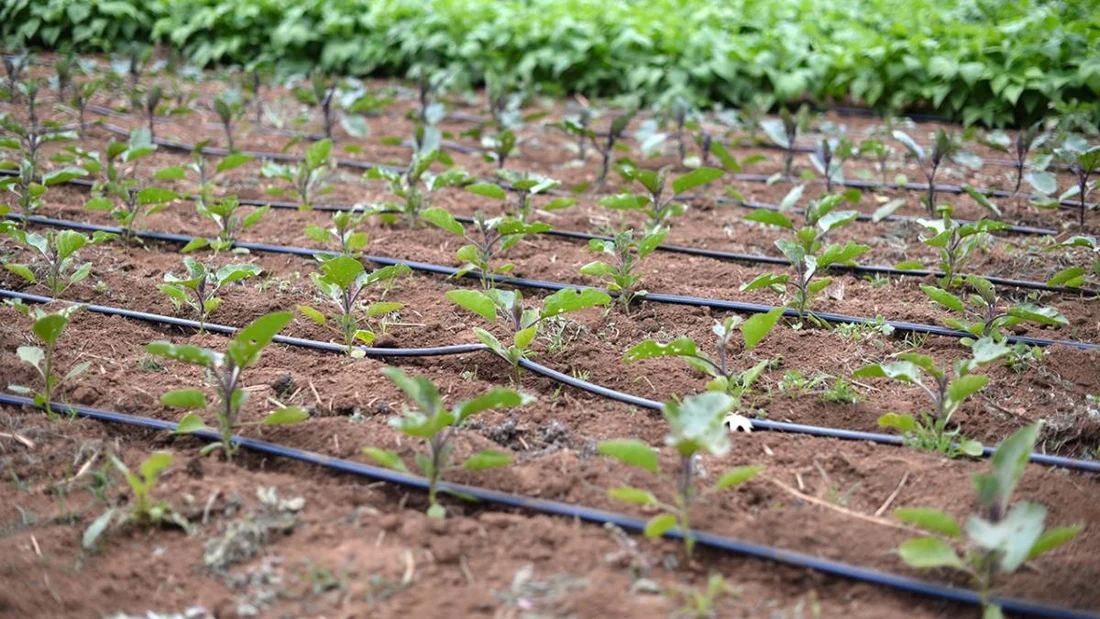
Farm borehole and irrigation installation Nigeria
Farm borehole and irrigation installation Nigeria
Reliable access to water is one of the most important requirements for successful agricultural production in Nigeria. While rainfall provides a natural source of water for many farms, seasonal rainfall patterns can make it difficult for farmers to maintain consistent production throughout the year. A properly designed farm borehole and irrigation system can provide a dependable water source and distribute water efficiently across cultivated areas.
Irrigrow Civil & Engineering provides farm borehole and irrigation installation services in Nigeria for farmers, commercial agricultural businesses, greenhouse operators, horticultural farms, agricultural investors, estates, institutions, and other clients requiring reliable agricultural water infrastructure.
Our services combine water-source development with irrigation engineering to create practical farm water systems. Depending on the site and agricultural requirements, a complete project can include borehole development, pumping equipment, water storage, filtration, pipelines, irrigation distribution networks, drip irrigation, sprinkler systems, valves, control equipment, and installation.
Whether you are developing a small irrigated farm or planning a large commercial agricultural project, Irrigrow Civil & Engineering can help you plan and implement the water infrastructure required for efficient farm operations.
Farm Borehole Installation in Nigeria
A farm borehole provides access to underground water that can be used for irrigation and other agricultural purposes. However, installing a borehole for agriculture requires more than drilling a hole into the ground. The borehole should be planned according to the expected water demand, geological conditions, pumping requirements, storage capacity, and irrigation system.
Irrigrow Civil & Engineering can support agricultural borehole projects from initial planning through installation and connection to the farm’s water distribution infrastructure.
A typical agricultural borehole project may involve:
- Site assessment
- Borehole siting
- Hydrogeological investigation
- Borehole drilling
- Casing installation
- Well development
- Pump testing
- Water yield assessment
- Submersible pump installation
- Borehole headworks
- Water storage connection
- Pipeline installation
- Irrigation system connection
The exact borehole depth, diameter, pump capacity, and expected yield depend on the geological and hydrological characteristics of the project location.
Borehole and Irrigation Engineering for Farms
A borehole and irrigation system should be considered as one integrated water infrastructure project rather than two completely separate installations.
A borehole may successfully produce water but still fail to meet the farm’s requirements if the pump is incorrectly sized, the storage capacity is inadequate, or the irrigation network is poorly designed.
For this reason, Irrigrow Civil & Engineering considers the complete water cycle:
Water source → Borehole → Pump → Storage → Filtration → Mainline → Distribution network → Irrigation zones → Crops
This approach helps ensure that the different components work together as part of a coordinated agricultural water system.
Agricultural Borehole Drilling
Borehole drilling involves creating a well that reaches a suitable groundwater-bearing formation. The drilling method and depth depend on geological conditions at the project location.
Before drilling, appropriate site investigation is important to improve the likelihood of developing a productive water source.
The borehole development process may include:
- Site assessment
- Hydrogeological investigation
- Borehole positioning
- Drilling
- Installation of casing and screen
- Gravel packing where required
- Well development
- Pump testing
- Water quality assessment
- Pump installation
- Connection to the farm water system
Agricultural boreholes should be designed around the actual water demand rather than simply selecting a borehole size based on assumptions.
Farm Water Demand Assessment
One of the first considerations when designing a farm irrigation system is determining how much water the farm requires.
Water demand can depend on:
- Farm size
- Crop type
- Crop growth stage
- Plant population
- Climate
- Soil type
- Irrigation method
- Irrigation frequency
- Evapotranspiration
- Irrigation efficiency
- Number of irrigation zones
- Seasonal conditions
A vegetable farm, orchard, greenhouse, and large-scale field crop operation may have significantly different water requirements.
Irrigrow Civil & Engineering can assess the intended agricultural operation and use the expected demand as part of irrigation infrastructure planning.
Borehole Pump Installation for Agriculture
The pump is one of the most important components of a farm borehole system. An incorrectly selected pump may result in inadequate water delivery, excessive energy consumption, unstable pressure, or premature equipment failure.
Submersible pumps are commonly used for borehole water abstraction because they can operate below the water level and push water to the surface.
Pump selection should consider factors such as:
- Borehole depth
- Static water level
- Dynamic water level
- Borehole yield
- Required flow rate
- Total dynamic head
- Storage tank elevation
- Pipeline length
- Irrigation pressure requirements
- Power availability
Irrigrow Civil & Engineering can help integrate the borehole pump with the farm’s storage and irrigation infrastructure.
Solar-Powered Farm Borehole Systems
Solar energy can be an attractive option for agricultural water pumping, particularly in locations where grid electricity is unreliable or where farmers want to reduce dependence on fuel-powered generators.
A solar-powered farm borehole system can include:
- Borehole
- Submersible pump
- Solar panels
- Solar mounting structure
- Pump controller
- Electrical protection
- Water storage tank
- Pipeline
- Irrigation distribution network
The solar system should be designed according to the pump power requirement, daily water demand, solar resource, pumping schedule, and storage strategy.
In many agricultural applications, water can be pumped into a storage tank during periods of available solar energy and subsequently distributed to irrigation zones according to the farm’s irrigation schedule.
Diesel and Electric Borehole Pumping Systems
Where solar power is not suitable as the primary energy source, agricultural boreholes may be powered by electricity or diesel generators.
The appropriate power source depends on:
- Availability of electricity
- Farm location
- Required pumping capacity
- Operating hours
- Energy costs
- Existing infrastructure
- Budget
- Long-term operating requirements
Irrigrow Civil & Engineering can help clients evaluate the appropriate pumping arrangement for their agricultural water system.
Farm Irrigation Installation in Nigeria
Irrigation allows farmers to supply water to crops when rainfall is insufficient. Properly installed irrigation infrastructure can support dry-season farming and improve production planning.
Irrigrow Civil & Engineering provides farm irrigation installation based on the crop, farm layout, available water source, terrain, soil conditions, and irrigation requirements.
Our irrigation solutions can include:
- Drip irrigation
- Sprinkler irrigation
- Micro-irrigation
- Water distribution pipelines
- Irrigation manifolds
- Filtration systems
- Pressure regulation
- Valves
- Storage tanks
- Pumping systems
- Irrigation control systems
Drip Irrigation Installation for Farms
Drip irrigation delivers water directly or close to the root zone of crops through emitters installed along drip lines. It is commonly used for vegetables, fruits, horticultural crops, greenhouse production, and other agricultural applications.
A properly designed drip irrigation system can help farmers manage water application according to crop requirements.
A typical installation may consist of:
Borehole or water source
The system begins with a reliable source of irrigation water.
Pump
The pump moves water from the source to the storage or irrigation network.
Filtration
Filters help remove particles that could clog emitters and other irrigation components.
Fertilizer injection
Where fertigation is required, a suitable fertilizer injection system can be integrated into the irrigation network.
Mainline
The mainline carries water from the source or storage facility toward the irrigation areas.
Sub-mainlines
Sub-mainlines distribute water to different irrigation blocks.
Laterals or drip lines
Drip lines distribute water along crop rows.
Emitters
Emitters release controlled quantities of water near the plants.
This system can be divided into irrigation zones to make water management easier, especially on larger farms.
Sprinkler Irrigation Installation
Sprinkler irrigation distributes water through pressurized sprinklers that simulate rainfall. It can be useful for particular crops, nursery operations, lawns, pasture, and agricultural applications where overhead irrigation is appropriate.
The system can include:
- Pumping equipment
- Mainline pipes
- Sub-mainlines
- Sprinkler risers
- Sprinkler heads
- Control valves
- Filters
- Pressure regulators
- Water storage
Sprinkler spacing and system pressure should be determined through proper irrigation design to achieve suitable water distribution.
Greenhouse Borehole and Irrigation Systems
Greenhouse farming requires reliable and controllable water supply because crops are grown within a managed environment.
Irrigrow Civil & Engineering can provide borehole and irrigation infrastructure for greenhouse developments, including water supply, storage, filtration, pumping, drip irrigation, fertigation support, and distribution networks.
A greenhouse water system can be designed to provide water to individual greenhouse units or multiple production blocks.
For larger greenhouse projects, irrigation can be divided into zones to allow different crops or production areas to receive appropriate irrigation schedules.
Irrigation for Vegetable Farms
Vegetable production often requires consistent water management, particularly during dry periods.
Crops such as tomato, pepper, cucumber, lettuce, cabbage, watermelon, onion, and other vegetables can benefit from properly managed irrigation.
Irrigrow Civil & Engineering can design irrigation infrastructure based on the farm’s crop layout and water requirements.
For vegetable farms, the system may include:
- Borehole
- Pump
- Storage tank
- Filtration
- Fertigation equipment
- Mainline
- Sub-mainlines
- Drip lines
- Control valves
- Irrigation zones
Irrigation for Orchards and Fruit Farms
Orchards require irrigation systems capable of delivering water efficiently to trees distributed across larger areas.
Depending on the crop and orchard layout, irrigation may use drip lines, micro-sprinklers, or other suitable methods.
The system can be designed around:
- Tree spacing
- Root zone requirements
- Orchard size
- Water availability
- Terrain
- Pump capacity
- Irrigation frequency
Good irrigation planning helps ensure that water is distributed consistently throughout the production area.
Farm Water Storage Systems
Water storage can improve the reliability of agricultural irrigation systems by providing a buffer between water production and irrigation demand.
Storage options may include:
- Poly tanks
- Steel tanks
- Concrete reservoirs
- Elevated tanks
- Ground-level storage
- Agricultural water reservoirs
The appropriate storage solution depends on the farm’s water demand, available land, pump capacity, irrigation schedule, and budget.
For solar-powered systems, storage can be particularly useful because water can be pumped during daylight hours and distributed according to irrigation requirements.
Irrigation Filtration Systems
Filtration is an important component of many irrigation systems, particularly drip irrigation.
Particles in irrigation water can block emitters and reduce system performance. Appropriate filtration helps protect irrigation components and improve system reliability.
The filtration arrangement depends on the water source and water quality.
Potential filtration components include:
- Screen filters
- Disc filters
- Sand media filters
- Sediment filtration
- Flush systems
The filter should be selected according to the water characteristics and irrigation system requirements.
Fertigation Systems
Fertigation involves applying fertilizers through an irrigation system. When properly designed and managed, fertigation can allow farmers to deliver nutrients alongside irrigation water.
Irrigrow Civil & Engineering can incorporate suitable fertilizer injection arrangements into irrigation infrastructure where required.
A fertigation system may include:
- Fertilizer tank
- Injector
- Mixing equipment
- Filters
- Valves
- Irrigation control system
- Distribution network
Fertigation should be managed according to crop requirements and appropriate agricultural recommendations.
Farm Irrigation System Design
Installing pipes and pumps without proper hydraulic design can result in pressure losses, uneven water distribution, excessive energy consumption, and poor irrigation performance.
Irrigrow Civil & Engineering approaches irrigation projects through engineering design before installation.
Design considerations can include:
- Farm dimensions
- Crop spacing
- Water demand
- Source yield
- Pump capacity
- Pipe diameter
- Pipe length
- Elevation changes
- Friction losses
- Required operating pressure
- Irrigation zone size
- Filtration requirements
- Storage requirements
The objective is to create a system capable of delivering water efficiently to the intended irrigation areas.
Farm Irrigation for Dry-Season Agriculture
Dry-season farming is an important agricultural activity in Nigeria, but it depends heavily on reliable water availability.
A properly developed borehole and irrigation system can allow farmers to continue production beyond the main rainy season, depending on crop suitability, water availability, and other agricultural conditions.
Irrigrow Civil & Engineering can support farmers planning dry-season irrigation systems by integrating water sourcing, pumping, storage, and irrigation distribution.
Borehole Water Quality for Agricultural Use
Water quantity is not the only consideration when developing a farm borehole. Water quality can also affect irrigation equipment, soil conditions, and crop production.
Depending on the intended agricultural application, water may be assessed for relevant characteristics such as:
- pH
- Electrical conductivity
- Salinity
- Suspended solids
- Hardness
- Iron
- Other relevant parameters
Water testing can help identify potential problems before the irrigation system is installed.
Where water quality presents a concern, suitable treatment or filtration options may need to be considered.
Farm Borehole Rehabilitation
Existing agricultural boreholes can sometimes experience reduced performance due to declining yield, pump problems, blockage, sedimentation, or other issues.
Irrigrow Civil & Engineering can assess existing agricultural water systems and help identify possible rehabilitation requirements.
Depending on the condition of the system, rehabilitation may involve:
- Borehole assessment
- Pump inspection
- Pump replacement
- Well development
- Cleaning
- Pipeline replacement
- Electrical repairs
- Irrigation system rehabilitation
A technical assessment should be carried out before deciding on the appropriate rehabilitation method.
Borehole and Irrigation Installation for Large Farms
Large agricultural projects require more detailed infrastructure planning because water demand can be substantial.
A large farm may require multiple boreholes, multiple pumping stations, storage reservoirs, several irrigation zones, extensive pipeline networks, and automated control systems.
Irrigrow Civil & Engineering can support large agricultural water infrastructure projects through phased planning and implementation.
The project may involve:
- Farm site assessment
- Water demand assessment
- Borehole planning
- Water source development
- Pump selection
- Storage design
- Hydraulic irrigation design
- Pipeline network design
- Irrigation zoning
- Installation
- Testing
- Commissioning
How Much Does Farm Borehole and Irrigation Installation Cost in Nigeria?
The cost of a farm borehole and irrigation installation project varies considerably depending on the project requirements.
Factors that can affect the total cost include:
- Borehole depth
- Geological conditions
- Borehole diameter
- Drilling requirements
- Pump capacity
- Water yield
- Farm size
- Irrigation method
- Pipe length
- Pipe diameter
- Number of irrigation zones
- Storage capacity
- Filtration requirements
- Solar or electrical power requirements
- Terrain
- Site accessibility
- Labour
- Equipment
- Crop type
- Level of automation
For this reason, a reliable project price should be based on the actual farm requirements rather than a generic price per acre.
Irrigrow Civil & Engineering can assess the project scope and prepare an appropriate technical and commercial proposal.
Our Farm Borehole and Irrigation Installation Process
A structured process helps ensure that the water infrastructure meets the agricultural objective.
1. Initial Consultation
We discuss the farm location, size, crop type, irrigation requirements, water source, existing infrastructure, and project objectives.
2. Site Assessment
The site is assessed to understand access, terrain, existing water infrastructure, and other relevant conditions.
3. Water Source Investigation
Potential groundwater sources and available water resources are evaluated according to the requirements of the project.
4. Water Demand Assessment
The expected irrigation demand is determined based on farm size, crop requirements, irrigation method, and operating conditions.
5. System Design
The borehole, pump, storage, pipelines, filtration, and irrigation network are coordinated into an appropriate system design.
6. Installation
The approved borehole and irrigation infrastructure is installed according to the project scope.
7. Testing and Commissioning
The system is tested to verify pumping, water distribution, pressure, flow, and irrigation operation.
8. Handover
The completed system is handed over to the client with relevant operational guidance.
Why Choose Irrigrow Civil & Engineering?
Choosing the right company for farm water infrastructure is important because irrigation systems involve significant capital investment and directly affect agricultural operations.
Irrigrow Civil & Engineering combines civil engineering, water infrastructure, irrigation, and agricultural project experience to deliver practical solutions.
Integrated Engineering Services
We can coordinate borehole, pumping, water storage, irrigation, drainage, and other agricultural infrastructure requirements.
Project-Specific Design
We do not assume that every farm requires the same system. Design considerations are based on the specific project requirements.
Agricultural Focus
Our systems are designed with agricultural operations in mind, including crop requirements, farm layout, water demand, and future expansion.
Scalable Infrastructure
Where appropriate, systems can be designed to accommodate phased farm development and future expansion.
Professional Project Planning
We help clients understand the technical requirements and scope before major construction and installation activities begin.
Frequently Asked Questions
How deep should a farm borehole be in Nigeria?
There is no single borehole depth suitable for every location in Nigeria. Groundwater depth and availability vary according to local geological and hydrogeological conditions. Proper investigation should be conducted before drilling.
Can one borehole supply an entire farm?
It depends on the borehole yield and the farm’s water demand. A small farm may be adequately supplied by one borehole, while a large agricultural development may require multiple water sources or storage and pumping infrastructure.
Which irrigation system is best for a farm?
There is no universal irrigation system that is best for every farm. Drip irrigation, sprinkler irrigation, micro-irrigation, or other systems may be appropriate depending on crop type, soil, terrain, water availability, farm layout, and budget.
Can a borehole be powered by solar energy?
Yes. Solar-powered borehole pumping can be used for agricultural water supply where the system is properly designed around the pump requirements, water demand, solar resource, and storage strategy.
Do I need a water storage tank for farm irrigation?
Storage is not necessarily required in every system, but it can provide operational advantages. Storage can act as a buffer between water abstraction and irrigation demand and can be particularly useful in solar-powered agricultural systems.
Can you install irrigation on an existing borehole?
Yes, provided the existing borehole produces sufficient water and is technically suitable for the intended irrigation application. The borehole yield, pump, water quality, and existing infrastructure should be assessed before connecting a new irrigation system.
Can irrigation systems be used for greenhouse farming?
Yes. Drip and other controlled irrigation systems are widely applicable to greenhouse production. The system can be designed according to greenhouse layout, crop requirements, water demand, filtration, and fertigation needs.
How often should a farm irrigation system be maintained?
Maintenance frequency depends on the system design, water quality, operating hours, and environmental conditions. Filters, pumps, valves, pipelines, emitters, and other components should be inspected regularly to maintain system performance.
Start Your Farm Borehole and Irrigation Project
Reliable water infrastructure can make a significant difference to agricultural operations in Nigeria. A properly planned borehole provides a potential source of groundwater, while an engineered irrigation system distributes water to crops according to the requirements of the farm.
Irrigrow Civil & Engineering provides farm borehole and irrigation installation in Nigeria, supporting agricultural investors, commercial farmers, greenhouse operators, horticultural businesses, and other agricultural projects.
From borehole planning and water-source development to pump installation, water storage, drip irrigation, sprinkler systems, filtration, pipelines, and irrigation commissioning, we can help develop an integrated farm water infrastructure solution.
Farm borehole and irrigation installation Nigeria | Farm borehole and irrigation installation Nigeria| Farm borehole and irrigation installation Nigeria | Farm borehole and irrigation installation Nigeria | Farm borehole and irrigation installation Nigeria
If you are planning a new agricultural project, expanding an existing farm, developing dry-season farming operations, installing greenhouse irrigation, or upgrading an existing farm water system, contact Irrigrow Civil & Engineering for a project assessment and professional engineering proposal.
