
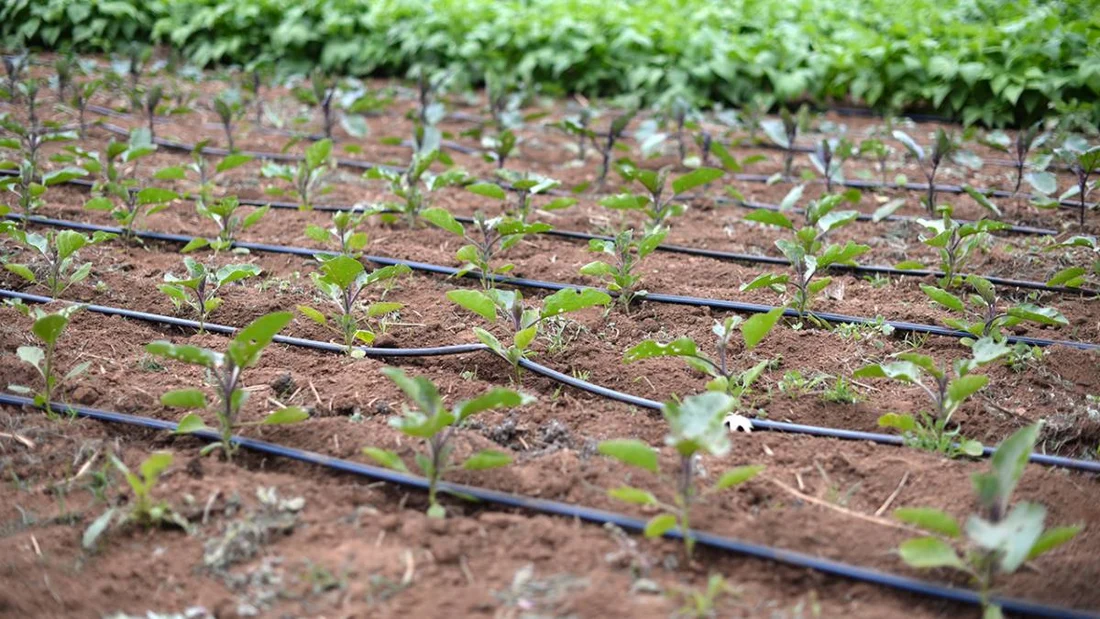
Farm irrigation company Abuja
Farm irrigation company Abuja
Reliable water supply is one of the most important requirements for successful commercial agriculture in Abuja and other parts of Nigeria. Although rainfall supports agricultural production during the wet season, farmers who want to produce crops consistently throughout the year often need a dependable irrigation system. A professionally designed irrigation system can provide controlled water delivery, support dry-season farming, improve farm management, and help commercial farmers make better use of their agricultural land.
Irrigrow Civil & Engineering Ltd is a farm irrigation company in Abuja providing irrigation design, installation, water management, pumping systems, greenhouse irrigation, drip irrigation, sprinkler irrigation, fertigation, and agricultural engineering solutions. We work with farmers, agribusinesses, agricultural investors, greenhouse operators, institutions, and commercial farms to develop irrigation systems based on their specific farm requirements.
Farm irrigation is not simply about installing pipes and connecting a pump. A properly engineered system requires consideration of the water source, farm size, crop type, soil, terrain, pumping requirements, pipe network, irrigation method, pressure, filtration, water storage, and irrigation schedule. Irrigrow approaches each project as an engineering project so that the irrigation infrastructure is designed around the actual agricultural operation.
Farm Irrigation Services in Abuja
Irrigrow provides agricultural irrigation solutions for farms and agricultural projects in Abuja and surrounding areas.
Our services include:
- Farm irrigation design
- Drip irrigation installation
- Sprinkler irrigation installation
- Greenhouse irrigation
- Irrigation pumping systems
- Borehole irrigation systems
- Solar-powered irrigation
- Water storage systems
- Irrigation filtration
- Fertigation systems
- Irrigation automation
- Irrigation maintenance
- Farm drainage
- Agricultural water infrastructure
- Agricultural civil engineering
Whether you are developing a small vegetable farm or a large commercial agricultural estate, the irrigation system should be appropriately sized for the farm’s water requirements and production objectives.
Irrigation Company for Farms in Abuja
Abuja has a growing agricultural and agribusiness ecosystem, with farming activities taking place within the Federal Capital Territory and surrounding communities. Commercial farmers require reliable infrastructure to support crop production, especially when rainfall is insufficient.
Irrigation can support production of crops such as:
- Tomato
- Pepper
- Cucumber
- Onion
- Watermelon
- Maize
- Vegetables
- Lettuce
- Cabbage
- Carrot
- Fruit crops
- Nursery plants
- Other commercial crops
The appropriate irrigation technology depends on the crop and farm layout. Drip irrigation may be appropriate for vegetables and orchards, while sprinkler systems can be suitable for certain field crops, nurseries, pasture, and other applications.
Farm Irrigation Design Abuja
Professional irrigation design is the foundation of a reliable irrigation system.
Before installation, Irrigrow can assess factors such as:
- Farm acreage
- Crop type
- Plant spacing
- Row spacing
- Soil characteristics
- Water source
- Water availability
- Terrain
- Farm elevation
- Pumping requirements
- Pipe distances
- Irrigation zones
- Power availability
The design process helps determine the appropriate pump, pipe sizes, irrigation equipment, filtration system, valves, and other components.
A farm should not be fitted with an irrigation system simply because a particular pump or drip line is available. The equipment should be selected based on hydraulic and agricultural requirements.
Drip Irrigation Installation Abuja
Drip irrigation is one of the most useful irrigation methods for many commercial farms.
The system delivers water through emitters positioned along drip lines. Water is applied close to the crop root zone rather than distributed indiscriminately across the entire field.
A typical drip irrigation system may consist of:
- Water source
- Pump
- Filter
- Fertigation unit
- Mainline
- Sub-main
- Valves
- Drip laterals
- Emitters
- Pressure regulators
- Flush points
Drip irrigation can be used for vegetable farms, orchards, greenhouses, nurseries, and other agricultural applications.
Drip Irrigation for Vegetable Farms
Vegetable production is particularly suitable for drip irrigation because crops are often planted in rows.
Irrigrow can design drip irrigation systems for crops such as:
- Tomato
- Pepper
- Cucumber
- Onion
- Lettuce
- Cabbage
- Carrot
- Okra
- Watermelon
- Garden egg
The drip lines can be positioned according to the crop’s row spacing and planting arrangement.
The system can also be divided into irrigation zones, allowing farmers to irrigate different sections of the farm according to available water and pumping capacity.
Sprinkler Irrigation Installation Abuja
Sprinkler irrigation distributes water through sprinkler heads over a defined area.
It may be suitable for:
- Vegetables
- Maize
- Pasture
- Nurseries
- Lawns
- Some fruit crops
- Commercial agricultural fields
Sprinkler systems require appropriate hydraulic design because the pressure and flow available at the sprinkler heads influence their performance.
A professional design considers sprinkler spacing, nozzle size, operating pressure, flow rate, pipe diameter, and irrigation coverage.
Greenhouse Irrigation Abuja
Greenhouse farming requires controlled water application because crops are grown in a protected environment.
Irrigrow can design and install irrigation systems for greenhouse projects in Abuja.
A greenhouse irrigation system may include:
- Water tank
- Pump
- Filter
- Fertigation equipment
- Mainline
- Sub-main
- Drip lines
- Valves
- Pressure regulators
- Irrigation controllers
For commercial greenhouse farms, irrigation can be combined with fertigation and automation.
Greenhouse Construction and Irrigation
Farmers developing a new greenhouse should consider irrigation at the same time as greenhouse construction.
The greenhouse structure, irrigation system, water storage, drainage, ventilation, fertigation, and electrical infrastructure need to work together.
Irrigrow can integrate greenhouse construction with agricultural irrigation infrastructure where the project requires a complete greenhouse solution.
This approach can help prevent situations where a greenhouse is constructed first and the irrigation system has to be redesigned later.
Borehole Irrigation Abuja
Boreholes are an important water source for many farms.
Where groundwater is suitable, a borehole can be integrated into the farm irrigation system.
A typical arrangement may be:
Borehole → Submersible Pump → Storage Tank/Reservoir → Filtration → Irrigation Pump → Mainline → Irrigation System
However, the availability of a borehole does not automatically mean that it can support any size of farm.
The borehole yield should be assessed against the farm’s irrigation requirements.
If the farm requires more water during peak irrigation periods than the borehole can produce, storage can be used to accumulate water before irrigation.
Solar Farm Irrigation Abuja
Solar-powered irrigation is an option for farms that want to reduce dependence on grid electricity or fuel-powered pumps.
A solar irrigation system may include:
- Solar panels
- Solar pump
- Pump controller
- Borehole
- Storage tank
- Reservoir
- Irrigation network
The solar system must be properly sized according to the required flow rate, pumping head, water volume, pump specifications, and available solar energy.
Solar-powered irrigation can be particularly useful for farms located in areas where grid electricity is unreliable or unavailable.
Farm Water Storage Systems
Water storage can improve the flexibility of an irrigation system.
Storage options may include:
- Plastic tanks
- Steel tanks
- Concrete reservoirs
- Farm ponds
- Lined reservoirs
A farm reservoir can collect water before it is distributed through the irrigation network.
For example, a borehole can operate during the day to fill a storage reservoir, while the irrigation system can distribute the stored water to different farm sections according to an irrigation schedule.
Irrigation Pump Selection
Pump selection is an important part of irrigation engineering.
The pump should be selected according to:
- Required flow rate
- Total dynamic head
- Operating pressure
- Elevation
- Pipeline length
- Pipe diameter
- Irrigation equipment
- Number of irrigation zones
- Water-source characteristics
Choosing a pump simply because it has a high horsepower rating does not necessarily mean that it is appropriate for the farm.
Hydraulic calculations should be used to determine the pump requirements.
Irrigation Filtration Abuja
Filtration is especially important for drip irrigation.
Water can contain:
- Sand
- Silt
- Organic matter
- Algae
- Mineral particles
- Other suspended materials
These materials can block irrigation emitters and reduce system performance.
Depending on the water source, a farm irrigation system may require:
- Screen filters
- Disc filters
- Sand media filters
- Hydrocyclones
The filtration system should be selected according to the quality of the irrigation water.
Fertigation Systems for Farms
Fertigation involves applying soluble nutrients through irrigation water.
A fertigation system may include:
- Fertilizer tank
- Injector
- Dosing pump
- Filters
- Valves
- Irrigation controller
Fertigation can be incorporated into drip irrigation systems used for commercial vegetable production and greenhouse farming.
Proper fertilizer compatibility and filtration are important to reduce the risk of clogging irrigation components.
Irrigation Automation Abuja
Modern farm irrigation systems can incorporate automation.
Automated irrigation may control:
- Pumps
- Valves
- Irrigation zones
- Irrigation schedules
- Fertigation
More advanced systems can incorporate:
- Soil-moisture sensors
- Flow meters
- Pressure sensors
- Water-level sensors
- Automated controllers
- Remote monitoring
Automation can be useful for commercial farms where several irrigation zones need to be managed.
Smart Irrigation for Abuja Farms
Smart irrigation combines irrigation infrastructure with sensors and control technology.
A smart irrigation system can monitor parameters such as:
- Soil moisture
- Water flow
- Pressure
- Tank levels
- Irrigation schedules
This information can help farm operators make more informed decisions about irrigation.
Not every farm requires advanced automation. A simple manually controlled irrigation system may be appropriate for a small farm, while a large commercial operation may benefit from automated irrigation.
Irrigation for Dry-Season Farming in Abuja
Dry-season farming requires a dependable source of irrigation water.
With an appropriately designed irrigation system, farmers can cultivate crops when rainfall is limited.
Dry-season irrigation can support:
- Vegetable farming
- Tomato production
- Pepper production
- Cucumber farming
- Onion farming
- Watermelon production
- Nursery production
- Greenhouse farming
The irrigation system should be designed to supply sufficient water throughout the crop production cycle.
Farm Irrigation for Commercial Agriculture
Commercial farms require irrigation systems that can operate reliably and be maintained efficiently.
A commercial farm irrigation project may include:
- Water source
- Pumping station
- Reservoir
- Filtration
- Mainline
- Sub-main
- Irrigation zones
- Drip or sprinkler systems
- Fertigation
- Automation
For larger farms, irrigation should be integrated into the overall agricultural master plan.
Irrigation for Small Farms in Abuja
Small farms do not necessarily require complicated irrigation systems.
A small vegetable farm may only need:
- Water source
- Pump
- Storage tank
- Filter
- Mainline
- Drip lines
- Valves
The system can be designed so that the farmer can operate it manually.
As the farm expands, additional irrigation zones and infrastructure can be added where the original design allows for expansion.
Irrigation for One-Acre Farms
A one-acre farm can be equipped with drip or sprinkler irrigation.
The required system depends on the crop.
For example, the irrigation requirements of one acre of tomato may differ from one acre of orchard crops because plant spacing and water requirements are different.
A professional irrigation design can determine:
- Number of drip lines
- Emitter spacing
- Pipe sizes
- Pump capacity
- Irrigation zones
- Water storage requirements
Irrigation for Five-Acre Farms
A five-acre farm requires a larger irrigation network than a one-acre farm.
The project may include:
- Pump
- Filtration
- Mainline
- Sub-main
- Several irrigation blocks
- Valves
- Drip lines or sprinklers
- Water storage
- Fertigation
Zoning can allow the farmer to irrigate different sections separately.
Irrigation for Ten-Acre Farms
Ten-acre agricultural projects require detailed planning of the water distribution network.
The irrigation design should consider:
- Total water demand
- Pumping capacity
- Pipe diameter
- Irrigation zones
- Water storage
- Pressure
- Crop requirements
Larger farms may benefit from automated irrigation management.
Large-Scale Farm Irrigation Abuja
Large agricultural estates require a comprehensive engineering approach.
Depending on the project, irrigation technologies may include:
- Drip irrigation
- Sprinkler irrigation
- Centre pivot
- Micro-irrigation
- Automated irrigation
Large-scale systems may require:
- High-capacity pumps
- Large reservoirs
- Filtration stations
- Mainline pipelines
- Automated valves
- Flow meters
- Pressure monitoring
- Irrigation controllers
The appropriate technology should be determined by the farm’s crop, acreage, terrain, water source, and investment requirements.
Irrigation and Agricultural Drainage
Irrigation should be planned alongside farm drainage.
Applying water to agricultural land without an appropriate drainage strategy can contribute to:
- Waterlogging
- Soil problems
- Erosion
- Root-zone problems
Irrigrow provides agricultural drainage and civil engineering services that can be incorporated into broader farm infrastructure projects.
A well-planned farm should consider both how water enters the farm and how excess water leaves it.
Farm Roads and Irrigation Infrastructure
Farm roads can interact with irrigation pipelines and drainage infrastructure.
Mainlines may need to cross roads or run alongside access routes.
During farm development, irrigation, drainage, roads, and other civil works should therefore be considered together.
This integrated approach can reduce future construction conflicts and make maintenance easier.
Irrigation Engineering Process
Irrigrow follows a structured approach to farm irrigation projects.
Site Assessment
The farm location and existing infrastructure are assessed.
Water Assessment
The available water source is evaluated.
Crop Assessment
The crop and planting arrangement are considered.
Irrigation Design
The irrigation layout and hydraulic requirements are developed.
Equipment Selection
Pumps, filters, pipes, drip lines, sprinklers, valves, and other equipment are selected.
Bill of Quantities
The required materials and installation requirements are calculated.
Installation
The irrigation system is installed according to the design.
Testing
The system is tested for pressure, flow, leakage, and distribution.
Commissioning
The completed irrigation system is commissioned.
Training
Farm operators can receive guidance on system operation and maintenance.
Farm Irrigation Cost in Abuja
The cost of farm irrigation in Abuja varies according to the requirements of each project.
Factors that can affect the cost include:
- Farm size
- Crop type
- Irrigation technology
- Water source
- Pump capacity
- Pipe network
- Drip-line quantity
- Sprinkler quantity
- Filtration
- Water storage
- Fertigation
- Automation
- Solar power
- Terrain
- Installation requirements
A one-acre farm with an existing water source will have a different cost from a 50-acre commercial farm requiring a borehole, reservoir, solar pumping, filtration, large pipeline network, and automated irrigation.
For this reason, farmers should request a project-specific assessment and bill of quantities.
Irrigation Cost Per Acre in Abuja
There is no universal price for irrigation per acre.
The cost depends on the irrigation method and infrastructure required.
A drip irrigation system may have different material requirements from a sprinkler system. An orchard may have different irrigation requirements from a vegetable farm.
Additional infrastructure such as:
- Borehole
- Solar pump
- Reservoir
- Fertigation
- Automation
can also affect the total investment.
Irrigrow can assess the project requirements and prepare a quotation based on the actual farm.
Factors to Consider Before Installing Farm Irrigation
Before installing an irrigation system, farmers should consider several important factors.
Water Availability
Is sufficient water available throughout the production season?
Water Quality
Is the water suitable for the crop and irrigation equipment?
Farm Size
How much land needs to be irrigated?
Crop
What crop will be cultivated?
Soil
How quickly does the soil absorb and retain water?
Terrain
Is the farm flat or sloped?
Power
What energy source will operate the pump?
Future Expansion
Will the farm expand in the future?
Answering these questions helps determine the appropriate irrigation design.
Why Choose Irrigrow as Your Farm Irrigation Company?
Irrigrow Civil & Engineering Ltd provides irrigation as part of a broader agricultural engineering service.
Our capabilities can cover:
- Farm irrigation
- Greenhouse construction
- Greenhouse irrigation
- Borehole systems
- Water storage
- Solar irrigation
- Agricultural drainage
- Farm roads
- Agricultural civil engineering
This integrated capability is useful for farmers developing new agricultural projects that require several infrastructure components.
For example, a complete farm development may require:
Borehole + Reservoir + Solar Pump + Drip Irrigation + Greenhouse + Drainage + Farm Roads
Rather than designing each component independently, these systems can be considered together during project planning.
Farm Irrigation Projects in Abuja and Surrounding Areas
Irrigrow can support agricultural irrigation projects in Abuja and surrounding locations within the Federal Capital Territory and nearby agricultural communities.
Projects can be developed for:
- Commercial farms
- Vegetable farms
- Greenhouses
- Orchards
- Nurseries
- Agricultural estates
- Institutional farms
- Agribusiness projects
- Smallholder farms
The irrigation design should be adapted to the specific site and agricultural requirements.
How to Request an Irrigation Quote
To obtain a preliminary irrigation proposal, farmers should provide the following information:
Farm Location: Abuja area, district, or nearby community.
Farm Size: For example, 1 acre, 5 acres, 10 acres, or more.
Crop: Tomato, cucumber, pepper, vegetables, orchard, etc.
Water Source: Borehole, river, pond, well, reservoir, or other source.
Power Source: Electricity, generator, diesel, or solar.
Existing Equipment: Pump, tank, pipes, borehole, or other infrastructure.
Irrigation Preference: Drip, sprinkler, or professional recommendation.
Farm Layout: A survey plan, satellite image, farm dimensions, or simple sketch can help with preliminary planning.
Frequently Asked Questions
Which irrigation system is best for farms in Abuja?
There is no single system that is best for every farm. Drip irrigation, sprinkler irrigation, micro-irrigation, and other systems may be suitable depending on the crop, farm size, water source, terrain, and budget.
Does Irrigrow install farm irrigation systems in Abuja?
Yes. Irrigrow Civil & Engineering Ltd provides farm irrigation design and installation services for agricultural projects in Abuja and other locations in Nigeria.
Can you install drip irrigation in Abuja?
Yes. Drip irrigation systems can be designed and installed for vegetable farms, orchards, nurseries, greenhouses, and other agricultural applications.
Can irrigation work with a borehole?
Yes. A suitable borehole can supply an irrigation system when its yield and water quality are adequate for the farm’s requirements.
Can you install solar-powered irrigation?
Yes. Solar pumping can be integrated with suitable farm irrigation systems.
How much does farm irrigation cost in Abuja?
The cost depends on the farm size, irrigation method, water source, pump, pipeline network, filtration, storage, fertigation, automation, power system, and installation requirements. A project-specific quotation is recommended.
Can you irrigate a five-acre farm?
Yes. A five-acre farm can be designed with an appropriate irrigation network, potentially divided into multiple irrigation zones.
Can you design irrigation for a large commercial farm?
Yes. Large agricultural projects can use professionally designed drip, sprinkler, centre-pivot, or other irrigation systems depending on their requirements.
Do you install greenhouse irrigation?
Yes. Greenhouse irrigation can include drip lines, filtration, fertigation, pumping systems, valves, water storage, and automation.
Can fertilizer be applied through drip irrigation?
Yes. Fertigation equipment can be incorporated into an appropriately designed drip irrigation system.
Does irrigation require filtration?
Proper filtration is highly important for many irrigation systems, particularly drip irrigation, because suspended particles can clog emitters.
Get a Farm Irrigation System Designed for Your Abuja Farm
Reliable irrigation can provide farmers with greater control over agricultural water management and help support production during periods when rainfall is insufficient. However, the performance of an irrigation system depends heavily on proper design, appropriate equipment selection, correct installation, and regular maintenance.
Irrigrow Civil & Engineering Ltd provides professional farm irrigation services in Abuja, including irrigation design, drip irrigation installation, sprinkler systems, greenhouse irrigation, borehole irrigation, solar-powered pumping, water storage, fertigation, automation, and agricultural engineering.
Whether you are developing a one-acre vegetable farm, five-acre farm, ten-acre commercial farm, greenhouse, orchard, nursery, or large agricultural estate in Abuja, our team can help assess your water requirements and develop an irrigation solution around your project.
Farm irrigation company Abuja | Farm irrigation company Abuja | Farm irrigation company Abuja | Farm irrigation company Abuja | Farm irrigation company Abuja | Farm irrigation company Abuja |
Contact Irrigrow Civil & Engineering Ltd today to discuss your farm irrigation project in Abuja and request an irrigation design, bill of quantities, or installation quotation.

Share options