
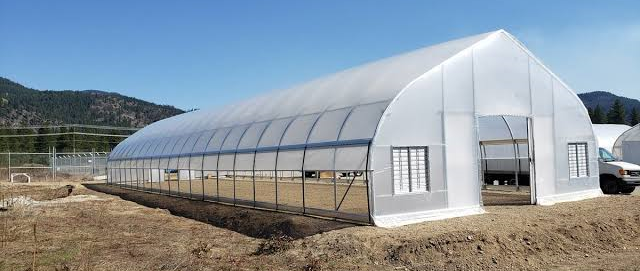
Climate smart greenhouse Nigeria
Climate smart greenhouse Nigeria
Climate change, unpredictable weather patterns, rising temperatures, irregular rainfall, water shortages, and increasing pressure on agricultural resources are creating new challenges for farmers across Nigeria. Climate smart greenhouse farming in Nigeria provides an approach to protected agriculture that combines greenhouse technology, efficient irrigation, water management, environmental monitoring, and resource-efficient farming practices.
A climate smart greenhouse is designed to provide farmers with greater control over the crop production environment while improving the efficient use of water, energy, nutrients, and other agricultural resources. Depending on the farm’s requirements, a climate smart greenhouse can incorporate ventilation, shade systems, drip irrigation, fertigation, water storage, solar-powered pumping, sensors, automated controls, and other technologies.
Irrigrow Civil & Engineering Ltd provides greenhouse construction, agricultural irrigation, farm infrastructure, and agricultural engineering services for farmers, agribusinesses, agricultural investors, institutions, and commercial growers in Nigeria.
Our approach to climate-smart greenhouse development focuses on integrating the greenhouse structure with appropriate water, irrigation, drainage, energy, and environmental management systems.
Whether you are planning a small greenhouse, commercial vegetable farm, tomato greenhouse, cucumber greenhouse, nursery, hydroponic greenhouse, or large-scale protected cultivation project, the greenhouse can be designed around the specific climate, crop, site, and production requirements.
What Is a Climate Smart Greenhouse?
A climate smart greenhouse is a protected cultivation structure designed to help farmers manage environmental conditions while using resources efficiently.
It can incorporate technologies and practices such as:
- Natural ventilation
- Mechanical ventilation
- Shade systems
- Drip irrigation
- Fertigation
- Water storage
- Rainwater management
- Solar-powered irrigation
- Environmental sensors
- Automated irrigation
- Temperature monitoring
- Humidity monitoring
- Soil-moisture monitoring
- Efficient drainage
- Crop-support systems
The exact technology used depends on the greenhouse location, crop, farm size, budget, and production objectives.
Climate Smart Agriculture and Greenhouses
Climate-smart agriculture focuses on improving agricultural productivity and resilience while making better use of natural resources.
Greenhouse farming can support these objectives by allowing farmers to manage important production factors more precisely.
A well-designed greenhouse can help farmers manage:
- Water
- Irrigation
- Nutrients
- Temperature
- Humidity
- Crop protection
- Growing conditions
- Production schedules
However, greenhouse technology does not eliminate climate-related risks completely. Proper farm management, crop selection, greenhouse design, and maintenance remain essential.
Climate Smart Greenhouse Company Nigeria
Irrigrow Civil & Engineering Ltd provides climate-smart greenhouse development solutions for agricultural projects in Nigeria.
Our services can include:
- Greenhouse design
- Greenhouse construction
- Greenhouse installation
- Drip irrigation
- Sprinkler irrigation
- Fertigation
- Water storage
- Borehole integration
- Solar irrigation
- Ventilation
- Environmental monitoring
- Automation
- Drainage
- Farm roads
- Agricultural civil engineering
These components can be integrated into a greenhouse development according to the project’s requirements.
Why Climate Smart Greenhouses Are Important in Nigeria
Nigeria’s agricultural sector operates across different climatic zones, from humid southern regions to drier northern areas.
Farmers can experience:
- High temperatures
- Heavy rainfall
- Irregular rainfall
- Dry seasons
- Harmattan
- Water shortages
- Flooding
- High humidity
- Strong winds
These conditions can affect agricultural production.
A properly designed greenhouse can provide a more controlled production environment and allow farmers to manage irrigation and ventilation more effectively.
Climate Smart Greenhouse Design Nigeria
Climate-smart greenhouse design should take the local environment into account.
Important considerations include:
Greenhouse Orientation
The orientation of the greenhouse can affect sunlight exposure, ventilation, and internal environmental conditions.
Ventilation
Adequate ventilation helps remove excess heat and humidity.
Covering Material
The covering should be selected according to the crop, climate, light requirements, and greenhouse design.
Shade Management
Shade systems can be used where additional protection from excessive solar radiation is required.
Irrigation
Efficient irrigation can reduce unnecessary water use and deliver water closer to the crop root zone.
Drainage
Drainage infrastructure should manage rainfall and excess water around the greenhouse.
Greenhouse Ventilation for Nigeria’s Climate
Ventilation is one of the most important features of a greenhouse in a warm climate.
A greenhouse can use:
- Side vents
- Roof vents
- Roll-up curtains
- Exhaust fans
- Circulation fans
- Automated ventilation
Natural ventilation can be used where appropriate, while mechanical ventilation can provide additional air movement when required.
The ventilation strategy should be designed according to the greenhouse dimensions, crop, covering, location, and environmental conditions.
Natural Ventilation Greenhouse Nigeria
Natural ventilation uses openings in the greenhouse to allow air to enter and exit.
Examples include:
- Side vents
- Roof vents
- Roll-up sides
- Ventilation openings
Natural ventilation can reduce reliance on mechanical equipment where the greenhouse design and climate permit it.
Proper greenhouse orientation and ventilation openings are important when using this approach.
Automated Greenhouse Ventilation
Commercial greenhouse projects can use automated ventilation.
Sensors can monitor environmental conditions and activate ventilation equipment when appropriate.
Automated systems may control:
- Roof vents
- Side vents
- Exhaust fans
- Circulation fans
The level of automation depends on the project’s requirements.
Climate Smart Drip Irrigation Nigeria
Water efficiency is an important component of climate-smart agriculture.
Drip irrigation delivers water close to the crop root zone.
A greenhouse drip irrigation system may include:
- Water source
- Pump
- Filter
- Mainline
- Sub-main
- Drip lines
- Emitters
- Valves
- Pressure regulators
- Fertigation equipment
Drip irrigation can be designed according to crop spacing and greenhouse layout.
Water Conservation in Greenhouse Farming
Efficient water management is important for greenhouse farms.
Water conservation strategies can include:
- Drip irrigation
- Irrigation scheduling
- Water storage
- Leak detection
- Filtration
- Pressure management
- Irrigation zoning
- Soil-moisture monitoring
The objective is to provide crops with the required water while minimizing unnecessary losses.
Greenhouse Rainwater Management
Rainwater can be an important consideration in greenhouse design.
Greenhouse roofs collect rainfall, creating opportunities for controlled water management.
Depending on the design, rainfall can be directed through:
- Gutters
- Downpipes
- Drainage channels
- Storage tanks
- Reservoirs
Collected water should be appropriately filtered and treated where necessary before being used for irrigation.
Water quality should be assessed before incorporating harvested rainwater into sensitive irrigation or fertigation systems.
Greenhouse Water Storage Nigeria
Water storage can improve the reliability of greenhouse irrigation.
Storage options can include:
- Plastic tanks
- Steel tanks
- Concrete reservoirs
- Lined reservoirs
Storage capacity should be determined according to:
- Farm size
- Crop
- Water requirement
- Irrigation schedule
- Water-source availability
- Pump capacity
Solar Powered Greenhouse Irrigation Nigeria
Solar energy can be integrated into greenhouse irrigation systems.
A solar-powered irrigation system may include:
- Solar panels
- Solar pump
- Pump controller
- Mounting structure
- Electrical cables
- Protection equipment
- Water storage
- Irrigation system
Solar pumping can be useful for farms in locations where grid electricity is unavailable or unreliable.
The system should be sized according to the pump’s flow and head requirements and the farm’s water demand.
Climate Smart Solar Greenhouse Nigeria
A climate-smart greenhouse can combine solar energy with efficient water management.
A typical system could include:
Solar Panels
↓
Solar Pump
↓
Water Storage
↓
Filtration
↓
Drip Irrigation
↓
Greenhouse Crops
Solar energy can also support sensors, controllers, ventilation, and other suitable electrical equipment depending on system capacity.
Greenhouse Fertigation Nigeria
Fertigation involves applying soluble nutrients through irrigation.
A greenhouse fertigation system can include:
- Fertilizer tank
- Injector
- Dosing pump
- Filters
- Valves
- Control equipment
Fertigation can allow farmers to manage water and nutrient delivery through the same irrigation network.
Smart Irrigation for Greenhouses
Smart irrigation combines irrigation equipment with monitoring and control technologies.
A smart greenhouse irrigation system can use:
- Soil-moisture sensors
- Flow meters
- Pressure sensors
- Water-level sensors
- Automated valves
- Irrigation controllers
These systems can help farmers monitor irrigation performance and make more informed decisions.
Climate Monitoring in Greenhouses
Environmental monitoring is an important component of a smart greenhouse.
Sensors can monitor:
- Temperature
- Relative humidity
- Soil moisture
- Water level
- Irrigation flow
- Pressure
Data can help farmers identify changes in the growing environment and irrigation system.
Greenhouse Temperature Management Nigeria
High temperatures can affect greenhouse crop production.
Temperature management strategies can include:
- Natural ventilation
- Roof vents
- Side vents
- Shade systems
- Exhaust fans
- Circulation fans
- Appropriate greenhouse orientation
- Suitable covering materials
The correct combination depends on the crop and local climate.
Greenhouse Humidity Management
Humidity can become high inside greenhouses, especially where ventilation is inadequate.
Humidity management can involve:
- Proper ventilation
- Air circulation
- Irrigation management
- Drainage
- Plant spacing
- Environmental monitoring
Managing the greenhouse environment requires balancing irrigation with adequate air movement.
Climate Smart Greenhouse Covering
Greenhouse covering influences the amount of light, heat, and environmental protection provided to crops.
Possible covering materials include:
Polyethylene Film
Agricultural polyethylene film is commonly used for greenhouse structures.
Polycarbonate
Polycarbonate provides a rigid covering option for suitable greenhouse designs.
Glass
Glass can be used in specialized greenhouse structures.
The covering should be selected based on the greenhouse design, crop requirements, climate, budget, and expected service life.
Greenhouse Shade Systems Nigeria
Shade systems can be used to reduce excessive solar radiation when required.
Possible options include:
- External shade nets
- Internal shade screens
- Retractable shading systems
The appropriate system depends on the crop and environmental requirements.
Climate Smart Greenhouse for Tomato Farming
Tomato production can be carried out in climate-smart greenhouse systems.
A tomato greenhouse can incorporate:
- Drip irrigation
- Fertigation
- Ventilation
- Crop support
- Water storage
- Environmental monitoring
- Automated irrigation
Tomato production requires appropriate management of water, nutrients, temperature, humidity, and crop support.
Climate Smart Greenhouse for Cucumber Farming
Cucumber production can also be integrated with climate-smart greenhouse systems.
A cucumber greenhouse can include:
- Drip irrigation
- Fertigation
- Trellising
- Ventilation
- Water storage
- Environmental monitoring
Proper crop-support infrastructure should be considered during greenhouse design.
Climate Smart Greenhouse for Pepper Farming
Pepper can be grown under protected conditions using an appropriately designed greenhouse.
The project can include:
- Greenhouse structure
- Drip irrigation
- Fertigation
- Ventilation
- Water storage
- Environmental monitoring
Climate Smart Greenhouse Nursery
Climate-smart greenhouse systems can be used for nursery production.
Potential applications include:
- Vegetable seedlings
- Fruit seedlings
- Forestry seedlings
- Ornamental plants
- Horticultural plants
Nursery greenhouses may use:
- Misting
- Micro-sprinklers
- Drip irrigation
- Shade systems
- Environmental monitoring
Climate Smart Hydroponic Greenhouse Nigeria
Climate-smart greenhouse technology can also be combined with hydroponic production.
Hydroponic systems may use:
- Cocopeat
- Grow bags
- Nutrient solutions
- Drip systems
- NFT systems
- Other soilless cultivation methods
Hydroponic production requires careful management of:
- Water quality
- Nutrient concentration
- pH
- Irrigation
- Drainage
- Temperature
- Humidity
Climate Smart Greenhouse Farm Development
A climate-smart greenhouse should be part of a broader farm development strategy.
The farm may include:
- Greenhouses
- Boreholes
- Water storage
- Solar pumping
- Irrigation
- Fertigation
- Drainage
- Farm roads
- Nursery
- Storage
- Processing areas
Planning these systems together can improve farm infrastructure coordination.
Climate Smart Greenhouse Cost Nigeria
The cost of a climate-smart greenhouse depends on the level of technology and infrastructure included.
Factors include:
- Greenhouse size
- Structural specification
- Covering
- Foundation
- Ventilation
- Shade systems
- Irrigation
- Fertigation
- Water storage
- Borehole
- Solar power
- Sensors
- Automation
- Drainage
- Farm roads
- Installation
A basic greenhouse with manual systems will have different costs from a fully automated commercial greenhouse.
For this reason, project-specific design and quotation are recommended.
Climate Smart Greenhouse Cost Per Square Metre
There is no single cost per square metre for every climate-smart greenhouse.
The cost depends on whether the greenhouse includes:
- Basic structure
- Irrigation
- Fertigation
- Automated ventilation
- Sensors
- Solar power
- Water storage
- Environmental controls
Farmers should compare greenhouse quotations based on the complete specification rather than price alone.
Climate Smart Greenhouse Project Quotation Nigeria
A professional greenhouse quotation can identify:
- Greenhouse structure
- Foundation
- Covering
- Ventilation
- Irrigation
- Fertigation
- Water storage
- Pump
- Filtration
- Solar system
- Automation
- Sensors
- Installation
- Transportation
- Testing
- Commissioning
A Bill of Quantities can also be prepared where a detailed breakdown is required.
Climate Smart Greenhouse Bill of Quantities
A BOQ can provide a structured breakdown of the project.
| No. | Description | Quantity | Unit | Rate | Amount |
|---|---|---|---|---|---|
| 1 | Greenhouse Structure | As designed | Set | — | — |
| 2 | Greenhouse Covering | As designed | m² | — | — |
| 3 | Foundation Works | As designed | Lot | — | — |
| 4 | Ventilation | As designed | Set | — | — |
| 5 | Shade System | Optional | Set | — | — |
| 6 | Drip Irrigation | As designed | Set | — | — |
| 7 | Water Tank/Reservoir | As required | Unit | — | — |
| 8 | Irrigation Pump | As designed | Unit | — | — |
| 9 | Filtration | As designed | Set | — | — |
| 10 | Fertigation | Optional | Set | — | — |
| 11 | Solar System | Optional | Set | — | — |
| 12 | Sensors & Automation | Optional | Set | — | — |
| 13 | Installation | As required | Lot | — | — |
The final quantities should be determined from the actual greenhouse design.
Climate Smart Greenhouse Installation Nigeria
Installation involves more than assembling the greenhouse frame.
A complete installation can include:
- Site preparation
- Foundation
- Structural frame
- Covering
- Ventilation
- Irrigation
- Fertigation
- Water storage
- Solar system where required
- Sensors
- Automation
- Drainage
- Testing
- Commissioning
Each component should be coordinated with the overall greenhouse design.
Climate Smart Greenhouse Maintenance
Regular maintenance is essential for greenhouse performance.
Maintenance activities may include:
- Structural inspection
- Covering inspection
- Filter cleaning
- Drip-line flushing
- Pump maintenance
- Valve inspection
- Sensor checks
- Ventilation maintenance
- Solar system inspection
- Drainage maintenance
Preventive maintenance can help identify problems before they become major operational issues.
Climate Smart Greenhouse Development in Lagos
Greenhouse development in Lagos may require particular attention to:
- High humidity
- Rainfall
- Drainage
- Ventilation
- Water management
- Farm accessibility
Greenhouses in humid environments should be designed with appropriate ventilation and drainage.
Climate Smart Greenhouse Development in Ogun State
Greenhouse farms in Ogun State can be designed for commercial vegetable production, nurseries, and other horticultural activities.
Potential infrastructure includes:
- Greenhouses
- Drip irrigation
- Boreholes
- Water storage
- Solar pumping
- Fertigation
- Drainage
Climate Smart Greenhouse Development in Oyo State
Climate-smart greenhouse farms can be developed around Ibadan and other agricultural areas in Oyo State.
Projects can include:
- Greenhouse construction
- Irrigation
- Fertigation
- Water storage
- Solar pumping
- Ventilation
- Environmental monitoring
- Drainage
Climate Smart Greenhouse Development Abuja
Greenhouse projects around Abuja can be designed according to the site’s water availability, climate, crop, land, and infrastructure.
Irrigation and water storage can be particularly important components of greenhouse development.
Climate Smart Greenhouse Development Across Nigeria
Climate-smart greenhouse projects can be developed in different regions of Nigeria.
Potential project locations include:
- Lagos
- Ogun
- Oyo
- Osun
- Ondo
- Ekiti
- Kwara
- Abuja
- Kaduna
- Kano
- Plateau
- Benue
- Nasarawa
- Edo
- Delta
- Rivers
- Other agricultural regions
The design should be adapted to the environmental and agricultural conditions of the selected site.
Turnkey Climate Smart Greenhouse Nigeria
A turnkey climate-smart greenhouse project can combine:
Site Assessment
↓
Farm Planning
↓
Greenhouse Design
↓
Foundation
↓
Greenhouse Construction
↓
Irrigation
↓
Fertigation
↓
Water Storage
↓
Solar Power
↓
Environmental Monitoring
↓
Automation
↓
Drainage
↓
Testing & Commissioning
This approach allows the major systems to be coordinated during project development.
Climate Smart Greenhouse Farm Infrastructure
A commercial greenhouse farm may require infrastructure outside the greenhouse itself.
This can include:
- Farm roads
- Drainage
- Boreholes
- Reservoirs
- Pump houses
- Solar installations
- Fertigation areas
- Storage buildings
- Nursery areas
- Loading areas
These facilities can be incorporated into the overall farm master plan.
Climate Smart Greenhouse and Water Management
Water management should be considered throughout the farm development process.
A complete system can include:
Water Source
↓
Storage
↓
Filtration
↓
Pumping
↓
Fertigation
↓
Drip Irrigation
↓
Crop Root Zone
This arrangement can provide a controlled method of distributing water and nutrients.
Climate Smart Greenhouse and Renewable Energy
Renewable energy can support greenhouse operations where appropriate.
Solar energy can be used for:
- Water pumping
- Irrigation
- Ventilation
- Sensors
- Controllers
- Other suitable equipment
The solar installation should be designed according to the actual energy demand.
Climate Smart Greenhouse and Resource Efficiency
Resource efficiency can be improved through appropriate technology and farm management.
Potential strategies include:
Water Efficiency
Use drip irrigation, appropriate scheduling, filtration, and leak monitoring.
Energy Efficiency
Use efficient pumps, appropriate solar systems, and efficient electrical equipment.
Nutrient Efficiency
Use controlled fertigation and appropriate nutrient management.
Environmental Management
Use ventilation, shade, monitoring, and appropriate greenhouse design.
Greenhouse Farm Climate Resilience
Climate resilience involves preparing the agricultural system to operate under changing environmental conditions.
Greenhouse resilience can involve:
- Strong structural design
- Effective ventilation
- Reliable water supply
- Water storage
- Efficient irrigation
- Drainage
- Backup systems
- Preventive maintenance
- Environmental monitoring
The appropriate combination depends on the farm location and production model.
Why Choose Irrigrow for Climate Smart Greenhouse Projects?
Irrigrow Civil & Engineering Ltd combines greenhouse construction with agricultural irrigation and civil engineering.
Our capabilities include:
- Greenhouse design
- Greenhouse construction
- Greenhouse installation
- Drip irrigation
- Sprinkler irrigation
- Fertigation
- Borehole systems
- Water storage
- Solar irrigation
- Farm drainage
- Farm roads
- Agricultural civil engineering
- Environmental monitoring
- Greenhouse automation
This integrated approach allows the greenhouse to be developed together with its supporting farm infrastructure.
For example:
Greenhouse + Borehole + Water Storage + Solar Pump + Drip Irrigation + Fertigation + Drainage + Automation
can be planned as one coordinated agricultural project.
How to Start a Climate Smart Greenhouse Project in Nigeria
Farmers and investors should provide basic project information when requesting a greenhouse proposal.
Farm Location
State, LGA, and general location.
Land Size
Total available agricultural land.
Greenhouse Size
Desired dimensions if known.
Crop
Tomato, cucumber, pepper, vegetables, nursery crops, or other crops.
Number of Greenhouses
One unit or multiple greenhouse structures.
Water Source
Borehole, well, river, pond, reservoir, or other source.
Power Source
Grid electricity, generator, or solar.
Irrigation
Drip, sprinkler, or recommended system.
Technology Level
Manual, semi-automated, or automated.
This information helps determine the appropriate project scope.
Frequently Asked Questions
What is a climate smart greenhouse?
A climate-smart greenhouse is a protected cultivation facility designed to improve control of crop-growing conditions while using resources such as water and energy efficiently.
Is greenhouse farming climate smart?
Greenhouse farming can support climate-smart agricultural practices when the greenhouse is appropriately designed and combined with efficient irrigation, water management, ventilation, energy management, and other suitable technologies.
How much does a climate-smart greenhouse cost in Nigeria?
The cost varies according to greenhouse size, structural specification, irrigation, ventilation, water storage, fertigation, solar power, sensors, automation, drainage, and installation requirements.
Can Irrigrow build a climate-smart greenhouse?
Yes. Irrigrow provides greenhouse construction and agricultural engineering services that can incorporate irrigation, fertigation, water management, solar pumping, ventilation, monitoring, and automation.
Can solar power be included?
Yes. Solar-powered irrigation and other suitable solar applications can be incorporated into the project.
Can rainwater harvesting be included?
Yes. Greenhouse roof runoff can be incorporated into a water-management design where appropriate, subject to suitable collection, storage, filtration, and water-quality considerations.
Can climate-smart greenhouses be used for tomatoes?
Yes. Tomato production can be carried out in appropriately designed greenhouse systems with irrigation, fertigation, ventilation, and crop-support infrastructure.
Can climate-smart greenhouses be used for cucumbers?
Yes. Cucumber production can be integrated with drip irrigation, fertigation, ventilation, trellising, and environmental monitoring.
Can you automate the greenhouse?
Yes. Automated irrigation, ventilation, fertigation, environmental monitoring, and other systems can be incorporated according to the project requirements.
Do you provide irrigation installation?
Yes. Irrigation can be included as part of a complete greenhouse farm development.
Can you develop a complete greenhouse farm?
Yes. Irrigrow can coordinate greenhouse construction with irrigation, water infrastructure, drainage, solar pumping, farm roads, and other agricultural civil engineering requirements.
Do you work outside Ibadan?
Yes. Greenhouse and agricultural engineering projects can be developed in different locations across Nigeria, subject to project assessment.
Start Your Climate Smart Greenhouse Project in Nigeria
Climate-smart greenhouse farming requires more than installing a covered structure. A successful project should consider greenhouse design, ventilation, irrigation, water storage, fertigation, drainage, energy, environmental monitoring, crop support, and farm infrastructure as interconnected components.
Irrigrow Civil & Engineering Ltd provides climate-smart greenhouse development services in Nigeria, combining greenhouse construction, irrigation engineering, water infrastructure, fertigation, solar irrigation, agricultural civil engineering, drainage, and smart greenhouse technologies.
Whether you are planning a small greenhouse, commercial vegetable farm, tomato greenhouse, cucumber greenhouse, nursery, hydroponic greenhouse, multi-greenhouse project, or large-scale climate-smart agricultural facility, our team can help develop the appropriate infrastructure.
Contact Irrigrow Civil & Engineering Ltd today to discuss your climate-smart greenhouse project, request a site assessment, obtain a greenhouse design and BOQ, or receive a project quotation for greenhouse development anywhere in Nigeria.
