
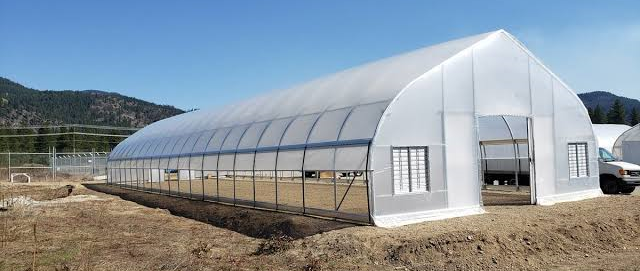
Modern greenhouse farming company Nigeria
Modern greenhouse farming company Nigeria
Modern greenhouse farming is transforming the way agricultural businesses approach crop production in Nigeria. As farmers and agricultural investors look for more reliable production systems, greenhouse technology provides an opportunity to protect crops from certain environmental stresses while improving control over irrigation, nutrition, ventilation, pest management, and production conditions.
Irrigrow Civil & Engineering is a modern greenhouse farming company in Nigeria providing greenhouse construction, agricultural engineering, irrigation installation, farm infrastructure development, greenhouse project planning, and protected agriculture solutions for farmers, agribusinesses, institutions, and agricultural investors.
Modern greenhouse farming is more than placing a structure over crops. A productive greenhouse is an integrated agricultural system that can combine structural engineering, irrigation, fertigation, water storage, drainage, ventilation, crop support, environmental monitoring, and farm management. Nigerian protected-cultivation research identifies different levels of greenhouse technology, from manually operated structures to systems with more advanced climate-control and precision-irrigation technologies.
At Irrigrow Civil & Engineering, our goal is to help clients develop greenhouse farms that are practical for Nigerian conditions, appropriate for their crops, and scalable according to their investment objectives.
What Is Modern Greenhouse Farming?
Modern greenhouse farming is a protected agricultural production system in which crops are cultivated inside specially designed structures while environmental conditions are managed to improve production.
Unlike conventional open-field farming, greenhouse farming gives the farmer greater control over several aspects of crop production.
Depending on the technology level, a modern greenhouse may incorporate:
- Greenhouse structural frames
- UV-resistant covering materials
- Insect-proof nets
- Natural or mechanical ventilation
- Shade systems
- Drip irrigation
- Fertigation
- Water filtration
- Water storage
- Environmental sensors
- Temperature monitoring
- Humidity monitoring
- Automated irrigation
- Crop support systems
- Drainage
- Solar power
- Farm management technology
The level of technology should be selected according to the crop, location, budget, production targets, and technical capacity of the farm.
Modern Greenhouse Farming Company in Nigeria
Irrigrow Civil & Engineering provides modern greenhouse farming solutions for clients who want to establish controlled and protected crop production systems in Nigeria.
Our services can cover the entire infrastructure surrounding a greenhouse project, including:
- Greenhouse design
- Greenhouse construction
- Greenhouse installation
- Site preparation
- Farm civil works
- Borehole development
- Water storage
- Irrigation installation
- Drip irrigation
- Fertigation
- Drainage
- Farm roads
- Crop support systems
- Ventilation infrastructure
- Shade systems
- Greenhouse maintenance
- Agricultural project consultancy
This integrated approach allows the greenhouse structure and supporting infrastructure to be developed as one coordinated agricultural project.
Why Modern Greenhouse Farming Is Important in Nigeria
Nigeria has a large agricultural sector and diverse climatic conditions. However, farmers can face challenges related to unpredictable rainfall, high temperatures, pests, diseases, water availability, and seasonal production.
Protected cultivation can help farmers manage some of these challenges by creating a more controlled growing environment.
Research on protected cultivation in Nigeria highlights differences between regions and emphasizes that greenhouse design and technology need to reflect local climate conditions.
Modern greenhouse farming can provide farmers with better control over:
- Water application
- Crop nutrition
- Growing environment
- Pest exclusion
- Production scheduling
- Crop support
- Irrigation frequency
- Farm monitoring
- Production consistency
However, greenhouse technology does not eliminate the need for good agronomy. Crop selection, seed quality, nutrition, disease management, water quality, farm management, and market access remain important to commercial success.
Smart Greenhouse Farming in Nigeria
Smart greenhouse farming takes protected agriculture further by incorporating technology into farm management.
A smart greenhouse can use sensors, automated irrigation, monitoring equipment, control systems, and other technologies to help farmers make better production decisions.
Depending on the project, smart greenhouse technology can monitor:
- Temperature
- Relative humidity
- Soil moisture
- Growing media moisture
- Water pressure
- Water flow
- Nutrient levels
- Irrigation schedules
- Environmental conditions
Some systems can also automate irrigation, ventilation, fertigation, cooling, and other functions.
The appropriate technology level should be determined by the farm’s production requirements and investment capacity rather than installing technology simply for its own sake.
Greenhouse Construction and Agricultural Engineering
Modern greenhouse farming requires proper engineering because the structure must work together with the farm’s water and agricultural systems.
Irrigrow Civil & Engineering approaches greenhouse projects from an agricultural infrastructure perspective.
A typical modern greenhouse project can include:
Land → Site preparation → Greenhouse structure → Water source → Pumping → Storage → Filtration → Irrigation → Fertigation → Crop production → Drainage
Each component should be considered during project planning.
For example, installing a large greenhouse without sufficient water supply can limit production. Similarly, installing irrigation without proper filtration can cause problems with drip emitters.
Greenhouse Site Selection
Choosing a suitable location is an important first step in greenhouse farming.
The site should be assessed for:
- Accessibility
- Water availability
- Drainage
- Soil conditions
- Terrain
- Sunlight
- Wind exposure
- Electricity
- Security
- Proximity to markets
- Availability of labour
- Potential for expansion
The greenhouse should ideally be positioned where water can be supplied efficiently and excess water can be safely managed.
Irrigrow Civil & Engineering can assist with site assessment and infrastructure planning before greenhouse construction begins.
Greenhouse Site Preparation
Before the greenhouse structure is installed, the land may require civil works.
Depending on the condition of the site, preparation may include:
- Land clearing
- Vegetation removal
- Grading
- Leveling
- Excavation
- Filling
- Compaction
- Drainage
- Foundation preparation
- Access road construction
A properly prepared site provides a more suitable platform for greenhouse installation and can reduce future drainage and accessibility problems.
Modern Greenhouse Structural Systems
The greenhouse structure provides the framework that supports the covering and other components.
Modern greenhouse structures can be constructed using materials such as galvanized steel and other suitable structural components.
The structure may incorporate:
- Columns
- Arches
- Roof structures
- Bracing
- Doors
- Ventilation openings
- Anchoring systems
- Crop support systems
Structural selection should consider the greenhouse design, local environmental conditions, expected loads, crop-support requirements, and project specifications.
Greenhouse Covering Materials
The covering protects crops while allowing sunlight into the greenhouse.
Depending on the greenhouse design, covering materials may include specialized agricultural films, polycarbonate materials, glass, shade materials, or other suitable systems.
Important covering characteristics may include:
- UV stability
- Light transmission
- Durability
- Thermal characteristics
- Tear resistance
- Weather resistance
The choice should be based on the greenhouse type, crop, climate, expected service life, and budget.
Greenhouse Irrigation Systems
Irrigation is a central component of modern greenhouse farming.
Because greenhouse crops depend heavily on managed water supply, irrigation systems should be designed according to crop water requirements and the greenhouse layout.
Irrigrow Civil & Engineering can provide:
- Drip irrigation
- Micro-irrigation
- Irrigation pipelines
- Pumps
- Filters
- Valves
- Pressure regulators
- Water storage
- Irrigation controllers
- Fertigation systems
Modern irrigation can help deliver water directly to crop root zones and reduce unnecessary water application.
Drip Irrigation for Greenhouse Farming
Drip irrigation is particularly useful for greenhouse production because water can be delivered along crop rows through controlled emitters.
A typical system can include:
- Water source
- Pump
- Storage tank
- Filter
- Fertilizer injector
- Mainline
- Sub-mainline
- Irrigation valves
- Drip lines
- Emitters
The greenhouse can be divided into different irrigation zones, allowing the farmer to manage production areas independently.
Greenhouse Fertigation
Fertigation combines irrigation with nutrient application.
A properly designed fertigation system can distribute dissolved nutrients through irrigation water according to the crop’s production program.
Components can include:
- Fertilizer tanks
- Injectors
- Pumps
- Filters
- Mixing equipment
- Control valves
- Irrigation lines
Fertigation can be especially useful in commercial greenhouse production where precise crop nutrition is important.
The fertilizer program itself should be determined according to the crop, growing medium, water quality, and agronomic requirements.
Farm Borehole for Greenhouse Irrigation
A reliable water source is essential for greenhouse farming.
Where groundwater is available and suitable, a borehole can provide water for irrigation.
A greenhouse borehole project can include:
- Borehole siting
- Drilling
- Casing
- Well development
- Pump testing
- Water quality testing
- Submersible pump
- Storage tank
- Irrigation connection
Borehole depth and yield vary by location, so proper water-source investigation should be conducted before drilling.
Solar-Powered Greenhouse Irrigation
Solar energy can be integrated into greenhouse irrigation systems, particularly where grid electricity is unreliable or where farmers want an alternative energy source.
A solar irrigation system may consist of:
- Solar panels
- Pump controller
- Submersible pump
- Borehole
- Water tank
- Mounting structure
- Electrical protection
- Irrigation network
Water can be pumped into storage during periods of solar availability and subsequently distributed to greenhouse production areas.
This approach can be useful for farms located in areas with limited access to reliable electricity.
Greenhouse Water Storage
Water storage provides a buffer between water production and irrigation demand.
Greenhouse farms may use:
- Polyethylene tanks
- Steel tanks
- Concrete reservoirs
- Elevated tanks
- Ground-level tanks
- Farm reservoirs
The required storage capacity depends on greenhouse size, crop water requirements, irrigation schedule, water source, pumping capacity, and farm management strategy.
Greenhouse Filtration
Water filtration is particularly important in drip irrigation systems.
Particles in water can block emitters and affect irrigation performance.
Depending on water quality, a greenhouse irrigation system may require:
- Screen filters
- Disc filters
- Sand filters
- Sediment filtration
- Additional water treatment
Filter selection should be based on the characteristics of the water and the requirements of the irrigation equipment.
Greenhouse Ventilation
Temperature and humidity management are important aspects of protected agriculture.
Natural ventilation can be achieved through:
- Side openings
- Roof vents
- Roll-up curtains
- Ventilation openings
More advanced systems can incorporate mechanical fans and other climate-control equipment.
The appropriate ventilation system depends on greenhouse size, crop requirements, location, greenhouse design, and climate.
Nigerian protected-cultivation assessments show that many local greenhouse operations use relatively low-tech systems with manual ventilation, while more advanced farms may employ precision irrigation, sensors, temperature alarms, foggers, and other technologies.
Greenhouse Cooling Systems
Nigeria’s tropical climate means that heat management can be an important consideration in greenhouse design.
Depending on the location and crop, cooling strategies can include:
- Natural ventilation
- Shade nets
- Evaporative cooling
- Fogging
- Misting
- Fans
- Cooling pads
Not every greenhouse requires advanced cooling equipment. The system should be selected based on the actual environmental requirements of the crop and the greenhouse design.
Greenhouse Environmental Monitoring
Environmental monitoring can help farmers understand conditions inside the greenhouse.
Sensors may monitor:
- Temperature
- Humidity
- Soil moisture
- Growing media moisture
- Light
- Water flow
- Irrigation pressure
Monitoring information can help farmers make more informed decisions about irrigation, ventilation, shading, and crop management.
Automation in Modern Greenhouse Farming
Automation can reduce the amount of manual intervention required for certain greenhouse operations.
Depending on the system, automation can be applied to:
- Irrigation
- Fertigation
- Ventilation
- Cooling
- Lighting
- Environmental monitoring
- Water management
Automation should be introduced according to the farm’s operational requirements and financial capacity.
A simple greenhouse with automated irrigation may be more appropriate for one farm than a fully climate-controlled system.
Greenhouse Crops in Nigeria
Modern greenhouse farming can support a wide range of crops.
Common greenhouse crops include:
- Tomatoes
- Cucumbers
- Sweet peppers
- Hot peppers
- Lettuce
- Herbs
- Strawberries
- Melons
- Seedlings
- Flowers
- Nursery plants
The suitability of each crop depends on the greenhouse environment, production technology, market demand, crop variety, and farm management.
Nigeria’s protected agriculture initiatives have particularly emphasized high-value vegetables such as tomato, cucumber, and sweet pepper.
Modern Greenhouse Tomato Farming
Tomatoes are among the crops that can be produced under protected cultivation.
A modern tomato greenhouse may incorporate:
- Drip irrigation
- Fertigation
- Trellising
- Insect protection
- Ventilation
- Crop monitoring
- Water storage
- Drainage
Tomato production should be planned around suitable varieties, crop spacing, nutrition, irrigation, disease management, pollination, and market requirements.
Modern Greenhouse Cucumber Farming
Cucumber is another popular crop for protected cultivation.
A commercial cucumber greenhouse can include:
- Drip irrigation
- Fertigation
- Trellis support
- Ventilation
- Insect protection
- Water storage
- Drainage
Because cucumbers can have rapid growth and significant water requirements, irrigation scheduling should be properly managed.
Modern Greenhouse Pepper Farming
Pepper production can also be undertaken under protected conditions.
Depending on the production system, the greenhouse may include drip irrigation, fertigation, crop support, insect exclusion, ventilation, and environmental monitoring.
The production approach should be developed according to the selected pepper variety and intended market.
Modern Greenhouse Farming for Commercial Agriculture
Commercial greenhouse farming requires more comprehensive planning than a small demonstration greenhouse.
A commercial development may include:
- Multiple greenhouse units
- Central water supply
- Boreholes
- Reservoirs
- Pumping stations
- Irrigation networks
- Fertigation systems
- Farm roads
- Drainage
- Nursery areas
- Packing facilities
- Storage
- Power infrastructure
- Staff facilities
Irrigrow Civil & Engineering can help coordinate these supporting infrastructure requirements.
Greenhouse Farm Master Planning
For larger developments, a master plan can help organize the entire agricultural estate.
A greenhouse farm master plan may identify:
- Greenhouse blocks
- Roads
- Drainage
- Water sources
- Reservoirs
- Pump stations
- Power systems
- Nursery
- Packhouse
- Storage
- Staff facilities
- Waste management areas
- Expansion zones
Master planning helps prevent infrastructure conflicts and allows the farm to expand systematically.
Modern Greenhouse Farming and Water Efficiency
Water management is one of the key advantages of controlled irrigation.
Drip irrigation can deliver water directly to the root zone and allow farmers to manage application more precisely than many traditional irrigation approaches.
However, water efficiency depends on the complete system, including:
- Correct pump sizing
- Appropriate pipe sizing
- Proper filtration
- Suitable irrigation scheduling
- Correct emitter selection
- Leak prevention
- Regular maintenance
The goal is not simply to install drip irrigation but to develop an irrigation system that operates efficiently.
Greenhouse Drainage
Modern greenhouse farming should include a drainage strategy.
Drainage can help manage:
- Rainfall
- Excess irrigation water
- Surface runoff
- Water around foundations
- Farm road runoff
Possible infrastructure includes:
- Perimeter drains
- Open drains
- Concrete channels
- Collection channels
- Culverts
- Stormwater outlets
- Erosion-control structures
Drainage should be integrated with the overall farm infrastructure.
Greenhouse Farm Road Construction
Commercial greenhouse projects require reliable access for workers, farm equipment, inputs, harvesting, maintenance, and transportation.
Irrigrow Civil & Engineering can construct supporting farm roads and access routes around greenhouse developments.
These may include:
- Main farm access roads
- Internal farm roads
- Laterite roads
- Walkways
- Service roads
- Loading areas
Road drainage should also be incorporated to maintain accessibility during the rainy season.
Greenhouse Farming and Sustainable Agriculture
Modern greenhouse systems can support more efficient use of agricultural resources when properly designed and managed.
Sustainable practices may include:
- Efficient irrigation
- Water storage
- Rainwater collection
- Controlled fertilizer application
- Integrated pest management
- Renewable energy
- Crop residue management
- Proper drainage
- Reuse of suitable resources
The specific sustainability measures should be selected according to the farm’s production model and available resources.
Modern Greenhouse Farming for Agricultural Investors
Greenhouse farming can be an attractive agricultural investment, but investors should understand that greenhouse construction alone does not guarantee profitability.
Commercial success depends on factors such as:
- Crop selection
- Market demand
- Production costs
- Water availability
- Farm management
- Labour
- Crop yield
- Pest and disease control
- Post-harvest handling
- Transportation
- Sales channels
A feasibility assessment should therefore consider both infrastructure and the commercial side of the agricultural project.
Greenhouse Project Cost in Nigeria
The cost of modern greenhouse farming varies according to the technology level and project scope.
Factors affecting cost include:
- Greenhouse size
- Greenhouse type
- Structural materials
- Covering materials
- Irrigation
- Fertigation
- Borehole
- Water storage
- Ventilation
- Cooling
- Automation
- Solar power
- Drainage
- Site preparation
- Farm roads
- Labour
- Transportation
- Crop support systems
Published Nigerian market examples show substantial differences between basic greenhouse structures and larger or automated commercial systems. One current market source lists basic 8m × 24m greenhouse models from about ₦9.5 million and notes that larger automated commercial systems can reach ₦25 million or more, while another 2026 source gives a broader installed range depending on specification. These figures are indicative rather than fixed quotations.
Irrigrow Civil & Engineering can prepare a project-specific quotation based on the required greenhouse size, technology, irrigation, civil works, and supporting infrastructure.
Modern Greenhouse Farming Project Process
Irrigrow Civil & Engineering uses a structured process when developing greenhouse farming projects.
Initial Consultation
We discuss the client’s agricultural objectives, preferred crops, available land, expected production, budget, and desired technology level.
Site Assessment
The proposed site is evaluated for water, access, terrain, drainage, soil, environmental conditions, and infrastructure requirements.
Farm Planning
The greenhouse layout and supporting infrastructure are planned according to the available land and production requirements.
Greenhouse Design
The structural design, covering, ventilation, access, crop support, and other greenhouse components are established.
Water and Irrigation Design
The water source, pump, storage, filtration, irrigation network, and fertigation requirements are planned.
Civil Works
Site preparation, foundations, drainage, access roads, platforms, and other supporting infrastructure are developed.
Greenhouse Installation
The greenhouse structure and associated components are installed.
Irrigation Installation
Drip irrigation, water distribution, filtration, fertigation, and control systems are installed.
Testing and Commissioning
The completed system is tested to confirm that water, irrigation, drainage, ventilation, and other infrastructure operate as intended.
Handover
The project is handed over with relevant operational and maintenance guidance.
Why Choose Irrigrow Civil & Engineering?
Irrigrow Civil & Engineering approaches greenhouse farming as an integrated agricultural engineering project rather than simply a greenhouse supply business.
Engineering Expertise
We consider structural, civil, water, drainage, and infrastructure requirements when planning projects.
Integrated Farm Infrastructure
Our services can combine greenhouse construction with boreholes, irrigation, drainage, farm roads, water storage, and other agricultural infrastructure.
Project-Specific Solutions
We develop greenhouse systems according to the crop, site, budget, and production objectives.
Scalable Development
Commercial greenhouse farms can be planned in phases to allow future expansion where appropriate.
Nigerian Agricultural Conditions
Our greenhouse planning considers the environmental and infrastructure conditions that can affect protected agriculture in Nigeria.
Modern Greenhouse Farming Across Nigeria
Irrigrow Civil & Engineering can support greenhouse farming projects across Nigeria.
Different parts of the country have different environmental conditions, and greenhouse design should reflect these differences.
The southern region generally presents different temperature, rainfall, and humidity conditions from northern agricultural zones. Research on protected cultivation in Nigeria emphasizes the need for region-specific approaches to greenhouse production.
For this reason, Irrigrow Civil & Engineering assesses each project individually instead of assuming that one greenhouse design will be suitable for every location.
Frequently Asked Questions
What is a modern greenhouse farm?
A modern greenhouse farm is an agricultural production facility that uses protected structures together with technologies such as controlled irrigation, fertigation, ventilation, monitoring, and sometimes automation to manage crop production.
Is greenhouse farming profitable in Nigeria?
Greenhouse farming can be commercially viable, but profitability depends on crop selection, production costs, market demand, farm management, infrastructure, yields, and sales channels. A proper feasibility assessment is recommended before making a major investment.
What crops are best for greenhouse farming in Nigeria?
Tomatoes, cucumbers, peppers, leafy vegetables, herbs, strawberries, seedlings, and other high-value crops can be cultivated under protected conditions. The best crop depends on the greenhouse system, location, market, and farmer’s production strategy.
Can Irrigrow build a smart greenhouse?
Yes. Irrigrow Civil & Engineering can incorporate appropriate irrigation, fertigation, monitoring, ventilation, and automation technologies into greenhouse projects depending on the client’s requirements.
Do I need a borehole for modern greenhouse farming?
A reliable water source is essential, but it does not always have to be a borehole. Where groundwater is suitable and available, a borehole can provide a dedicated irrigation source.
Can solar power be used for greenhouse farming?
Yes. Solar energy can power irrigation pumps and other greenhouse systems where properly designed. The appropriate solar system depends on the farm’s energy demand.
Can you build a commercial greenhouse farm?
Yes. Irrigrow Civil & Engineering can support commercial greenhouse developments involving multiple production units and integrated infrastructure such as water supply, irrigation, drainage, farm roads, and supporting facilities.
Can you install drip irrigation in an existing greenhouse?
Yes. An existing greenhouse can be assessed and upgraded with drip irrigation, filtration, water storage, pumping, fertigation, and other irrigation components.
Does greenhouse farming require drainage?
Yes. Proper drainage is important for managing rainfall, excess irrigation water, and surface runoff around the greenhouse and farm.
Can you construct the farm road and drainage for my greenhouse project?
Yes. Irrigrow Civil & Engineering provides agricultural civil engineering services, including farm roads, drainage, culverts, earthworks, and other supporting infrastructure.
Start Your Modern Greenhouse Farming Project
Modern greenhouse farming can provide Nigerian farmers and agricultural investors with a more controlled approach to crop production. However, successful protected agriculture requires the right combination of structure, irrigation, water supply, drainage, crop management, environmental control, and commercial planning.
Irrigrow Civil & Engineering is a modern greenhouse farming company in Nigeria providing greenhouse construction, agricultural engineering, irrigation installation, fertigation, borehole and water infrastructure, drainage, farm roads, and integrated agricultural development services.
Whether you are planning a small greenhouse, a commercial greenhouse farm, an 8m × 24m structure, an 8m × 48m greenhouse, multiple greenhouse units, or a large protected agriculture estate, we can help develop the infrastructure required for your project.
Our team can assess your proposed site, understand your crop production objectives, develop the required infrastructure scope, and provide a project-specific engineering proposal.
Modern greenhouse farming company Nigeria | Modern greenhouse farming company Nigeria | Modern greenhouse farming company Nigeria | Modern greenhouse farming company Nigeria
Contact Irrigrow Civil & Engineering today to discuss your modern greenhouse farming project in Nigeria and take the next step toward developing a professionally planned protected agricultural facility.
