
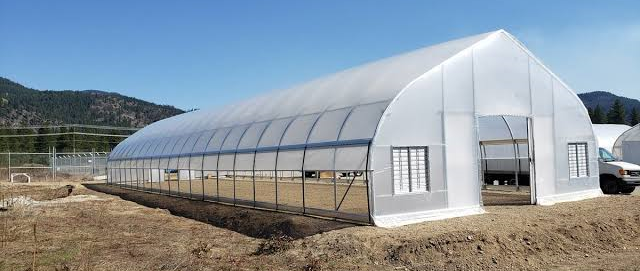
Greenhouse irrigation design company Nigeria
Greenhouse irrigation design company Nigeria
Greenhouse farming requires more than a well-built structure. For crops to grow consistently and produce good yields, the greenhouse needs a properly designed irrigation system that delivers the right amount of water and nutrients to the plants at the right time. An irrigation system that is poorly designed can result in uneven watering, excessive water consumption, clogged emitters, nutrient losses, root-zone problems, and reduced crop performance.
Irrigrow Civil & Engineering Ltd is a greenhouse irrigation design company in Nigeria providing professional irrigation design, hydraulic planning, drip irrigation installation, fertigation, water supply, pumping systems, filtration, greenhouse construction, drainage, and agricultural engineering services.
Our approach combines irrigation engineering with greenhouse and farm infrastructure development. Irrigrow’s agricultural engineering services include irrigation design, greenhouse planning, drainage systems, water infrastructure, drip irrigation, fertigation, and commercial farm development.
Whether you are developing a small greenhouse, a commercial vegetable farm, a nursery, a hydroponic facility, or a large greenhouse estate, we can design an irrigation system around your crop, greenhouse dimensions, water source, growing method, and production objectives.
What Is Greenhouse Irrigation Design?
Greenhouse irrigation design is the engineering process of determining how water and, where applicable, nutrients will be transported and distributed throughout a greenhouse.
A complete greenhouse irrigation design considers:
- Greenhouse dimensions
- Number of plants
- Crop type
- Crop spacing
- Water requirements
- Water source
- Water quality
- Pump capacity
- Pipe sizes
- Drip-line spacing
- Emitter flow rate
- Irrigation pressure
- Filtration
- Fertigation
- Irrigation zones
- Storage capacity
- Drainage
- Automation
- Future expansion
The objective is to ensure that every production area receives adequate and uniform irrigation.
Irrigrow treats irrigation as an engineering project rather than simply supplying irrigation components. The company’s irrigation approach considers the water source, terrain, soil, crop requirements, pipe sizing, emitter spacing, pressure management, filtration, and integration with boreholes, storage, and drainage.
Greenhouse Irrigation Design Company in Nigeria
Irrigrow Civil & Engineering provides greenhouse irrigation design and installation services for agricultural projects across Nigeria.
Our solutions can include:
- Greenhouse drip irrigation
- Micro-irrigation
- Fertigation systems
- Irrigation hydraulic design
- Pump selection
- Water storage design
- Filtration systems
- Mainline design
- Sub-mainline design
- Drip-line layout
- Irrigation zoning
- Pressure management
- Automated irrigation
- Solar-powered irrigation
- Borehole integration
- Irrigation maintenance
Our objective is to develop irrigation systems that are practical, efficient, maintainable, and appropriate for Nigerian agricultural conditions.
Why Proper Greenhouse Irrigation Design Matters
A greenhouse creates a controlled production environment, but crops still require carefully managed water.
If irrigation is poorly designed, some plants may receive too much water while others receive too little.
Common problems caused by poor irrigation design include:
- Uneven crop growth
- Water wastage
- Low irrigation uniformity
- Excessive pressure
- Insufficient pressure
- Clogged emitters
- Pipe leakage
- Fertilizer losses
- Root-zone problems
- Increased labour requirements
- Reduced crop quality
A properly engineered irrigation system helps distribute water consistently throughout the greenhouse.
Greenhouse Drip Irrigation Design
Drip irrigation is one of the most widely used irrigation methods for greenhouse vegetable production.
Instead of applying water over the entire growing area, drip irrigation delivers water through emitters positioned close to the plant root zone.
A typical greenhouse drip irrigation system may follow this arrangement:
Water Source → Pump → Storage Tank → Filter → Fertigation Unit → Mainline → Sub-Mainline → Irrigation Valves → Drip Lines → Emitters → Crop Root Zone
Each component needs to be correctly selected and sized.
Irrigrow can design and install drip irrigation systems according to the greenhouse layout and crop production requirements.
Greenhouse Hydraulic Design
Hydraulic design is an important part of professional greenhouse irrigation engineering.
The hydraulic design determines how water will flow from the source to the individual irrigation lines.
Key considerations include:
- Flow rate
- Pressure
- Pipe diameter
- Pipe length
- Elevation differences
- Friction losses
- Emitter discharge
- Pump capacity
- Number of irrigation zones
- Filtration requirements
Correct hydraulic calculations help ensure that the irrigation system operates within the required pressure range.
Greenhouse Irrigation System Design Process
Irrigrow can follow a structured process when designing a greenhouse irrigation system.
1. Site Assessment
The first step is to understand the greenhouse site.
We assess:
- Land conditions
- Greenhouse location
- Terrain
- Water source
- Existing infrastructure
- Drainage
- Accessibility
- Available power
2. Crop Assessment
The crop determines many irrigation requirements.
We consider:
- Crop type
- Plant spacing
- Growth stage
- Root-zone requirements
- Expected water demand
- Growing medium
- Production method
Tomatoes, cucumbers, peppers, lettuce, herbs, and nursery seedlings may require different irrigation configurations.
3. Greenhouse Layout
The greenhouse dimensions and crop rows are mapped.
This allows the irrigation system to be designed around the actual crop layout rather than using a generic configuration.
4. Water Requirement Calculation
The estimated irrigation demand is determined based on crop requirements and the size of the production area.
5. Hydraulic Design
Pipes, pumps, valves, filters, emitters, and irrigation zones are sized according to the required flow and pressure.
6. Irrigation Zoning
Large greenhouses can be divided into irrigation zones.
This allows different sections to be irrigated independently.
7. Equipment Selection
Appropriate pumps, filters, pipes, valves, drip lines, emitters, fertigation equipment, and controllers are selected.
8. Installation
The irrigation system is installed according to the approved design.
9. Pressure Testing
The system is tested for leakage, pressure, flow, and distribution.
10. Commissioning
The completed system is commissioned and the farm operator can be trained on operation and maintenance.
Greenhouse Irrigation Zoning
Irrigation zoning is particularly useful for commercial greenhouse farms.
Instead of irrigating the entire greenhouse simultaneously, the system can divide the facility into separate zones.
For example:
- Zone A – Tomato production
- Zone B – Tomato production
- Zone C – Cucumber production
- Zone D – Pepper production
Each zone can have its own valve and irrigation schedule.
This can help manage water according to crop type, crop age, greenhouse section, or production requirements.
Greenhouse Irrigation Pump Design
The pump is an important component of the irrigation system.
Pump selection should be based on:
- Required flow rate
- Required pressure
- Total dynamic head
- Pipe length
- Elevation
- Irrigation zones
- Filter losses
- Fertigation equipment
- Number of emitters
Using an undersized pump can result in inadequate pressure, while an unnecessarily oversized pump can increase energy consumption and system costs.
Irrigrow can assess the irrigation requirements and select an appropriate pumping configuration.
Greenhouse Water Storage Design
Water storage can provide a buffer between the water source and irrigation system.
A greenhouse water-storage system may include:
- Polyethylene tanks
- Concrete reservoirs
- Steel tanks
- Elevated tanks
- Ground-level storage
Storage requirements depend on:
- Greenhouse size
- Crop water demand
- Irrigation frequency
- Borehole yield
- Pumping capacity
- Water availability
- Desired reserve capacity
The storage system should be integrated into the overall irrigation design.
Greenhouse Borehole and Irrigation Integration
Many greenhouse farms require a dedicated water source.
Where groundwater is suitable, a borehole can be integrated with the greenhouse irrigation system.
A typical arrangement can be:
Borehole → Submersible Pump → Water Storage → Filtration → Fertigation → Irrigation Network
Irrigrow provides broader farm water infrastructure services, including boreholes, water storage tanks, pumping systems, filtration systems, reservoirs, and agricultural water distribution.
Before relying on a borehole for greenhouse production, the water source should be assessed for yield and water quality.
Greenhouse Water Quality
Water quality can have a major effect on irrigation equipment and crop production.
Important water-quality considerations can include:
- Suspended particles
- pH
- Electrical conductivity
- Salinity
- Hardness
- Iron
- Other dissolved minerals
- Biological contamination
Poor-quality irrigation water can cause emitter blockage, scaling, or crop problems.
Water testing can therefore be an important part of greenhouse irrigation planning.
Greenhouse Filtration Design
Filtration protects irrigation components from suspended particles and other contaminants.
Depending on the water source and quality, filtration can involve:
- Screen filters
- Disc filters
- Sand-media filters
- Sediment filters
- Other water-treatment systems
The filter should be sized according to the irrigation flow rate and water-quality requirements.
Regular filter cleaning and maintenance are also important.
Greenhouse Fertigation Design
Fertigation is the application of nutrients through an irrigation system.
A professionally designed greenhouse fertigation system can include:
- Fertilizer tanks
- Injection pumps
- Venturi injectors
- Mixing tanks
- Filters
- Check valves
- Flow meters
- Control valves
- Irrigation controllers
The system can be configured to deliver nutrients through different irrigation zones.
Fertigation design should be coordinated with crop requirements and water chemistry.
Automated Greenhouse Irrigation
Modern greenhouse farms can incorporate automated irrigation.
Automation can control:
- Irrigation timing
- Irrigation duration
- Irrigation zones
- Fertilizer injection
- Pump operation
- Water levels
- Pressure
- Environmental triggers
Automation can reduce manual intervention and improve consistency.
However, automation should be selected according to the farm’s scale, crop, budget, technical capacity, and operational requirements.
Smart Greenhouse Irrigation Systems
A smart greenhouse irrigation system can use sensors and controllers to monitor growing conditions and support irrigation decisions.
Possible sensors include:
- Soil moisture sensors
- Growing-media moisture sensors
- Temperature sensors
- Humidity sensors
- Water-flow sensors
- Pressure sensors
- Water-level sensors
- Electrical conductivity sensors
- pH sensors
The information can be used to improve irrigation scheduling and nutrient management.
Greenhouse Irrigation for Tomato Farming
Tomatoes are among the crops commonly cultivated in greenhouse systems.
A tomato greenhouse irrigation design may include:
- Drip lines
- Pressure-compensating emitters
- Fertigation
- Irrigation zones
- Water filtration
- Water storage
- Pumping
- Crop-support integration
Tomato irrigation should account for plant growth stage and environmental conditions.
Greenhouse Irrigation for Cucumber Farming
Cucumbers can have substantial water requirements, making irrigation design particularly important.
A cucumber greenhouse system may incorporate:
- Drip irrigation
- Fertigation
- Irrigation zoning
- Water storage
- Filtration
- Automated scheduling
The irrigation layout should correspond to plant spacing and crop-support arrangements.
Greenhouse Irrigation for Pepper Farming
Pepper production can also benefit from controlled drip irrigation.
A pepper greenhouse system may include:
- Drip lines
- Emitters
- Fertigation
- Irrigation valves
- Filtration
- Pressure regulation
- Automated irrigation
The design should be based on the selected pepper variety, plant density, growing medium, and production objectives.
Greenhouse Irrigation for Nursery Production
Nurseries have different irrigation requirements from mature vegetable crops.
Seedlings may require:
- Fine misting
- Overhead irrigation
- Micro-sprinklers
- Drip irrigation
- Humidity management
For propagation facilities, irrigation may need to be integrated with shade, ventilation, cooling, and humidity management. Greenhouse irrigation providers in Nigeria also offer specialized misting and overhead irrigation systems for nursery and controlled-environment applications.
Greenhouse Irrigation for Hydroponic Farming
Hydroponic greenhouse systems require a more specialized water and nutrient-management approach.
A hydroponic irrigation system may incorporate:
- Nutrient reservoirs
- Pumps
- Filters
- Growing channels
- Drippers
- Return lines
- EC monitoring
- pH monitoring
- Nutrient dosing
- Recirculation
The exact design depends on whether the farm uses NFT, Dutch buckets, coco coir, grow bags, deep-water systems, or another production method.
Solar-Powered Greenhouse Irrigation
Solar-powered irrigation can be used to supply water to greenhouse farms.
A solar irrigation system may include:
- Solar panels
- Pump controller
- Solar pump
- Borehole
- Water tank
- Distribution network
- Electrical protection
Where solar pumping is used, water storage can allow irrigation to continue according to the farm’s irrigation schedule even when solar energy availability changes.
Greenhouse Irrigation and Drainage
Irrigation and drainage should be considered together.
While irrigation supplies water to crops, drainage manages excess water and rainfall.
A greenhouse farm may require:
- Perimeter drainage
- Surface channels
- Collection drains
- Stormwater channels
- Culverts
- Irrigation runoff management
Irrigrow provides agricultural drainage and broader farm infrastructure services alongside irrigation design.
Greenhouse Irrigation Design for Commercial Farms
Commercial greenhouse farms require more detailed irrigation planning because of their size and production capacity.
A large project may require:
- Multiple greenhouse blocks
- Central pumping stations
- Large water reservoirs
- Filtration systems
- Fertigation units
- Automated valves
- Irrigation controllers
- Multiple irrigation zones
- Pressure-management systems
- Monitoring systems
- Backup water supply
The irrigation system should be designed with future expansion in mind.
Greenhouse Farm Master Planning
For large agricultural projects, irrigation design should form part of the overall farm master plan.
The master plan can coordinate:
- Greenhouse locations
- Water sources
- Reservoirs
- Pump stations
- Irrigation pipelines
- Drainage
- Farm roads
- Power systems
- Nursery areas
- Packhouses
- Storage
- Expansion areas
This integrated approach can reduce infrastructure conflicts and make future expansion easier.
Greenhouse Irrigation Installation Nigeria
After the irrigation design is approved, installation can begin.
Installation may include:
- Water-source connection
- Pump installation
- Tank or reservoir installation
- Filtration installation
- Mainline installation
- Sub-mainline installation
- Valve installation
- Drip-line installation
- Fertigation installation
- Controller installation
- Pressure testing
- System commissioning
Irrigrow provides irrigation installation support and technical guidance across Nigeria. Its irrigation equipment services cover locations including Lagos, Abuja, Port Harcourt, Kano, Kaduna, Abeokuta, Akure, Osogbo, Ilorin, Benin City, and other parts of the country.
Greenhouse Irrigation Maintenance
Even a properly designed irrigation system requires maintenance.
Regular maintenance can include:
- Filter cleaning
- Drip-line flushing
- Emitter inspection
- Pressure checks
- Leak detection
- Pump maintenance
- Valve inspection
- Fertigation equipment cleaning
- Tank cleaning
- Pipe inspection
- Controller testing
Routine maintenance helps maintain irrigation uniformity and prolong system life.
Common Greenhouse Irrigation Problems
Some common greenhouse irrigation problems include:
Uneven Water Distribution
This can result from incorrect pipe sizing, pressure differences, blocked emitters, or poor system design.
Clogged Emitters
Emitter blockage can be caused by sediment, algae, mineral deposits, or inadequate filtration.
Low Pressure
Low pressure can result from undersized pumps, excessive pipe losses, leaks, or operating too many irrigation zones simultaneously.
Excessive Pressure
High pressure can damage components or cause irrigation rates to exceed design requirements.
Fertigation Problems
Incorrect injection rates or inadequate mixing can result in uneven nutrient distribution.
Poor Irrigation Scheduling
Even a well-designed irrigation system can perform poorly if irrigation timing does not match crop requirements.
Greenhouse Irrigation Cost in Nigeria
There is no single fixed price for greenhouse irrigation design and installation in Nigeria.
The cost depends on:
- Greenhouse size
- Number of plants
- Crop type
- Number of irrigation zones
- Water source
- Pump capacity
- Pipe lengths
- Drip-line quantity
- Filter requirements
- Fertigation
- Automation
- Water storage
- Borehole
- Site conditions
- Installation labour
For example, Irrigrow currently lists a 1-acre drip irrigation kit at ₦450,000, but a greenhouse irrigation project should not automatically be priced using an off-the-shelf kit. A complete greenhouse system may require additional hydraulic design, pumps, filtration, storage, fertigation, installation, and controls.
For this reason, Irrigrow can prepare project-specific quotations based on the actual greenhouse layout and water requirements.
How Much Does Greenhouse Irrigation Design Cost?
The design cost depends on the complexity of the project.
A small greenhouse may require a relatively straightforward irrigation layout, while a commercial greenhouse estate may require:
- Detailed hydraulic calculations
- Pump selection
- Reservoir sizing
- Filtration design
- Fertigation design
- Multiple irrigation zones
- Automation
- Detailed drawings
- Bill of quantities
- Installation supervision
A proper quotation should therefore be prepared after reviewing the greenhouse dimensions, crop, water source, and project requirements.
Greenhouse Irrigation BOQ and Project Planning
For commercial projects, Irrigrow can develop a detailed irrigation scope and bill of quantities.
A BOQ may identify:
- Pumps
- Pipes
- Drip lines
- Filters
- Valves
- Fertigation components
- Tanks
- Controllers
- Pressure regulators
- Fittings
- Installation labour
- Testing and commissioning
This gives the client a clearer understanding of the required materials and project costs.
Why Choose Irrigrow Civil & Engineering?
Choosing an irrigation company with both agricultural and civil engineering capabilities can be valuable for greenhouse projects.
Integrated Engineering Services
Irrigrow combines irrigation with water infrastructure, drainage, greenhouse planning, and agricultural development.
Customized Irrigation Design
The company considers crop type, water source, farm layout, and production objectives rather than applying one standard system to every farm.
Greenhouse and Irrigation Expertise
Irrigrow provides both greenhouse construction and irrigation services, allowing the two systems to be planned together.
Nationwide Support
Irrigrow provides irrigation and agricultural engineering services across Nigeria.
Commercial Project Capability
The company can support small farms as well as larger commercial agricultural developments requiring integrated water and farm infrastructure.
Greenhouse Irrigation Design Across Nigeria
Irrigrow provides greenhouse irrigation design and installation services for agricultural projects in different parts of Nigeria.
Our services can support projects in:
- Lagos
- Ibadan
- Abuja
- Ogun
- Osun
- Oyo
- Ondo
- Ekiti
- Kwara
- Kaduna
- Kano
- Plateau
- Rivers
- Delta
- Edo
- Other Nigerian states
Each location should be assessed individually because water availability, soil, terrain, climate, and farm infrastructure can vary considerably.
Frequently Asked Questions
What does a greenhouse irrigation design company do?
A greenhouse irrigation design company plans the complete water-distribution system required to irrigate greenhouse crops. This can include hydraulic calculations, pump selection, pipe sizing, drip-line layout, filtration, fertigation, irrigation zoning, automation, and installation.
Does Irrigrow design greenhouse irrigation systems?
Yes. Irrigrow provides irrigation design as part of its agricultural engineering and greenhouse services.
What irrigation system is best for a greenhouse?
Drip irrigation is commonly used for greenhouse vegetable production because it can deliver water directly to the crop root zone. However, the best system depends on the crop, growing method, greenhouse design, water source, and production objectives.
Can Irrigrow design irrigation for an existing greenhouse?
Yes. An existing greenhouse can be assessed and an irrigation system designed around its dimensions, crop layout, water source, and production requirements.
Can you integrate irrigation with a borehole?
Yes. Boreholes, pumps, water storage, filtration, and irrigation networks can be integrated into a complete greenhouse water system.
Can greenhouse irrigation use solar power?
Yes. Solar-powered pumping can be integrated into greenhouse irrigation systems where the site and project requirements make it appropriate.
Can irrigation and fertigation be installed together?
Yes. Fertigation can be integrated into a drip irrigation network to deliver nutrients through irrigation water.
Do you design automated greenhouse irrigation?
Yes. Depending on the project, irrigation controllers, automated valves, sensors, dosing equipment, and other automation technologies can be incorporated.
How much does greenhouse irrigation cost in Nigeria?
The cost depends on greenhouse size, crop, water source, pump, filtration, drip lines, fertigation, automation, storage, and installation requirements. A project-specific quotation is recommended.
Can Irrigrow design irrigation for large commercial greenhouse farms?
Yes. Larger farms can be designed with multiple irrigation zones, central pumping, reservoirs, filtration, fertigation, automation, and future expansion capacity.
Start Your Greenhouse Irrigation Project
A productive greenhouse requires a reliable and properly engineered irrigation system. From the water source to the final drip emitter, every component should work together to deliver water and nutrients efficiently.
Irrigrow Civil & Engineering Ltd is a greenhouse irrigation design company in Nigeria providing irrigation engineering, drip irrigation, fertigation, water infrastructure, greenhouse construction, borehole integration, filtration, pumping systems, drainage, and agricultural farm development services.
Whether you are building a small vegetable greenhouse, an 8m × 24m greenhouse, an 8m × 48m commercial greenhouse, a nursery, a hydroponic facility, or a large greenhouse estate, our team can help you design an irrigation system around your specific requirements.
Greenhouse irrigation design company Nigeria | Greenhouse irrigation design company Nigeria | Greenhouse irrigation design company Nigeria
Contact Irrigrow Civil & Engineering today for a greenhouse irrigation site assessment, hydraulic design, BOQ, installation quotation, or complete greenhouse irrigation project in Nigeria.
