
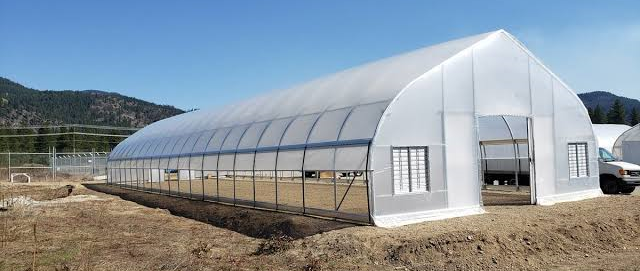
Greenhouse construction company in Nigeria
Greenhouse construction company in Nigeria
Modern agriculture in Nigeria is increasingly moving toward protected and controlled farming systems as farmers, agricultural investors, agribusinesses, and institutions seek more reliable ways to produce high-value crops throughout the year. Greenhouse farming provides an opportunity to create a more controlled growing environment while improving the management of water, nutrients, temperature, ventilation, pests, and crop production.
Irrigrow Civil & Engineering is a greenhouse construction company in Nigeria providing greenhouse design, engineering, construction, installation, irrigation integration, and agricultural infrastructure solutions for commercial and small-scale farming projects.
Our approach goes beyond simply erecting a greenhouse structure. We consider the complete agricultural environment, including site preparation, structural requirements, irrigation, drainage, water supply, access, ventilation, crop requirements, and future expansion.
Greenhouse projects in Nigeria can range from relatively simple protected structures for small farms to larger commercial greenhouse developments requiring multiple production units, irrigation systems, fertigation, water storage, ventilation, climate-management equipment, and other agricultural infrastructure. Current greenhouse projects in Nigeria also demonstrate the importance of integrating structures with irrigation, water management, and supporting farm facilities.
If you are planning to establish a greenhouse farm in Nigeria, Irrigrow Civil & Engineering can help you move from an initial concept to a functional greenhouse facility.
What Is Greenhouse Construction?
Greenhouse construction involves the engineering, fabrication, assembly, installation, and commissioning of a protected agricultural structure designed to create a more controlled environment for crop production.
A greenhouse typically consists of a structural frame covered with a transparent or semi-transparent material that allows sunlight to enter while providing a degree of protection from external environmental conditions.
Depending on the greenhouse design, the system may include:
- Structural steel or galvanized steel frames
- UV-resistant covering materials
- Insect-proof netting
- Ventilation systems
- Shade systems
- Irrigation systems
- Fertigation systems
- Water storage
- Drainage
- Crop support systems
- Environmental monitoring
- Cooling or misting systems
- Electrical infrastructure
- Access doors and service areas
The right combination depends on the crop, location, climate, farm size, production model, and investment objectives.
Greenhouse Construction Company Nigeria
Choosing the right greenhouse construction company is important because greenhouse farming requires coordination between structural engineering and agricultural production.
Irrigrow Civil & Engineering provides greenhouse construction services for farmers and agricultural investors looking for professionally planned farming infrastructure.
Our services can cover:
- Greenhouse design
- Greenhouse structural construction
- Site preparation
- Foundation and anchoring works
- Greenhouse installation
- Irrigation integration
- Fertigation infrastructure
- Drainage
- Water supply
- Ventilation
- Shade systems
- Crop support structures
- Farm access infrastructure
- Greenhouse maintenance
- Project supervision
Our objective is to create greenhouse systems that are appropriate for Nigerian agricultural conditions and the specific requirements of each project.
Greenhouse Design and Engineering
A greenhouse should be designed according to the intended agricultural operation rather than simply selecting a standard structure.
Several factors influence greenhouse design, including:
- Location
- Farm size
- Crop type
- Local climate
- Wind conditions
- Temperature
- Humidity
- Rainfall
- Available water
- Soil conditions
- Irrigation requirements
- Production method
- Budget
- Expected expansion
The design process should also consider how workers will move through the greenhouse, how crops will be irrigated, how excess water will be managed, and how ventilation will be maintained.
Irrigrow Civil & Engineering can help clients develop greenhouse layouts based on their production requirements.
Greenhouse Construction for Nigerian Conditions
Nigeria has diverse climatic conditions. The requirements of a greenhouse in a humid southern region can differ from those of a greenhouse in a hotter or drier northern environment.
Greenhouse design should therefore account for local environmental conditions.
Important considerations include:
Ventilation
High temperatures can affect crop growth. Proper ventilation allows hot air to escape and helps improve airflow within the greenhouse.
Shade Management
Depending on the crop and location, shading may be required to reduce excessive solar radiation and heat.
Insect Protection
Insect netting can help reduce the entry of certain pests while maintaining airflow.
Rainwater Management
The greenhouse structure and surrounding site should be designed to manage rainfall effectively and prevent unwanted water accumulation.
Structural Stability
The structure should be appropriately anchored and constructed according to the anticipated environmental loads.
Irrigation
Reliable irrigation is essential for greenhouse crop production, particularly where rainfall cannot be relied upon to provide crop water requirements.
Types of Greenhouses in Nigeria
Different greenhouse structures are available for different agricultural applications.
Tunnel Greenhouses
Tunnel greenhouses use curved or arched frames and can provide a relatively simple protected growing environment.
They may be suitable for small and medium-scale production depending on crop requirements and the desired level of environmental control.
Gable Greenhouses
Gable-style structures provide straight side walls and roof ventilation options. They can offer useful growing space and can be configured for different crop production systems.
Gothic Arch Greenhouses
Gothic-style greenhouse structures use a pointed or modified arch profile and can provide additional internal height compared with some conventional tunnel structures.
Multi-Span Greenhouses
Multi-span greenhouses consist of multiple connected growing sections. They can be appropriate for larger commercial farms requiring greater production capacity.
Net Houses and Screen Houses
Screen houses can provide protection against certain insects and environmental conditions while maintaining substantial natural ventilation.
The appropriate structure depends on the production objectives, site conditions, crop, budget, and required level of environmental control.
Commercial Greenhouse Construction
Commercial greenhouse farming requires careful planning because the greenhouse is only one component of the agricultural production system.
A commercial greenhouse project may include:
- Multiple greenhouse units
- Boreholes
- Water storage
- Pumping stations
- Filtration
- Drip irrigation
- Fertigation
- Drainage
- Farm roads
- Power supply
- Solar systems
- Crop support systems
- Nursery facilities
- Packing areas
- Storage facilities
Irrigrow Civil & Engineering can support clients developing commercial greenhouse farms by coordinating these infrastructure requirements.
For larger projects, the greenhouse layout can be designed to allow phased expansion.
Greenhouse Site Preparation
Proper site preparation is an important part of greenhouse construction.
Before installation begins, the site may require:
- Vegetation clearing
- Removal of debris
- Leveling
- Grading
- Excavation
- Filling
- Compaction
- Drainage
- Access road construction
- Foundation preparation
The site should provide a suitable platform for the greenhouse while allowing water to drain effectively.
Poor site preparation can result in uneven structures, water accumulation, difficult access, and problems with irrigation and drainage.
Greenhouse Foundation and Anchoring
The structural support system of a greenhouse depends on its design and environmental requirements.
Foundations and anchoring systems provide stability and help secure the greenhouse structure to the ground.
The appropriate foundation arrangement depends on:
- Greenhouse design
- Soil conditions
- Structural loads
- Wind conditions
- Frame configuration
- Site characteristics
- Manufacturer requirements
Irrigrow Civil & Engineering considers the structural and site requirements during project planning to ensure that the greenhouse installation has an appropriate support system.
Greenhouse Irrigation Installation
Irrigation is one of the most important systems in greenhouse farming.
Unlike open-field agriculture, greenhouse production provides an opportunity to deliver water directly according to crop requirements.
Irrigrow Civil & Engineering can integrate irrigation systems into greenhouse projects.
These may include:
- Drip irrigation
- Micro-irrigation
- Mainline pipes
- Sub-mainlines
- Drip lines
- Filters
- Pressure regulators
- Valves
- Pumps
- Water tanks
- Fertilizer injection systems
A properly designed irrigation system can help farmers manage water delivery more precisely.
Greenhouse Drip Irrigation
Drip irrigation is commonly used in protected agriculture because it can deliver water close to the root zone of individual plants.
A greenhouse drip irrigation system may include:
Water source: Borehole, reservoir, tank, or another suitable water source.
Pump: Provides the required flow and pressure.
Filter: Helps remove particles that could clog irrigation emitters.
Mainline: Transports water toward the greenhouse.
Distribution lines: Divide the water into production zones.
Drip lines: Deliver water along crop rows.
Emitters: Release water at controlled points.
Irrigation zones can be created to manage different greenhouse sections independently.
Greenhouse Fertigation Systems
Fertigation allows nutrients to be delivered through an irrigation system.
For commercial greenhouse operations, fertigation can help provide crops with nutrients according to a planned feeding program.
A fertigation system may contain:
- Fertilizer tank
- Injector
- Mixing system
- Filters
- Valves
- Irrigation lines
- Control equipment
The appropriate fertigation method depends on the crop, growing medium, irrigation design, and farm management system.
Greenhouse Water Supply
A greenhouse requires a dependable water source.
Depending on the site, the water supply may come from:
- Boreholes
- Existing farm water systems
- Reservoirs
- Storage tanks
- Rainwater collection
- Other suitable water sources
Irrigrow Civil & Engineering can integrate the water source with the greenhouse irrigation system.
For farms without an existing water supply, the project may involve borehole development, pumping, storage, filtration, and distribution infrastructure.
Greenhouse Borehole Installation
A borehole can provide a dedicated water source for greenhouse irrigation where groundwater is available and suitable.
The borehole project may involve:
- Water-source investigation
- Borehole drilling
- Casing
- Well development
- Pump testing
- Water quality assessment
- Submersible pump installation
- Water storage
- Irrigation connection
Borehole depth and yield depend on local geological and hydrogeological conditions. A site-specific investigation is therefore recommended before construction.
Greenhouse Drainage Construction
Drainage is an important part of greenhouse infrastructure.
Excess irrigation water and rainfall around the greenhouse should be managed to prevent waterlogging and damage to surrounding infrastructure.
Greenhouse drainage may include:
- Perimeter drains
- Internal drainage
- Surface channels
- Collection drains
- Stormwater channels
- Outlet structures
- Erosion protection
Irrigrow Civil & Engineering can coordinate greenhouse drainage with the overall farm drainage system.
Greenhouse Ventilation
Ventilation helps manage the internal greenhouse environment by allowing air movement and reducing excessive heat and humidity.
Natural ventilation can be provided through roof vents, side openings, or other designed openings.
Depending on the greenhouse design and crop requirements, mechanical ventilation may also be considered.
Ventilation design should take into account:
- Greenhouse size
- Crop type
- Local temperature
- Humidity
- Wind
- Structure orientation
- Insect netting
- Shade systems
The objective is to create a suitable environment for healthy crop development.
Greenhouse Cooling and Misting
In hot environments, additional cooling measures may be required depending on the crop and greenhouse design.
Possible systems include:
- Misting
- Fogging
- Evaporative cooling
- Shade systems
- Ventilation
- Cooling pads and fans
Not every greenhouse requires all of these systems. The appropriate solution depends on the desired level of environmental control and crop requirements.
Greenhouse Crop Support Systems
Some greenhouse crops, such as tomatoes and cucumbers, require support systems to guide plant growth.
Crop support infrastructure can include:
- Trellising
- Wires
- Clips
- Posts
- Strings
- Support rails
These systems should be incorporated into the greenhouse design so that the structure can accommodate the expected crop loads.
Greenhouse Construction for Tomato Farming
Tomatoes are among the crops commonly cultivated in protected agricultural systems.
A tomato greenhouse project may require:
- Suitable greenhouse structure
- Drip irrigation
- Fertigation
- Crop support system
- Ventilation
- Pest protection
- Water storage
- Drainage
- Growing media or prepared soil
- Crop management support
The greenhouse should be designed around the selected tomato production method and expected crop density.
Greenhouse Construction for Cucumber Farming
Cucumbers are also well suited to protected cultivation when the appropriate production system is implemented.
A cucumber greenhouse may require:
- Drip irrigation
- Trellis system
- Fertigation
- Ventilation
- Insect protection
- Water storage
- Drainage
Proper greenhouse layout can make crop management, harvesting, irrigation, and maintenance more efficient.
Greenhouse Construction for Pepper Farming
Pepper production can also be carried out in protected structures. Depending on the variety and production system, peppers can be grown using soil-based or soilless methods.
Infrastructure may include:
- Greenhouse structure
- Drip irrigation
- Fertigation
- Crop support
- Ventilation
- Pest exclusion
- Water supply
- Drainage
The production system should be selected based on crop variety, market requirements, climate, and farm management capacity.
Greenhouse Farming for High-Value Crops
Protected agriculture can be used for various high-value crops, including:
- Tomatoes
- Cucumbers
- Peppers
- Lettuce
- Herbs
- Strawberries
- Melons
- Seedlings
- Flowers
- Nursery crops
The suitability of a crop depends on the greenhouse design, climate, market demand, farm management, production technology, and available resources.
Greenhouse Construction Process
Irrigrow Civil & Engineering follows a structured process for greenhouse projects.
1. Initial Consultation
We discuss the client’s objectives, farm size, location, crop, expected production, budget, and preferred greenhouse technology.
2. Site Assessment
The proposed site is assessed for access, terrain, drainage, water availability, soil conditions, and other relevant factors.
3. Greenhouse Planning
The greenhouse size, orientation, layout, production blocks, access routes, irrigation zones, and supporting infrastructure are planned.
4. Engineering Design
The structural and infrastructure requirements are developed according to the project specifications.
5. Material Selection
Suitable structural frames, coverings, netting, irrigation components, and supporting materials are selected.
6. Site Preparation
The site is cleared, graded, compacted, and prepared for construction.
7. Structural Installation
The greenhouse frame, anchors, covering materials, doors, vents, and other structural components are installed.
8. Irrigation Installation
Water supply, pumping, filtration, mainlines, distribution lines, drip systems, and other irrigation components are installed.
9. Drainage and Supporting Infrastructure
Drainage, access paths, water storage, and other required farm infrastructure are completed.
10. Testing and Commissioning
The greenhouse and associated systems are inspected and tested before handover.
11. Handover
The completed greenhouse is handed over with guidance on system operation and maintenance.
Greenhouse Construction Cost in Nigeria
The cost of greenhouse construction in Nigeria varies significantly depending on the size, structure, materials, irrigation system, automation, site conditions, and level of environmental control.
Major cost factors include:
- Greenhouse dimensions
- Structural design
- Steel or galvanized frame
- Covering material
- Insect netting
- Foundation and anchoring
- Irrigation
- Fertigation
- Water storage
- Pumping equipment
- Ventilation
- Cooling
- Electrical systems
- Site preparation
- Drainage
- Labour
- Transportation
- Automation
- Crop support systems
Current market offerings show that greenhouse prices in Nigeria can vary widely by size and specification. For example, published commercial offerings include 8m × 24m and 8m × 48m structures at different price points, while more advanced automated systems can cost substantially more. These figures should be treated as market examples rather than fixed prices because specifications and site requirements differ.
Irrigrow Civil & Engineering provides project-specific quotations based on the actual greenhouse requirements rather than relying on a single standard price.
How Much Does an 8m x 24m Greenhouse Cost in Nigeria?
An 8m × 24m greenhouse has a covered footprint of approximately 192 square metres.
However, the total project cost depends on what is included.
A basic structure may require fewer components than a complete turnkey greenhouse equipped with:
- Drip irrigation
- Water tank
- Pump
- Fertigation
- Ventilation
- Insect netting
- Crop support
- Growing media
- Electrical infrastructure
- Automation
Therefore, a reliable quotation should specify exactly what is included in the project.
How Much Does an 8m x 48m Greenhouse Cost in Nigeria?
An 8m × 48m greenhouse provides approximately 384 square metres of covered area.
The final cost will depend on the greenhouse type, structural specifications, covering materials, irrigation, site preparation, drainage, crop support, water infrastructure, labour, logistics, and additional technology.
For a commercial greenhouse, Irrigrow Civil & Engineering can prepare a project-specific scope and cost estimate after assessing the client’s requirements.
Greenhouse Construction for Commercial Agricultural Investors
Greenhouse farming can require significant initial investment. Investors should therefore consider the entire agricultural production system rather than focusing only on the greenhouse structure.
A commercial greenhouse investment may involve:
- Land
- Site development
- Greenhouse structures
- Irrigation
- Borehole
- Water storage
- Power
- Fertigation
- Crop inputs
- Labour
- Packaging
- Storage
- Transportation
- Market access
A properly planned infrastructure system can help investors establish a stronger foundation for commercial production.
Greenhouse Construction for Agricultural Estates
Agricultural estates may require multiple greenhouse units with shared infrastructure.
Instead of developing every greenhouse as a completely independent system, a master infrastructure plan can coordinate:
- Water supply
- Boreholes
- Reservoirs
- Pumping stations
- Irrigation
- Drainage
- Access roads
- Power
- Packing areas
- Storage
- Farm offices
This approach can make future expansion and infrastructure management more organized.
Greenhouse Construction and Irrigation Integration
One of the advantages of working with an agricultural engineering company is the ability to coordinate the greenhouse and irrigation infrastructure.
Irrigrow Civil & Engineering can design the greenhouse and irrigation system as interconnected components.
For example:
Borehole → Pump → Storage Tank → Filter → Fertigation → Mainline → Irrigation Zones → Drip Lines → Crops
This integrated approach helps ensure that the water system is compatible with the greenhouse production requirements.
Greenhouse Construction and Farm Drainage
Greenhouse construction should also be coordinated with farm drainage.
The surrounding farm should have a suitable water management strategy to prevent stormwater from entering production areas or accumulating around the greenhouse foundation.
Drainage planning may include:
- Perimeter drains
- Farm roads
- Culverts
- Stormwater channels
- Water outlets
- Erosion control
This is particularly important during periods of heavy rainfall.
Greenhouse Maintenance and Technical Support
A greenhouse requires regular maintenance to remain productive.
Maintenance may include:
- Structural inspections
- Cover inspection
- Net replacement
- Irrigation flushing
- Filter cleaning
- Pump maintenance
- Valve inspection
- Ventilation maintenance
- Drainage inspection
- Crop support inspection
- Replacement of damaged components
Regular maintenance can help identify problems before they affect production significantly.
Why Choose Irrigrow Civil & Engineering?
Irrigrow Civil & Engineering combines civil engineering and agricultural infrastructure capabilities to provide more than a basic greenhouse installation.
Engineering-Based Approach
We consider structural, water, drainage, site, and agricultural requirements when planning greenhouse projects.
Integrated Infrastructure
We can coordinate greenhouse structures with irrigation, boreholes, water storage, drainage, farm roads, and other supporting infrastructure.
Customized Solutions
Different farms have different requirements. We develop solutions according to the client’s crop, location, farm size, budget, and production objectives.
Commercial Farm Focus
Our services are suitable for investors and businesses developing commercial agricultural facilities.
Project Planning
We help clients understand the infrastructure required before construction begins.
Scalable Development
Where appropriate, greenhouse farms can be designed to allow future expansion and additional production units.
Greenhouse Construction Across Nigeria
Irrigrow Civil & Engineering can support greenhouse and agricultural infrastructure projects in different parts of Nigeria.
Because Nigerian agricultural environments vary significantly, each project should be evaluated based on its specific site conditions.
The greenhouse requirements for a farm in Lagos or Ogun may differ from those in Oyo, Kaduna, Kano, Plateau, Abuja, or other parts of the country.
Factors such as temperature, rainfall, wind, water availability, soil, crop selection, and market access should be considered when developing a greenhouse project.
Frequently Asked Questions
What does a greenhouse construction company do?
A greenhouse construction company designs, supplies, constructs, and installs protected agricultural structures. Services may also include irrigation, fertigation, water supply, ventilation, drainage, crop support, and other agricultural infrastructure.
How much does it cost to build a greenhouse in Nigeria?
There is no single fixed cost. Greenhouse construction costs depend on dimensions, structure, materials, irrigation, automation, site preparation, water infrastructure, labour, and other project requirements.
What crops can be grown in a greenhouse?
Greenhouses can be used for tomatoes, cucumbers, peppers, lettuce, herbs, strawberries, melons, seedlings, flowers, and other crops depending on the production system.
Can Irrigrow build a greenhouse with irrigation?
Yes. Irrigrow Civil & Engineering can integrate irrigation infrastructure into greenhouse projects, including drip irrigation, pumps, filtration, water storage, pipelines, and fertigation systems.
Can you construct a greenhouse on an existing farm?
Yes. An existing farm can be assessed to determine whether the proposed site is suitable for greenhouse construction. Site preparation, water supply, drainage, access, and electrical requirements should be evaluated.
Do I need a borehole for a greenhouse?
Not necessarily. A greenhouse requires a reliable water source, but that source may be a borehole, reservoir, storage system, or another suitable water supply. Where a borehole is required, its yield and water quality should be assessed.
Can greenhouses be constructed for large commercial farms?
Yes. Commercial farms can use multiple greenhouse units or multi-span structures with shared irrigation, water storage, drainage, power, and other supporting infrastructure.
Can you construct an 8m x 24m greenhouse?
Yes. Greenhouse dimensions can be developed according to the client’s farm size, crop requirements, production targets, and available budget.
Can you construct an 8m x 48m greenhouse?
Yes. An 8m × 48m structure can be considered for larger commercial production, subject to site assessment and project specifications.
Does greenhouse construction include irrigation?
It can. Irrigation can be included as part of a complete greenhouse project, but the exact scope should be clearly defined in the quotation.
How long does greenhouse construction take?
Construction time depends on greenhouse size, design, site preparation, material availability, logistics, irrigation requirements, and project complexity. A project-specific schedule can be prepared after the scope has been established.
Start Your Greenhouse Project in Nigeria
Greenhouse farming offers Nigerian farmers and agricultural investors an opportunity to develop more controlled production environments for high-value crops. However, the success of a greenhouse project depends on more than the structure itself.
A properly developed greenhouse should work together with irrigation, water supply, drainage, ventilation, crop support, farm access, and other agricultural infrastructure.
Irrigrow Civil & Engineering is a greenhouse construction company in Nigeria providing greenhouse design, construction, installation, irrigation integration, drainage, water infrastructure, and agricultural civil engineering services.
Whether you are planning an 8m × 24m greenhouse, an 8m × 48m commercial greenhouse, multiple greenhouse units, a greenhouse estate, or a larger protected agriculture project, our team can help you assess the site, develop the infrastructure requirements, and prepare a project-specific construction proposal.
Greenhouse construction company in Nigeria | Greenhouse construction company in Nigeria | Greenhouse construction company in Nigeria | Greenhouse construction company in Nigeria | Greenhouse construction company in Nigeria | Greenhouse construction company in Nigeria
Contact Irrigrow Civil & Engineering today to discuss your greenhouse construction project in Nigeria and begin planning a professionally engineered agricultural facility.
