


Civil Engineering Equipment

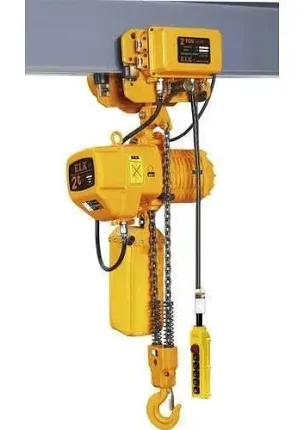
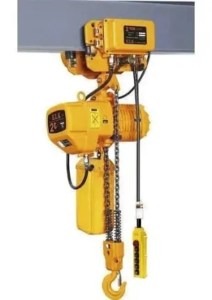
Electric chain hoist 3000kg
One of the most important features of the Electric Chain Hoist 3000kg is its rated load capacity of 3,000kg. This capacity makes it suitable for many medium- to heavy-duty industrial lifting applications. However, the actual load that can be lifted safely depends on the manufacturer’s rating, installation arrangement, lifting configuration, and condition of the equipment. The load must never exceed the hoist’s rated capacity, and any accessories used with the machine must also be appropriately rated for the intended lifting operation.
₦2000000.00
Additional Offers
- Categories: Civil Engineering Equipment, Farm Machines & Tools
- Availability: In Stock
- Product Type: Simple

The Electric Chain Hoist 3000kg is a heavy-duty industrial lifting machine designed to lift, lower, and position loads weighing up to 3,000 kilograms under specified operating conditions. It is an essential piece of material-handling equipment used in construction sites, manufacturing plants, engineering workshops, warehouses, factories, agricultural processing facilities, maintenance centres, and other industrial environments. The machine combines an electric motor, a durable lifting chain, a load hook, a chain guide, and a mechanical lifting system to provide controlled and efficient vertical movement of heavy materials. It is suitable for businesses and professionals who require dependable lifting equipment to handle machinery, steel components, construction materials, industrial products, and other compatible loads.
With a rated lifting capacity of 3 tonnes, this electric chain hoist can help reduce the physical effort required to raise and lower heavy objects manually. Its powered lifting mechanism allows operators to move loads more efficiently while maintaining controlled movement during lifting operations. Depending on the model and configuration, the hoist may be installed on a fixed suspension point, a suitable support structure, or a compatible trolley that allows horizontal movement along an overhead beam. This flexibility makes it useful for different material-handling arrangements in workshops, production facilities, assembly lines, and industrial storage areas.
Irrigrow Civil and Engineering Ltd provides construction and industrial equipment solutions for businesses involved in infrastructure development, engineering, manufacturing, agriculture, and general material handling. The Electric Chain Hoist 3000kg is a practical lifting solution for organisations that require powered equipment to handle heavy loads efficiently and support organised workflow operations.
The electric chain hoist is designed with a compact and robust structure that allows it to perform lifting tasks in suitable working environments. Its electric motor supplies the power required to operate the lifting mechanism, while the internal gearbox transfers the motor’s output to the chain-lifting assembly. The chain moves through a specialised chain wheel or load sprocket, allowing the attached hook to raise or lower the load according to the operator’s commands. The machine’s components are engineered to work together to provide controlled lifting performance within the manufacturer’s specified limits.
One of the most important features of the Electric Chain Hoist 3000kg is its rated load capacity of 3,000kg. This capacity makes it suitable for many medium- to heavy-duty industrial lifting applications. However, the actual load that can be lifted safely depends on the manufacturer’s rating, installation arrangement, lifting configuration, and condition of the equipment. The load must never exceed the hoist’s rated capacity, and any accessories used with the machine must also be appropriately rated for the intended lifting operation.
The electric motor is responsible for driving the lifting mechanism and enabling powered operation. Depending on the model, the motor may be designed for single-phase or three-phase electrical supply. Industrial versions commonly use three-phase power, although the correct supply requirements must always be confirmed from the manufacturer’s specifications. Motor power, lifting speed, duty rating, and operating voltage vary between products. Selecting a model with suitable electrical characteristics is important for ensuring compatibility with the available power supply and the expected workload.
The load chain is another essential component of the hoist. It is manufactured from specialised high-strength metal and designed to withstand the forces associated with lifting loads within the rated capacity. The chain passes through the lifting mechanism and connects to the load hook assembly. It must be inspected regularly for wear, deformation, corrosion, damage, and other conditions that may affect safe operation. Only the chain specified or approved by the manufacturer should be used as a replacement.
The load hook provides the connection point between the hoist and the load or approved lifting accessory. It may incorporate a safety latch to help prevent compatible lifting attachments from accidentally slipping out during normal handling. The hook must be inspected for deformation, cracks, excessive wear, and other signs of damage. Loads should be attached using suitable lifting accessories, and the hook should not be side-loaded or used in a way that places forces outside its intended design.
The braking system is an important safety feature of an electric chain hoist. It is designed to control movement and hold the load when the lifting motor is not actively raising or lowering it, in accordance with the manufacturer’s design. Reliable braking performance is essential when lifting heavy equipment, steel materials, and industrial components. The braking system should be inspected and maintained according to the manufacturer’s recommended procedures, and the hoist should not be operated if its braking performance is questionable.
Many electric chain hoists include a pendant control that allows the operator to raise and lower loads using clearly identified buttons. Depending on the model, the control system may also include an emergency stop function and additional operating controls. Some versions are supplied with a wireless remote-control system, which can provide greater flexibility when the operator needs to stand at a suitable viewing position. The control arrangement should be selected according to the working environment, visibility requirements, and applicable safety procedures.
An overload protection system may be available on certain models. This feature is designed to help prevent lifting beyond the equipment’s permitted load capacity. Other models may include limit switches that help restrict movement at designated upper or lower travel positions. These features vary by manufacturer and configuration, so buyers should confirm which protective systems are included before purchasing the equipment. Safety features should never be treated as a substitute for checking the load weight, inspecting the lifting accessories, and following approved lifting procedures.
The Electric Chain Hoist 3000kg is widely used in manufacturing and industrial production. Factories frequently need to lift heavy machine components, metal assemblies, motors, gearboxes, and other equipment during installation, maintenance, and production processes. An electric chain hoist can provide controlled vertical movement, helping workers position compatible components for further processing or assembly. When installed as part of a properly engineered lifting system, it can support more organised material handling and reduce reliance on manual lifting.
In engineering workshops, the hoist can be used for lifting machinery parts, industrial tools, fabrication components, and heavy equipment that require maintenance or repositioning. Workshops dealing with metal fabrication, mechanical repairs, plant maintenance, and equipment assembly may benefit from powered lifting equipment with a suitable load rating. The hoist can also be used alongside compatible overhead beam systems, trolleys, and supporting structures to improve movement between designated work areas. The supporting structure must be verified as capable of carrying the combined loads and forces associated with the installation and lifting operation.
Construction companies can use an electric chain hoist for suitable lifting activities involving steel components, mechanical equipment, construction materials, and other compatible loads. It may be installed in workshops, fabrication areas, equipment maintenance facilities, and selected construction support locations. However, the hoist should only be used in environments for which it is designed and protected. Outdoor construction sites may expose equipment to rain, dust, moisture, and other conditions that require suitable environmental protection and an appropriately rated electrical installation.
Warehouses and industrial storage facilities can also use electric chain hoists to lift heavy items during maintenance, equipment handling, and selected storage operations. A suitable installation may help workers raise machinery components or other heavy goods to a designated working position. Where horizontal travel is required, a compatible electric or manual trolley may be used if the hoist and supporting beam system are designed for that arrangement. The trolley’s rated capacity, beam compatibility, and travel requirements must be checked before use.
Agricultural processing facilities may use a 3-tonne electric chain hoist for handling heavy machinery components, processing equipment, motors, and other industrial items. Grain-processing plants, feed mills, food-processing facilities, irrigation equipment workshops, and agricultural machinery service centres may require powered lifting equipment during installation and maintenance. The equipment should be selected according to the facility’s operating conditions, including dust exposure, moisture, cleaning requirements, and the availability of suitable electrical infrastructure.
The hoist may also be useful in automotive and mechanical service environments for lifting compatible components and machinery during maintenance operations. Workshops that repair industrial vehicles, production equipment, and mechanical systems may benefit from a powered lifting device that offers controlled movement. However, lifting a vehicle or any suspended load requires equipment specifically suitable for that task, an approved lifting arrangement, and compliance with the relevant safety procedures.
One of the main advantages of the Electric Chain Hoist 3000kg is its ability to reduce the physical effort required to lift heavy loads. Electric power performs the lifting operation, allowing operators to control the movement through the designated control system. This can improve efficiency when heavy items need to be lifted repeatedly throughout a working day. It can also help reduce unnecessary manual handling, provided the lifting task is properly planned and workers remain clear of suspended loads.
Another benefit is controlled load positioning. Depending on the model’s lifting speed and control system, the operator can raise or lower materials to the required height within the equipment’s operating limits. This is valuable during machinery installation, fabrication, equipment maintenance, and industrial assembly. Smooth and controlled movement can support more accurate positioning and reduce unnecessary handling, although the load may require additional approved equipment or positioning procedures for precise alignment.
The compact design of many electric chain hoists makes them suitable for installation in selected areas where space is limited. Their relatively small lifting mechanism can be integrated into suitable overhead support arrangements without requiring the same type of structure as some larger lifting systems. Nevertheless, installation space, headroom, chain collection arrangements, electrical access, and maintenance clearance must all be considered when selecting a suitable unit.
Durability is another important consideration. Industrial electric chain hoists are designed for repeated lifting operations within their rated duty classifications. Their useful service life depends on manufacturing quality, operating frequency, load severity, environmental conditions, inspection, and maintenance. Buyers should consider the hoist’s duty rating and expected lifting cycle rather than relying on rated load capacity alone. A 3,000kg lifting capacity does not automatically mean that every model is suitable for continuous or intensive industrial operation.
The speed of lifting is also important when choosing an electric chain hoist. Different models provide different lifting speeds depending on the motor, gearbox, and control arrangement. Some units offer a single lifting speed, while others provide two-speed operation or variable-speed control. A suitable lifting speed should match the type of work being performed, the precision required, and the manufacturer’s operating specifications. Faster lifting is not always preferable when the task requires careful positioning of heavy components.
Lifting height is another specification buyers should confirm. The standard chain length varies between models, and the required height depends on the working area and intended application. A hoist used for machinery installation may require a different lifting height from one used for lifting materials within a workshop. Buyers should specify the required hook travel and available headroom when requesting a quotation. A longer chain may be available for certain models, but any modification must follow the manufacturer’s requirements.
The electrical supply should be assessed before installation. Voltage, frequency, phase, motor rating, control voltage, earthing, and electrical protection requirements vary by model. A qualified electrician should ensure that the supply and installation are appropriate for the equipment. Electrical connections should be protected against the conditions present in the operating environment, and the hoist should not be exposed to conditions outside its rated environmental protection.
Safe installation is essential for the reliable operation of the Electric Chain Hoist 3000kg. The supporting beam, suspension point, trolley, and associated structures must be designed or verified by a competent professional to support the intended load and the relevant forces generated during lifting. The rated capacity of the hoist must not be assumed to represent the capacity of the complete lifting arrangement. Every component in the lifting system, including shackles, slings, hooks, connectors, and supporting structures, must be suitable for the task.
Before each use, the operator should check the chain, hook, controls, brakes, suspension components, and other relevant safety features. A suitable test should be performed according to the manufacturer’s instructions and the site’s established inspection procedures. The operator should confirm the load weight, ensure that the load is properly attached, and verify that people are clear of the lifting area. Loads should not be lifted over people, and no person should stand beneath a suspended load.
The hoist must never be used to lift more than its rated capacity or to drag loads horizontally unless the manufacturer specifically permits the intended operation. Side pulling can introduce forces that the lifting mechanism and supporting structure may not be designed to withstand. The chain should remain properly aligned, and the load should be lifted in a controlled manner without sudden movements or shock loading. Workers should never attempt to repair, adjust, or maintain the equipment while it is carrying a suspended load.
Regular maintenance is necessary to preserve performance and reduce the risk of equipment failure. The chain should be kept clean and lubricated in accordance with the manufacturer’s instructions. Hooks, brakes, gears, bearings, electrical controls, limit switches, and suspension components should be inspected at the recommended intervals. Any damaged, worn, or defective component should be assessed by a competent technician and replaced with an approved part. Maintenance records should be kept to support traceability and help identify recurring problems.
When purchasing an Electric Chain Hoist 3000kg, buyers should consider the lifting capacity, lifting height, lifting speed, duty classification, motor specifications, power supply, control arrangement, chain quality, safety features, installation requirements, and after-sales support. The intended working environment is also important. For example, a hoist intended for a dusty workshop may require different protection from one used in a clean indoor assembly area or a moisture-prone industrial location.
The buyer should also confirm whether the product is supplied with a trolley, pendant control, power cable, chain container, mounting accessories, and other necessary components. These items are not necessarily included with every model. Installation and commissioning may require additional services and materials, so the full scope of supply should be clarified before placing an order.
New and used electric chain hoists may be available, but used equipment requires careful assessment. Buyers should review the service history, chain condition, hook condition, brake performance, electrical controls, motor operation, and inspection records. A competent lifting-equipment professional should assess the unit before it is returned to service. Any missing identification plate, uncertain rated capacity, undocumented modification, or evidence of significant damage should be treated seriously.
The total cost of ownership includes the purchase price, installation, electrical work, inspections, servicing, replacement chains and components, operator training, and any necessary supporting structures or trolley systems. Businesses should evaluate these costs against the expected workload and operating frequency. Selecting equipment with the correct duty rating and suitable after-sales support can help reduce avoidable downtime and support reliable operation.
In Nigeria, the Electric Chain Hoist 3000kg can be useful for construction support facilities, industrial workshops, manufacturing plants, agricultural processing operations, warehouses, and equipment maintenance centres. Buyers should verify the manufacturer’s specifications, availability of replacement parts, warranty conditions where applicable, delivery arrangements, and technical support before making a purchase. The equipment should be selected according to the actual lifting requirements rather than rated capacity alone.
Irrigrow Civil and Engineering Ltd offers construction and industrial equipment solutions to support businesses seeking dependable machinery for material handling and engineering operations. The Electric Chain Hoist 3000kg is suitable for organisations that require a powered lifting solution for compatible loads weighing up to three tonnes under specified operating conditions. Its electric motor, load chain, lifting hook, braking mechanism, and control system provide the essential functions needed for controlled vertical lifting in suitable industrial environments.
Whether used for machinery installation, workshop maintenance, fabrication operations, warehouse handling, or agricultural processing, the Electric Chain Hoist 3000kg can help improve lifting efficiency and reduce unnecessary manual effort. Selecting the right configuration, installing it on an adequately rated support structure, and following the manufacturer’s operating and maintenance requirements are essential for obtaining reliable service. For businesses seeking suitable lifting equipment for construction and industrial applications, Irrigrow Civil and Engineering Ltd provides equipment solutions designed to support practical material-handling and operational needs.

Fogging Machine for Sale in Nigeria
₦350000.00

GARRI FRYER
₦3000000.00
CASSAVA GRATING MACHINE
₦680000.00

Compare similar items
|
|
|
|
|
|
|
Find and select products to see the differences and similarities between them |
||||
| Customer Rating |
|
|
|
|
| Price |
₦2000000.00 |
₦430000.00 |
₦350000.00 |
₦550000.00 |
| Item Dimensions |
N/A
|
N/A
|
N/A
|
N/A
|
| Special Features |
One of the most important features of the Electric Chain Hoist 3000kg is its rated load capacity of 3,000kg. This capacity makes it suitable for many medium- to heavy-duty industrial lifting applications. However, the actual load that can be lifted safely depends on the manufacturer’s rating, installation arrangement, lifting configuration, and condition of the equipment. The load must never exceed the hoist’s rated capacity, and any accessories used with the machine must also be appropriately rated for the intended lifting operation.
|
N/A
|
Fogging Machine Price in NigeriaAt Irrigrow Civil & Engineering Ltd, we supply high-quality fogging machines in Nigeria at competitive prices for farmers, pest control companies, environmental sanitation contractors, government agencies, businesses, and individual customers. Contact us for the current fogging machine price in Nigeria, product specifications, and bulk purchase discounts.Order Your Fogging Machine TodayIf you are looking for a fogging machine for sale in Nigeria, thermal fogging machine, mosquito fogger, disinfection fogging equipment, or agricultural pest control machine, Irrigrow Civil & Engineering Ltd is your trusted supplier. Contact us today to request a quotation, confirm availability, and get the right fogging machine for your farm, business, institution, or pest control project. |
N/A
|
| Weight |
N/A
|
N/A
|
N/A
|
N/A
|
| Availability |
In stock |
In stock |
In stock |
In stock |






Share options